Stop letting foreign firms harvest the IP developed by ‘beautiful Canadian brains,’ Raquel Dancho urges
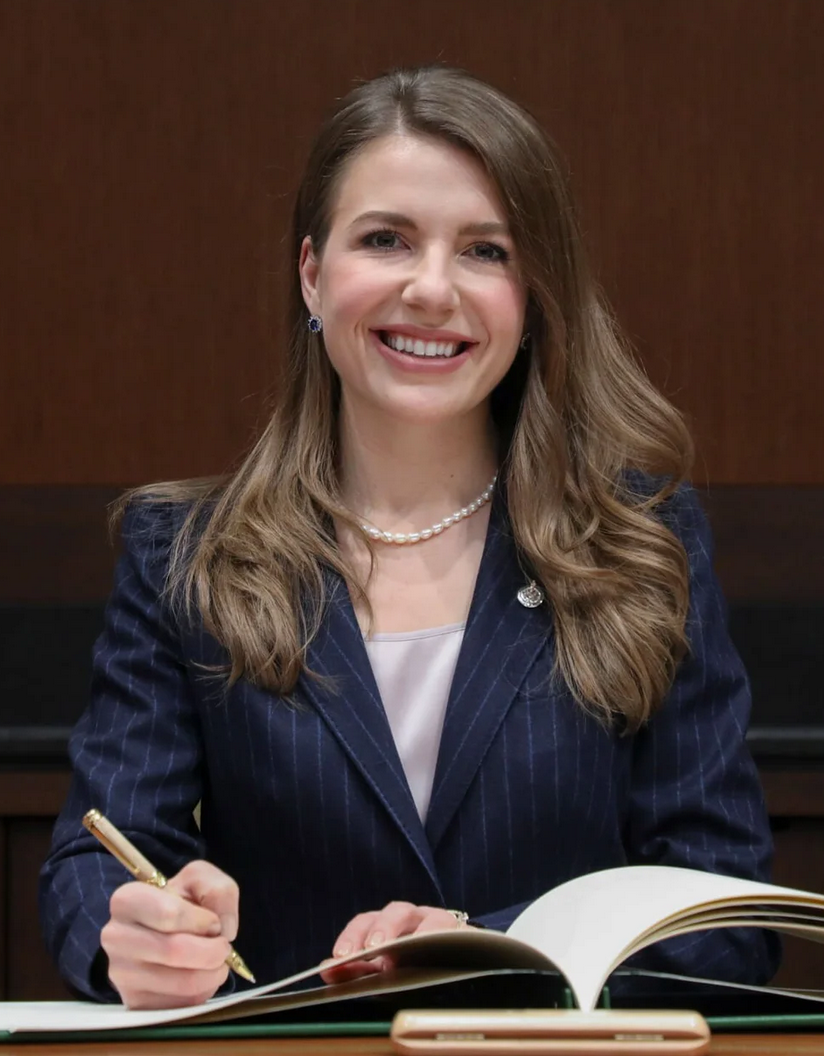
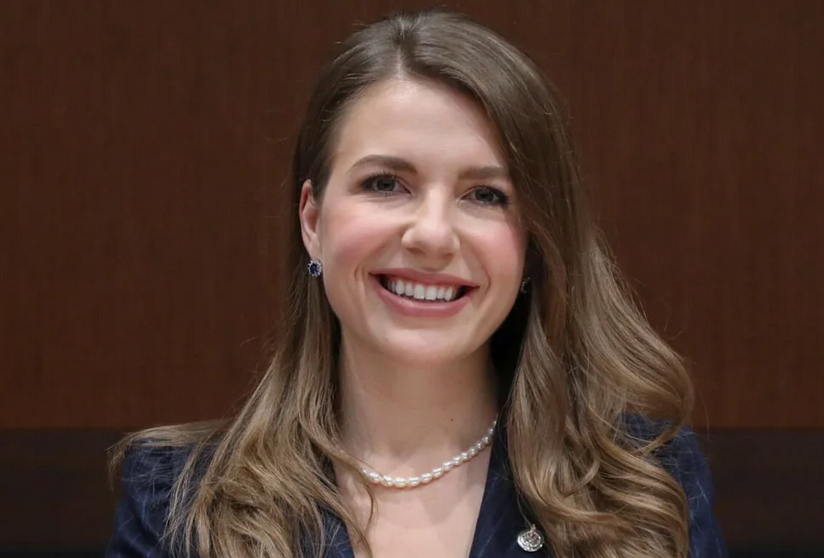
‘One of the greatest issues facing Canada's economy is the need for fundamental transformation to make Canada the most competitive business environment in North America, says Raquel Dancho.
/ MPRAQUELDANCHO.CA PHOTO
Canada pours billions of public dollars into research and development every year, but much of what gets built doesn't stay Canadian for long and that’s an economic sovereignty issue, says Conservative MP Raquel Dancho.
“We're researching and developing incredible things, developing incredible technology,” Dancho told Means & Ways. “But the problem is, we're not commercializing it, and what is being commercialized is often through foreign firms. So we're not retaining that intellectual property.”
Through programs like the SR&ED tax credits and tri-council university funding, the federal government channels significant public investment into research but has consistently failed to ask a critical question: what happens to that innovation next?
Dancho, the Kildonan–St. Paul, Man., MP who serves as the Shadow Minister for Industry, says the country should be asking, how are we retaining “that intellectual property so that we can have sovereignty over those ideas that we pay for, that were designed by beautiful Canadian brains in our universities and the private sector?”
An economic loss, and a loss of sovereign control
The pattern she describes is a familiar one in startup circles: a Canadian company develops a breakthrough product, scales up, and is acquired — typically by an American tech firm. The talent, the IP, and the long-term economic benefit all leave with it, which she says is an economic loss as well as “a loss in the long term for sovereign control.”
She highlights the lack of access to venture capital, suggesting Canadians invest more capital in the U.S. than in Canada. “That's a problem.”
Dancho argues Canada needs to change incentives for venture capital so that local and domestic investors are rewarded for keeping the money in the country. She pointed to Israel which claws back public R&D funding if the resulting IP leaves the country. Tax reform to incentivize domestic venture capital investment and to open up Canada's relatively risk-averse banking system is also needed, she said.
In Canada, the cultural and financial tolerance for risk remains low compared to countries like the U.S. which in turn deters the kind of bold innovation Canada needs to compete globally.
First elected to Parliament in 2019, Dancho has been reelected twice. She was raised on a fourth-generation farm in rural Manitoba and studied political science at McGill University before returning to the province to work as a researcher at a free-market think tank and later as a senior aide in the Manitoba Progressive Conservative government. Fluently bilingual, she previously served as critic for public safety, immigration, employment, diversity, inclusion and youth. She currently serves as the vice-chair of the House of Commons Industry and Technology committee.
From 2021 to 2023, she was voted as a favourite up-and-comer by The Hill Times and was a finalist for Maclean’s Rising Star Award. She is widely regarded as one of the most capable communicators in the Conservative caucus, with a sharp questioning style and an ability to zero in on gaps in government policy — a role that’s been met with more urgency given the geopolitical and trade uncertainty Canada faces.
The following Q&A was edited for length.
M&W: What do you think is the biggest economic challenge Canada is facing at the moment?
RD: The changing relationship with the U.S. For the last 10 years, we've had stagnant productivity growth. We've had our natural resource projects blocked. It's really been a lost decade. And then enter Trump 2.0 and completely upending, frankly, the existing framework of trade between the two countries. It has led to considerable disruption and thousands of job losses in the manufacturing sector. One of the greatest issues facing Canada's economy is the need for fundamental transformation to make Canada the most competitive business environment in North America and preferably in the Western world, so that we have companies that not only want to stay here and grow here, but come here, and that our innovation, our intellectual property, our startups, want to stay and expand in Canada as well.
M&W: In an op ed in The Hill Times recently you wrote that “innovation policy must strengthen domestic control over critical industries, strategic technologies and domestic value creation if we're to safeguard sovereign control over the Canadian economy.” Why is it important, especially given the geopolitical and trade uncertainty we're in right now?
RD: That's not only a lost opportunity for our economy, but is a concern for having sovereign control over critical industry technology that we're developing — so things in telecoms, agriculture, space and aerospace, AI, all different types of areas that would be deemed critical industries. I think that given the changing geopolitical landscape, Canada needs to do a better job of when we put public dollars behind things, we should also be putting that lens of, ‘Is this a critical industry and is it within Canada's interest, economically and security-wise, to ensure that that information, that that innovation, stays in Canada?’
“Canada needs to change incentives for venture capital so that local and domestic investors are rewarded for keeping the money in the country.”
M&W: During an opposition day motion you put forward, you said, “the tariffs the U.S. is putting on the Canadian auto sector are costing us thousands of jobs and many more to come are unfortunately likely.” What do you think the future of Canada's auto sector is, and can it recover given the damage that's already done?
RD: I think that depends heavily on what the Liberal government is able to deliver. So far, they've been able to deliver very little. … What we would do instead is we would cut the GST on all new Canadian-made vehicles. Broader economic policy reform that would incentivize businesses to stay here, including the auto sector [is also needed], so things like cutting the industrial carbon tax. It costs more money to make things with steel, aluminum, plastics, anything from a big manufacturing plant that has an industrial carbon tax on it, and so that's going to make our inputs more expensive. … We would support our existing auto sector, not try to manufacture an artificial EV supply chain, and we would make the business environment for autos and all manufacturing more competitive.
M&W: Canada, as you know, is allowing EVs in from China as a trade off for ag exports. Is this a fair trade and how will this affect the Canadian auto industry?
RD: I deeply appreciate the tariffs being lifted on some of our agricultural exports to China. That's very important. That being said, we absolutely are opposed to Chinese electric vehicles coming into Canada. There's two main reasons for that. One, they are a heavily subsidized industry. We are not competing apples for apples here. … It's frankly incomprehensible that given what's happening to our Canadian auto sector, that we would bring in a much cheaper alternative of car from a market that's heavily subsidized and controlled. The second thing is what we're hearing loud and clear from security experts: Chinese electric vehicles have the capability, for all intents and purposes, of being surveillance vehicles. … We passed a motion at the Industry committee to study the electric vehicle issue, notably the Chinese EVs, to hear a bit more from experts about what the threat analysis is of importing Chinese electric vehicles, and also the impact on our existing auto sector.
M&W: What is keeping you up at night?
RD: The lack of results from the Carney government. We are not seeing that transformational change that was promised. This legislative agenda has been very weak. On this front, his deliverables have been very weak. Canada is one of the most blessed countries in the world when it comes to critical minerals. We have nearly all, for example, of the NATO designated critical minerals. … We should be moving at lightning speed to approve more mines to approve and incentivize more processing and refining of our critical minerals, and beyond that, just natural resources in general. … Carney promised something very different. And yet we've seen one new project approved. And as you know, these projects take time. So that's kind of what worries me very much — the long-term trajectory of the Canadian economy and therefore, the standard of living in Canada. We have the solutions. We can make the changes needed to get us on the right track. I'm not seeing the results being delivered on that front.
M&W: You're one of 103 female MPs in the House of Commons. Do you think we need more women in parliament? How do we encourage more women to run and/or what advice would you give to young women who want to become MPs?
RD: Do we need more women? Yes. It's always important to have a good balance of perspectives. Women and men bring different strengths to the table, many similar strengths, but also different natural strengths. Whether it's at the committee level, whether it's in Parliament, whether it's just various opportunities to work together, decision making tables always benefit from having both perspectives. …Embracing positive evolutions in Parliament to ensure that it's a welcoming and supportive environment for people of all backgrounds is needed, and so I'm very proud of the women across all parties that are doing this job and having young kids. It is not easy. … You’ll never regret being an MP. You’ll never regret having kids. So if you want both, you can do it. Be realistic about the additional work it's going to take, that others won't have to do, but it's worth it for sure.