A life on the docks: Megan Owen-Evans on leading Neptune Terminals into a new era
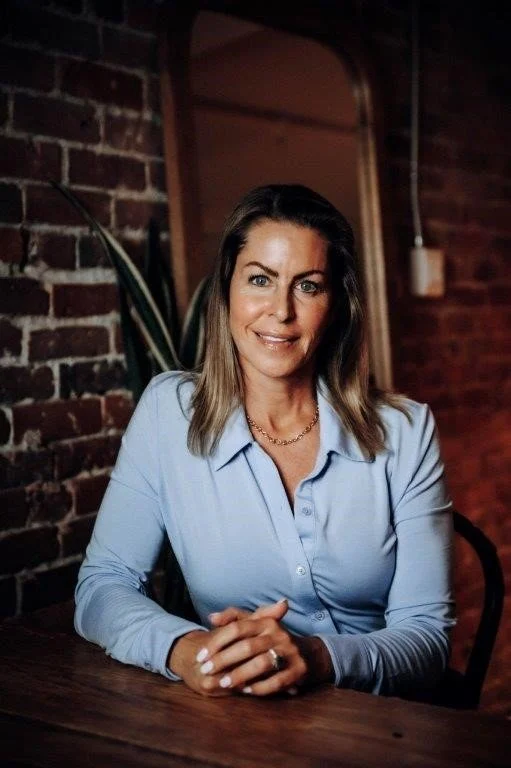
‘To stabilize our economy, we need to focus on building new partnerships by leveraging Canada’s abundance of natural resources. We then need to reliably move these goods to market,’ says Megan Owen-Evans.
/ SUBMITTED PHOTO
Resilient supply chains, investment in infrastructure improvements to promote growth and labour stability are essential to economic growth, says Megan Owen-Evans, President of Neptune Terminals.
“The biggest challenge to our economy currently is trade uncertainty given the dynamic nature of trade agreements and tariffs,” Owen-Evans told Means & Ways, adding that tariffs and trade barriers introduce market inefficiencies and unpredictable shipping patterns that complicate supply chain planning and logistics. “To stabilize our economy, we need to focus on building new partnerships by leveraging Canada’s abundance of natural resources. We then need to reliably move these goods to market.”
Neptune is owned by two bulk commodity shippers: Canpotex Bulk Terminals Limited and Elk Valley Resources (EVR). Neptune currently handles over 23.5 million tonnes of bulk products annually, with ongoing terminal and rail improvements set to increase that capacity to 30 million tonnes.
Owen-Evans, who’s served in her current role since October 2023, is also the co-chair of the Waterfront Diversity, Equity and Inclusion Council, a role she says is particularly important to her “as a woman who has advanced her career in an industry where women count for only 10% of the workforce.”
She got her start in the industry as a labourer at Cascadia Terminal in 1997. She was a member of the Grain Workers Union for 10 years before being promoted to a supervisor at Pacific Terminal. After obtaining a business degree, she became Operations Manager at Pacific Terminal and eventually moved back to Cascadia as General Manager. Prior to joining Neptune, she was the President of Fibreco.
“I am one year shy of completing 30 years on the Vancouver Waterfront and have been fortunate to have some amazing mentors that helped me get to where I am today,” she says.
At a time when the government is looking for new international trade partners in order to strengthen the country in the face of what Prime Minister Mark Carney calls a “rupture,” Owen-Evans’ job becomes particularly vital.
“It’s time to band together and unite as a nation,” she says. “To meet the mandate of doubling trade to non-U.S. countries in the next decade will require cooperation, collaboration and coordination across party lines and across provinces. We need to identify what the world needs, determine where we have the resources to meet that demand and align on projects that will directly support that growth.”
The following Q&A was edited for length.
Why are stable supply chains important to economic growth and prosperity?
Our shareholders’ customers count on us to reliably deliver on our commitments. It’s critical to them to have the right product, in the right quantity, at the right time. At the terminal we have finite capacity and empty berth time cannot be recovered, just as time without trains to unload cannot be recovered. Our supply chains for both Canpotex and EVR are well-oiled machines that move products from mines to the terminal and then to overseas markets. All parts must work together to create a steady flow in order to maximize export volumes — and that’s essential if we hope to realize the growth and diversification the federal government has mandated.
“The biggest challenge to our economy currently is trade uncertainty given the dynamic nature of trade agreements and tariffs”
What is the private sector's role in ensuring stable supply chains?
Market access is critical for our resources, and our shareholders have invested significantly in our terminal assets to increase capacity and resiliency. EVR invested over $1.2 billion to double steelmaking coal capacity and Canpotex is investing $500 million to unlock further potash capacity — both also adding resiliency by way of those investments. We must also continue to work closely with stakeholders such as the railways and the Vancouver Fraser Port Authority to ensure they have the necessary aggregate data to forecast growth through the region and can respond by investing in the right infrastructure to remove potential bottlenecks and prepare for future growth.
What's keeping you up at night?
We are just one piece of some very complex supply chains, and our growth can’t be in isolation. We need to work together as a nation and ensure we move quickly to build critical infrastructure and build in resiliency across all supply chains in order to meet the demands of the next decade and beyond.
Why do you think there are so few women in the industry? How can we attract more diversity to the sector?
The waterfront has always been known as a male-dominated and somewhat rough place to work and frankly that’s not very appealing to many women. I also don’t think we’ve done enough historically to get the word out about the great and diverse career opportunities that exist on the waterfront. I think by creating inclusive workplaces that are welcoming to women and by better educating people on the career potential that awaits here, we will see more females enter the industry. And as more women are represented in leadership roles, other women will realize what is possible and hopefully become curious about this sector and its potential for their own careers.
You're also a two-time living organ donor! Are you comfortable talking about that and why it was important to you to donate?
I believe our purpose in life is to make connections and to be as positively impactful as we can be. Donating a kidney and two-thirds of my liver felt like the most direct way to make a difference in the lives of others — and both experiences have been extremely rewarding for me. Our bodies have this amazing capacity to heal and adapt, which I’ve experienced twice over. I try to educate people about the donation process as much as I can in the hopes others may consider living donation.