Steely resolve and a hockey mom’s touch: Janice Charette’s trade toolkit
She has run Canada's public service twice, represented the country in London through the upheaval of Brexit, and counselled prime ministers through some of the most complex policy challenges of a generation. Now, Janice Charette has been handed what may be the most consequential assignment of her nearly 40-year public service career: leading Canada’s trade negotiations with the United States at a moment of historic economic uncertainty.
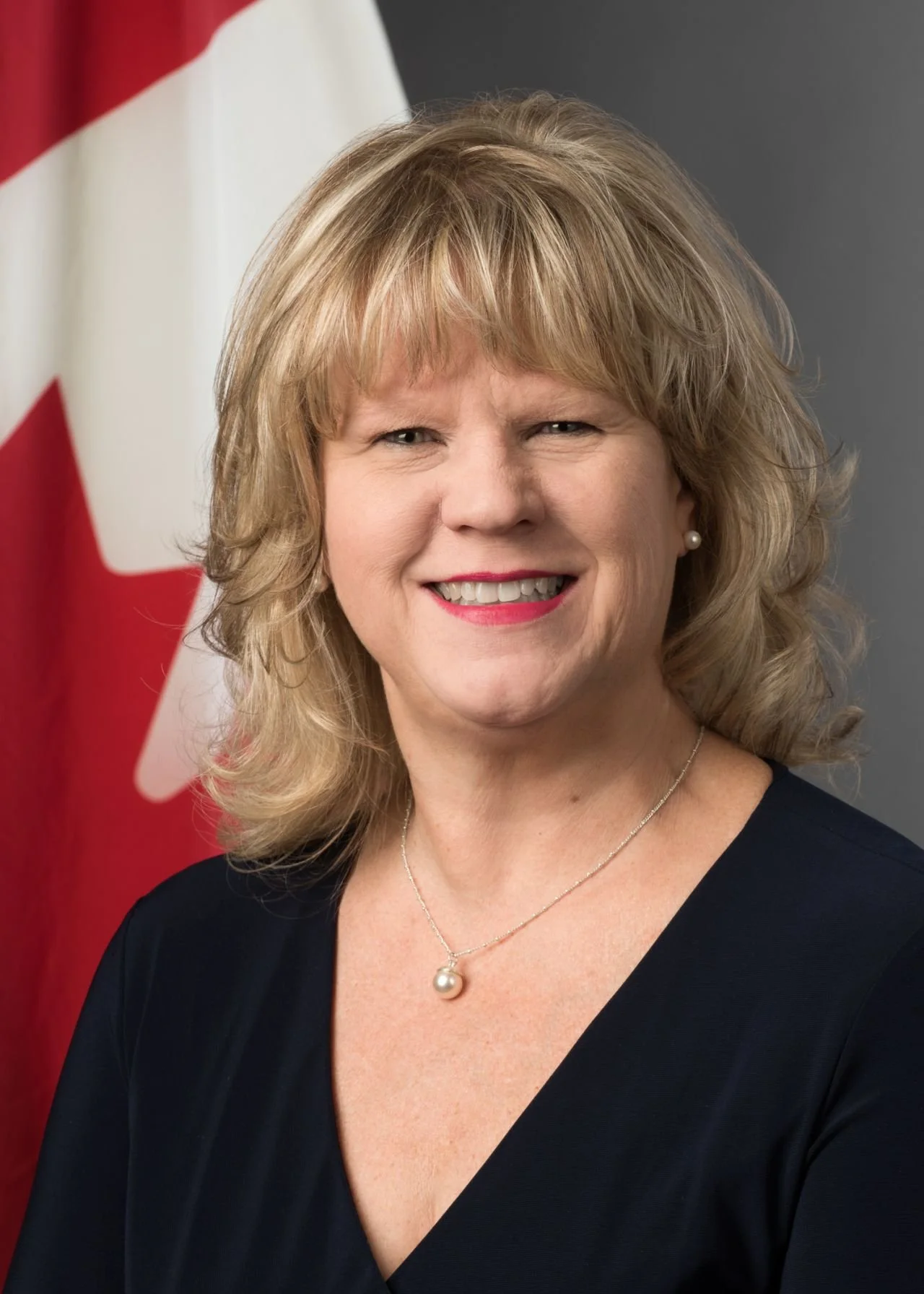
Charette is one of only two officials ever to have served twice as Clerk of the Privy Council and Secretary to the Cabinet. She's also one of only two female PCO Clerks / GOVERNMENT OF CANADA PHOTO
Prime Minister Mark Carney announced on Feb. 16 that Charette will serve as Canada's next Chief Trade Negotiator to the United States, working alongside Ambassador Mark Wiseman ahead of the mandatory review of the Canada-United States-Mexico Agreement (CUSMA), set to begin July 1, 2026. The agreement, which came into force in 2020 for a 16-year term, underpins more than $3.5 billion in daily cross-border trade and has served as Ottawa's primary shield against the sweeping tariffs imposed by the Trump administration — with more than 85% of Canadian merchandise exports crossing tariff-free under its provisions, the government's press release said.
By splitting the roles of ambassador and chief trade negotiator — tasks previously held simultaneously by outgoing envoy Kirsten Hillman — Carney is signalling that the CUSMA review is “a high-stakes and whole-of-government effort,” Christopher Hernandez-Roy, senior fellow at the Center for Strategic and International Studies in Washington, told The Globe and Mail.
Compass Rose Chief Strategy Officer and Managing Director Marci Surkes said while Hillman was uniquely positioned to do both jobs, the roles are generally separated. The ambassador's job is better suited to public diplomacy — traveling across the U.S., building alliances with governors, senators, and congressional members — rather than being tied down in detailed trade negotiations, Surkes told Means & Ways.
“It's hard to find these unicorns in terms of all of the roles,” she said. “In this case, two strong, capable people in different tracks, having to work obviously in close concert seems to make a lot of sense.”
Rarefied public-service company
Charette is one of only two officials ever to have served twice as Clerk of the Privy Council and Secretary to the Cabinet — the most senior position in Canada's public service and the principal public service advisor to the Prime Minister (the first was Michael Pitfield who served under Prime Minister Pierre Trudeau from 1975 to 1979, and again from 1980 to 1982). She's also one of only two female PCO Clerks (the first was Jocelyne Bourgon who served from 1994-1999). Charette first held the role from 2014 to 2016, returned as Interim Clerk in 2021, and served again until her retirement in June 2023.
Her time in the public service included leadership roles in eight departments covering a span of issues such as skills development, labour markets, immigration, citizenship, social security, health, and justice. Her early career included work in finance, privatisation, and federal-provincial-territorial relations, as well as in the Prime Minister’s Office.
During her short-lived retirement, she was Vice-Chair of the Rideau Hall Foundation, a member of the Board of the Institute for Research on Public Policy and a strategic advisor at the Business Council of Canada. She also previously worked in the private sector from 1996 to 1999 as Principal at Ernst & Young, and then as Director of the Transition Team for the start-up of the Canada Pension Plan Investment Board.
Those who have worked with her say the combination of experience is precisely what the moment demands.
“There are probably very few Canadians who bring the mix of experience to the negotiating table that Janice brings to bear at this time,” said Surkes. “Over the course of a decade's long tenure at the most senior ranks of the public service, she has been privy to a series of very important negotiations for Canada.”
‘No stranger to negotiation’
Surkes, former executive director of policy and cabinet affairs in the Prime Minister’s Office, pointed to Charette’s previous role as the High Commissioner for Canada in the United Kingdom from 2016 to 2021 — a posting that put her on the front lines of the post-Brexit realignment of British trade relationships, including the eventual UK accession to the Comprehensive and Progressive Agreement for Trans-Pacific Partnership. “She’s no stranger to negotiations,” Surkes said, adding Charette deeply understands the machinery of government and has the trust of Carney, Canada-U.S. Trade Minister Dominic LeBlanc and current PCO Clerk Michael Sabia.
In addition to a “steely resolve,” Charette also has an “immense ability to charm and understand people,” Surkes said, adding that those qualities are “paramount for a negotiator.”
In addition, Charette is plugged into her community, is a proud hockey mom and “has a good sense of I would say the Canadian spirit and has never lost that touch,” says Surkes. “Despite the roles that she has held and when she's represented Canada, she always brings a real grounded perspective to the table.”
Former Alberta premier and Harper-era cabinet minister Jason Kenney called her “one of Canada's most capable public servants,” who is “no nonsense, results-oriented, highly trusted.”
“There are probably very few Canadians who bring the mix of experience to the negotiating table that Janice brings to bear at this time.”
Charette herself anticipated the shape of the challenge ahead. In a March 2025 webinar hosted by the Institute for Research on Public Policy — months before her new appointment — she offered a clear-eyed diagnosis of what Canada was navigating.
“In the current moment, we have to get through a big door, and the big door is, right now, the tariff door,” she said. “And if we're able to get through the tariff door then I think, actually, we can have extremely productive and extremely constructive conversations around a whole host of areas where we have shared interests, energy and critical minerals.”
Proud hockey mom
She was also candid about the uncertainty ahead: “The near-term challenge is the fact that we are in a moment of political uncertainty. Is that paradigm out the window? What does the new paradigm look like?”
In announcing her appointment, Carney said Charette has “extraordinary leadership” and is committed to “advancing Canada's interests,” including “a strengthened trade and investment relationship that benefits workers and industries in both Canada and the United States.”
Surkes described her as “the epitome of a competent leader. She is not bombastic, there is no hyperbole. It is low-key, get your job done.”
“Implementation is core to who she is, how she works. She is someone who brings teams together, and along. She is widely noted as somebody whom generations of public servants have considered a mentor and for someone who has held roles as high-ranking as she has to take that time to really invest in people around her, and quite frankly, much junior to her, is testament to how she leads. She identifies people's strengths, and she recognizes that she can't get her own work done if she doesn't have strong people supporting her. So it's very much a grassroots-style leadership.”