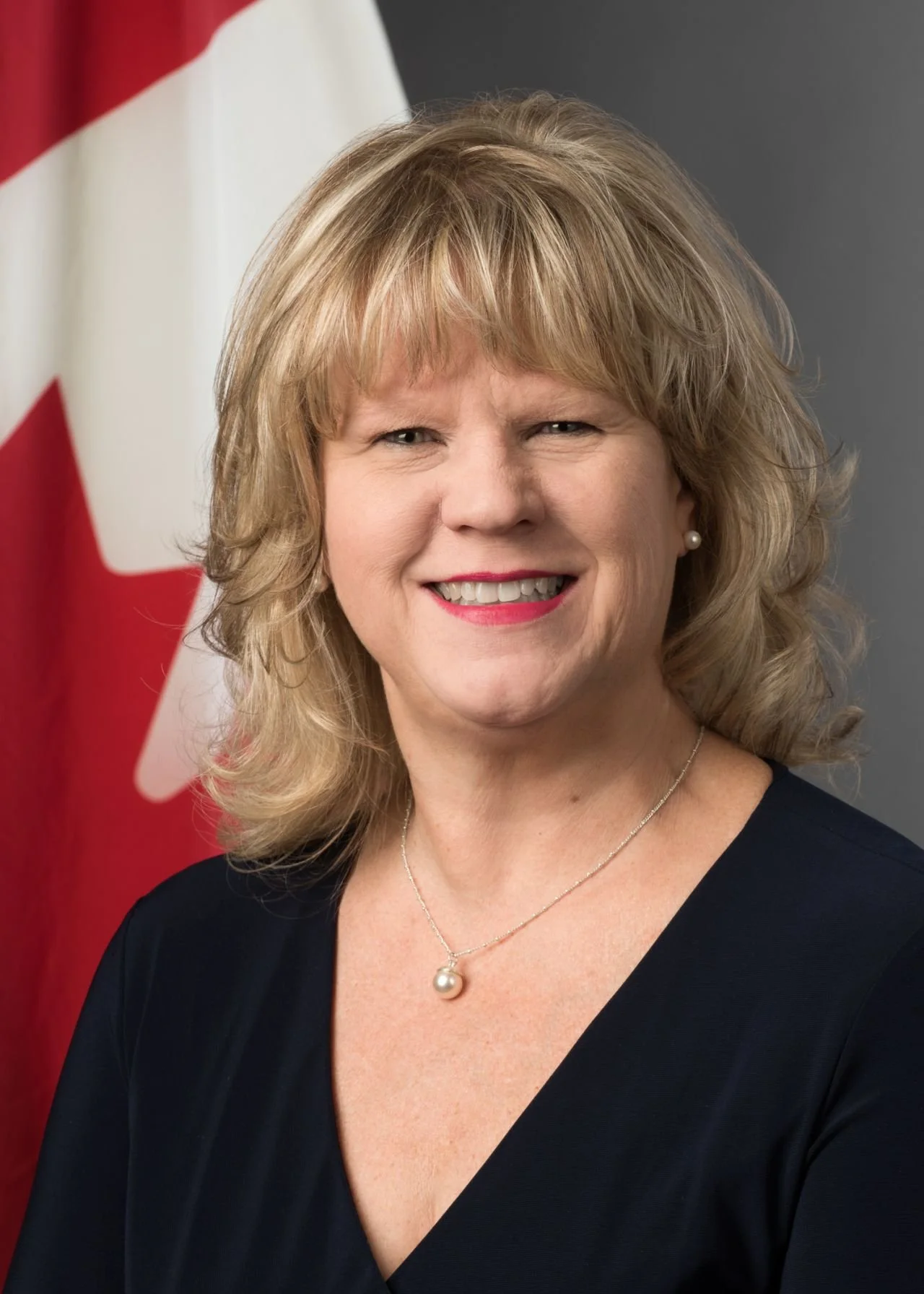
How Shannon Sterling is turning rivers into carbon removal machines

‘By enhancing the natural capacity of rivers to draw down carbon, our solution has the potential to play a pivotal role in our arsenal against climate change,’ says Shannon Sterling.
/ CARBONRUN PHOTO
For Dr. Shannon Sterling and her team, the discovery that restoring rivers could also remove carbon dioxide from the atmosphere was an accident.
Sterling, co-founder of CarbonRun, a Halifax-based startup developing river-based carbon removal technology, examined watersheds across Nova Scotia and found aluminium levels in many rivers remained dangerously high due to the lingering effects of acid rain. This posed further risks to local aquatic life, whose populations had already faced rapid declines.
Scientists have long added limestone to rivers to restore ecosystems damaged by acid rain. The process, known as “river liming,” neutralizes acidity, which improves conditions for fish populations. But, when undertaking the standard approach, Sterling’s team noticed that dissolving the limestone into rivers also consumed carbon dioxide.
The chemistry behind the process is deceptively simple, she said: when limestone reacts with carbon dioxide in river water, it forms bicarbonate, a stable molecule that remains dissolved in the water and flows downstream into the ocean, where carbon can be stored for thousands of years.
Frontier’s agreement with CarbonRun
If scaled up, the technology could remove tens of thousands of tonnes of carbon dioxide in the coming years. CarbonRun aims to eliminate roughly 55,000 tonnes of emissions from 2025 to 2029 through a $25.4 million deal with Frontier buyers, including global giants like Stripe, Shopify, and McKinsey Sustainability.
Sterling, who serves as CarbonRun’s chief operating officer and chief scientific officer alongside her responsibilities as an associate professor in the Department of Earth and Environmental Sciences at Dalhousie University, is careful to emphasize that carbon removal technologies are only one part of the climate equation.
“This is not meant to replace decarbonization,” she told Canada’s National Observer in 2024. “This is meant to aid us in meeting our targets to decarbonize. And as all of this came together, we absolutely saw [the creation of] a company as the best way forward.”
Though Sterling’s work remains grounded in Nova Scotia, CarbonRun saw international success through a collaboration in Norway last month. Working on the Kvina River in the southern part of the country, Sterling and her team applied their river liming approach as a part of a pilot project aimed at both restoring river ecosystems and capturing carbon.
The project marked a milestone for the emerging field of river-based carbon removal, as CarbonRun became the first company in the world to earn verified carbon credits for carbon removal through river liming.
Sterling believes the technology could help unlock new, swift and quantifiable climate solutions, all while delivering tangible ecological benefits and empowering local communities, she wrote in a 2023 statement.
“By enhancing the natural capacity of rivers to draw down carbon, our solution has the potential to play a pivotal role in our arsenal against climate change.”