In one RBC scenario, Canadian automakers are shut by 2040
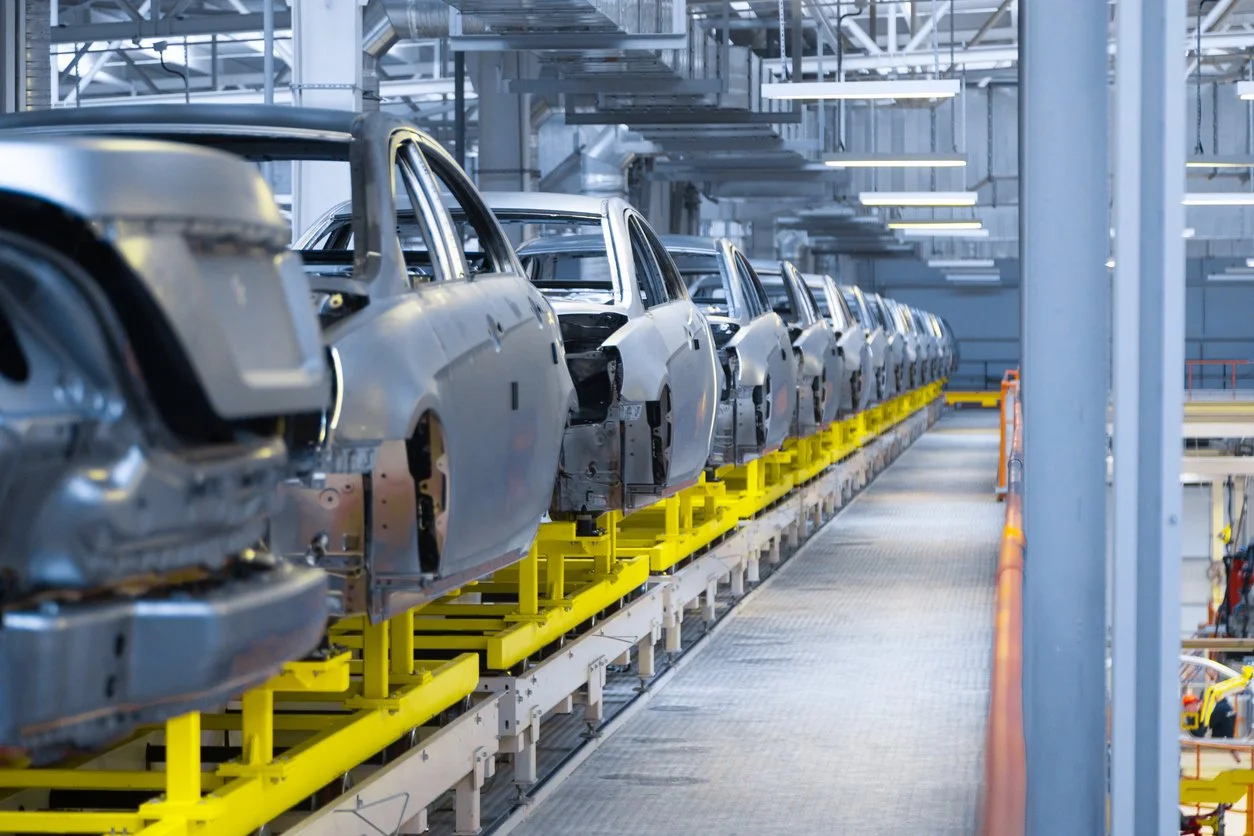
‘Canada’s auto industry is at the centre of a storm,’ a new RBC report says. / ISTOCK PHOTO
Canadian automakers could grow auto production to two million vehicles annually by 2040, or they could all be shut by then, according to a new report by RBC, which lays out several potential scenarios for the industry.
Canada’s auto sector employs 125,000 workers, contributes $17 billion in GDP, generates more than $100 billion in shipments and accounts for roughly 10% of Canadian exports. Yet the industry faces pressure from U.S. protectionism, slowing electric vehicle adoption, the rise of software-defined vehicles and growing competition from China.
According to the report, Canada stands at “an inflection point within the North American industry.” President Donald Trump’s efforts to repatriate manufacturing capacity through tariffs threaten supply chains that have linked Canadian and American factories for decades. In the report’s most pessimistic scenario, all Canadian auto assembly plants could close by 2040.
To achieve the most optimistic scenario, governments must secure tariff-free access to the U.S. market, deepen North American supply chains, invest in critical minerals and clean power, and compete for higher-value activities such as software, engineering and artificial intelligence.
"Canada’s auto industry is at the centre of a storm," RBC said. "Ultimately, Canada must decide how it positions itself in a transformed global auto system. With US$735 million in annual R&D spending, auto manufacturing is a high-tech, high-value industry with substantial spillover benefits across sectors.”
The report outlined several of Canada’s competitive advantages — skilled labour, clean and affordable power, and award-winning assembly facilities — that position the country well to capture value across the supply chain. “Success depends on maintaining the competitiveness of the ecosystem of suppliers, services, and technology providers."
Policymakers must broaden their focus beyond assembly plants to the technology and innovation embedded in modern vehicles, the report says.
Fast lane or the road to ruin?
“Industrial ecosystems, not individual firms, bestow sustained competitive advantage,” it says, warning that Canada’s future prosperity in the sector will increasingly depend on “the amount of value captured within each vehicle.”
The most optimistic scenario, described as the “Fast Lane,” envisions Canada preserving duty-free access to the U.S. market while leveraging its strengths in critical minerals, clean electricity, engineering talent and advanced manufacturing. Under that scenario, vehicle assembly would rise from about 1.3 million units today to two million by 2040.
The report argues that governments should pursue a North American critical minerals pact, coordinate tariffs on imports from outside the continent, expand electricity generation and charging infrastructure, and invest in shared research and testing facilities.
“The Fast Lane is narrow but navigable,” the report says.
Beyond manufacturing volume, the study highlights a deeper challenge: Canada captures less economic value from each vehicle it assembles than the United States, and the gap is widening. As vehicles become increasingly dependent on batteries, chips, sensors, connectivity and software, more value is migrating away from traditional assembly operations.
Tech platform versus manufacturing industry
“The auto industry has become a technology platform, not just a manufacturing industry,” the report states.
That shift creates both risks and opportunities. While EV adoption has slowed following the rollback of consumer incentives, technological change in software, autonomy and AI is accelerating. The report notes that automakers are struggling to align long-term capital investments with rapidly evolving technologies.
At the same time, China’s emergence as the world’s largest automotive producer poses what the report describes as “the most significant long-term threat to North America’s auto industry.” Chinese manufacturers have rapidly gained global market share through lower-cost production and increasingly sophisticated technology.
Canada should use its domestic market more strategically, the report says. Only Americans buy more vehicles per capita than Canadians, yet roughly 90% of vehicles sold in Canada are imported.
“Market access is a powerful, underutilized asset,” the report says. Policymakers could link access to Canadian consumers with commitments in manufacturing, research and development, software development, testing and certification.
Preserving the broader industrial ecosystem that connects assembly plants with suppliers, engineers, software developers, steel producers and research institutions is essential, the report says.
“Auto manufacturing is not just an industry,” the report says. “It is an ecosystem anchored by assembly. Remove the anchor and lose the density required for industrial dynamism across advanced manufacturing.”