‘We need to very aggressively fight for Canada,’ says Poilievre
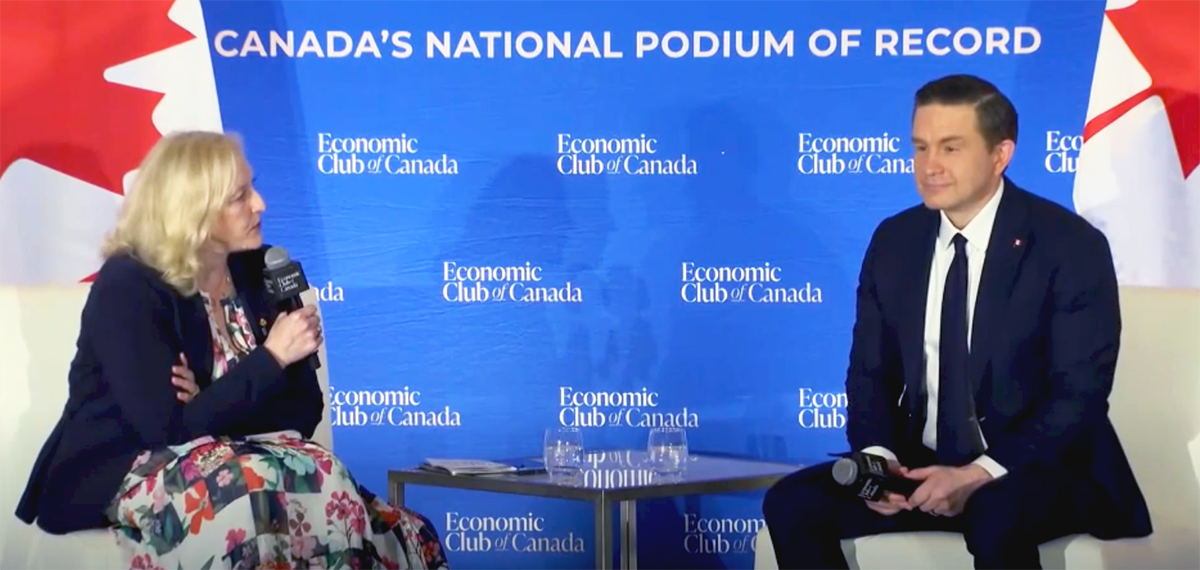
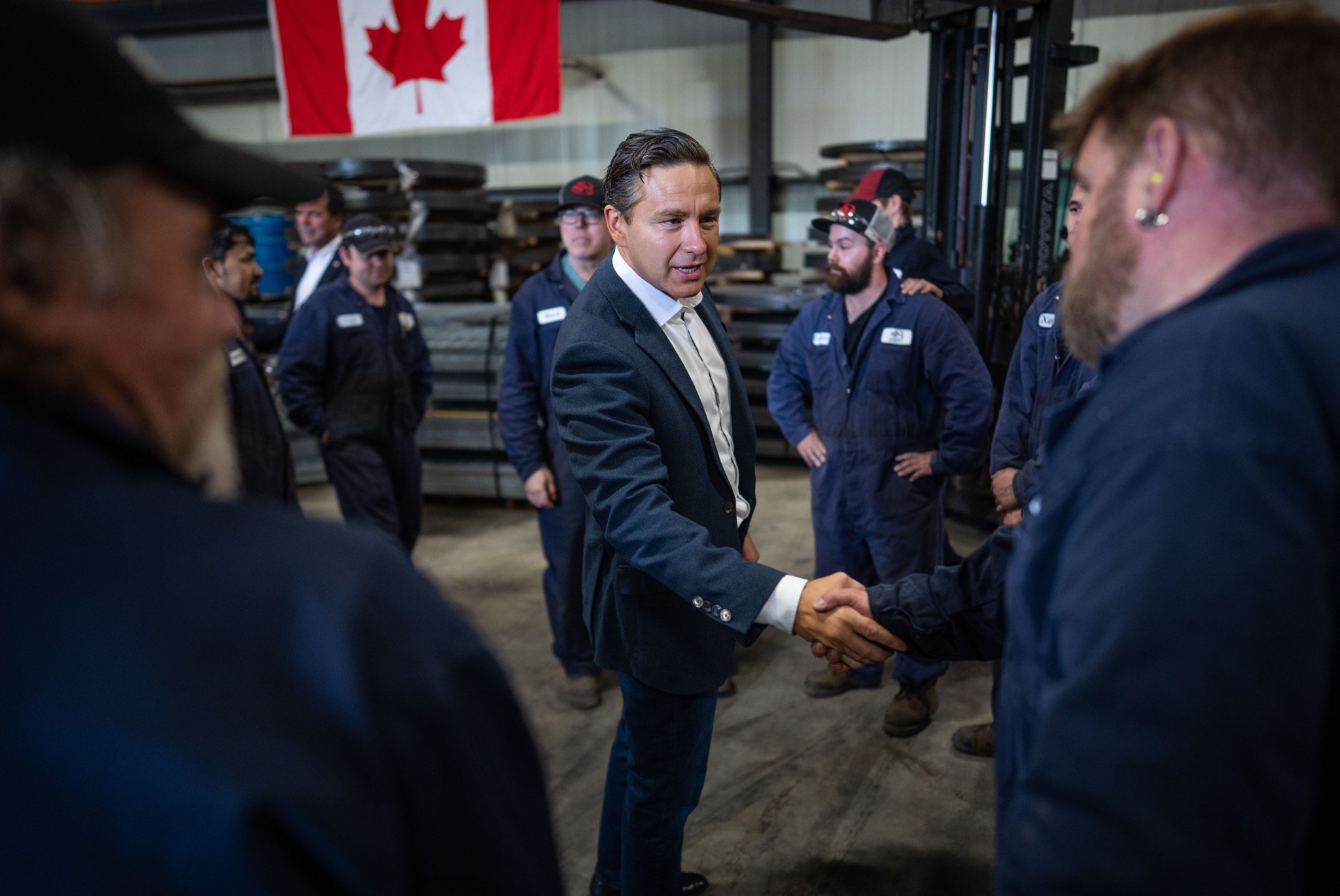
‘We have to make the case to the American people about the enormous benefits that go to them by having us as their northern neighbour,’ says Conservative Leader Pierre Poilievre, pictured with CIBC Vice-Chair Lisa Raitt. / SCREENSHOT
A Conservative government would create the conditions for “unbreakable leverage” in Canada-U.S. trade talks to protect domestic jobs and economic interests, Leader Pierre Poilievre said Thursday at an Economic Club of Canada event.
“When we come to the CUSMA review, I would basically focus on building up our strength so that we have unbreakable leverage facing down the Americans across the border,” he said in a conversation with CIBC Vice-Chair and former Conservative minister Lisa Raitt. “My plan sees us build new leverage that we can use to get those tariffs knocked down. That is, I think, the most pragmatic way, because ultimately, I mean, we know this president is not going to do anything for us to be nice. We have to have unbreakable leverage, going into these talks. And the Conservative approach is to build unbreakable leverage.”
During a keynote speech ahead of the conversation, Poilievre announced Conservative policy proposals to:
Form an all-party committee to advance Canada's interests in the CUSMA review.
Create a strategic reserve of energy and critical minerals.
Develop a new tariff-free auto pact with the United States.
At the beginning of his speech, Poilievre said U.S. President Donald Trump's comments about Canada and trade are "wrong."
"Our trade surplus does not represent exploitation by Canada of the United States of America, quite the opposite," said Poilievre. "In fact, it is the result of us selling very good and very well priced below market-priced raw materials, which America then upgrades and turns into massive profits for its economy."
Poilievre also said Trump's comments about Canada becoming the 51st state were unacceptable. "It goes without saying there is zero chance of Canada ever being a part of the United States," said Poilievre, while maintaining that the Canada-U.S. partnership remains profoundly in the interests of both peoples and countries.
"Canada's prosperity and security are inseparable from a stable relationship with the United States, and that is why we should not declare a permanent rupture with our biggest customer and closest neighbour in favour of a strategic partnership for a new world order with Beijing," said Poilievre.
"Canada should talk and trade where prudent, but never make the mistake of confusing engagement with dependency. China is not a substitute for the United States of America," he added.
The Conservative leader argued that Canada’s trade diversification efforts should focus first on removing domestic barriers to exports. He noted Canada already has free trade agreements with more than 50 countries and that the main obstacle to trade growth is government policy that slows projects and restricts resource development.
He framed regulatory delays, high taxes and bans on energy exports as internal barriers that limit Canada’s ability to expand trade and build leverage abroad.
“The problem is not that these countries block our products from coming in, it’s that our own government blocks our products from getting out," he said.
Poilievre also linked affordability and national autonomy to a shared policy agenda centred on energy production, housing construction, military investment and digital sovereignty, arguing these pillars would strengthen Canada domestically and improve its bargaining position internationally.
Additionally, he repeated calls for eliminating carbon taxes, accelerating oil, gas and electricity development and prioritizing Canadian-made vehicles by removing sales tax on domestic production while cancelling EV rebates tied to foreign manufacturing. He also proposed faster permitting timelines, a “one project, one rule” system and the rapid approval of a pipeline to the Pacific, alongside the creation of a strategic energy and minerals reserve to improve supply security.
He argued Canada must modernize defence procurement, expand Arctic sovereignty and accelerate investment in military infrastructure and technology. He also called for stronger protections for Canadian intellectual property, including restricting foreign takeovers of sensitive technology and ensuring publicly funded innovations remain in Canada.
During the fireside chat with Raitt, Poilievre expanded on his ideas for the upcoming CUSMA review.
"I think we need to very aggressively fight for Canada in the United States of America. We have to make the case to the American people about the enormous benefits that go to them by having us as their northern neighbour," he said. "And I think in making those arguments, the political incentive will be there for Congress and even the White House to take a position that is in our interest."