Canada risks remaining a ‘feeder economy’ without productivity boost, says TD’s Fong

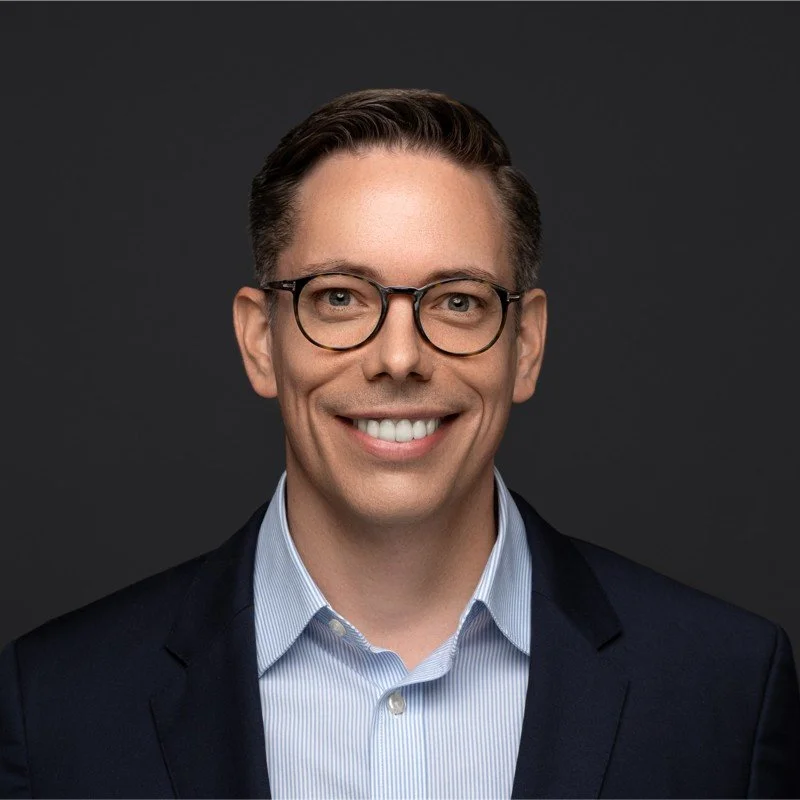
‘The underlying economic picture for many economies, notably the U.S. and Canada is one of resilience,’ says managing director of ESG research at TD Economics Francis Fong. / SUBMITTED PHOTO
It's too early to determine whether the federal government is steering Canada in the right direction because global uncertainty is making long-term policy decisions difficult to judge, says Francis Fong, managing director of ESG research at TD Economics.
“It's hard to judge right now whether or not we're headed in the right direction, because we are still in the midst of so much uncertainty,” Fong told Means & Ways.
He said recent policy changes under Prime Minister Mark Carney — including scrapping the federal fuel charge, placing less emphasis on climate policy, renewing focus on the energy sector and prioritizing major projects — reflect the current economic and geopolitical environment rather than a fundamental shift in Canada's long-term direction.
Efforts to strengthen east-west trade within Canada make sense given “an unreliable trading partner in the U.S.,” he said, while cautioning that today's policies could look very different if relations with Canada's largest trading partner improve.
“Were we to find that all of a sudden political stability returns and we find a much more amenable trading partner, I can imagine that homeostasis will pull everyone back to where we were before,” Fong said. “Until we can find some resolution of where we are, it's hard to judge whether we're heading in the right direction.”
He reiterated the greatest threats to Canada's economy are largely external.
“If you're a casual observer of things that are going on in the economy and geopolitically globally, there's lots to be concerned about — the Iran war, the AI boom potentially leading to future instability risks, the Russia-Ukraine war... There's a lot of tail risks and present risks that are presenting challenges for the economic outlook,” he said.
Fong, who previously served as chief economist at CPA Canada, said the economics profession has evolved significantly since the 2008-09 financial crisis. Where economists once focused primarily on traditional indicators such as GDP, employment and housing, interest rates, they now also closely monitor financial markets after the subprime mortgage crisis exposed how financial instability can trigger broader economic downturns.
“It wasn't until the subprime mortgage crisis that we understood the degree to which tightening financial conditions could create these really, really negative economic effects. So there was an evolution in our own industry of there being this new requirement for you to understand what you know about what the financial system was doing,” he said. “I would argue now that I'm in ESG, the next evolution of our industry is understanding the linkage between climate change and the clean energy transition, and therefore, economic growth, because there are risks that I think are very poorly understood, and ones that rear their ugly head.”
Despite those risks, he said, “the underlying economic picture for many economies, notably the U.S. and Canada is one of resilience.”
He spoke to Means & Ways about the risks to Canada’s economy, the need to address a Canadian brain drain, climate change taking a back seat in public policy and more.
The following Q&A was edited for length and clarity.
M&W: What's the biggest risk to Canada's economy today?
FF: Climate is one of these underlying long-term things that represent major risks of the economy. Is it the most clear and present danger today? Probably not, mainly because first of all, we in Canada are insulated relative to many other countries in the world from the effects of climate change, and that does go a long way in helping to insulate public discourse and identifying this as a core issue.
The biggest risk is still going to be our economic and trade relationship with the United States. Most of the negative effects that we are seeing today are emanating from all sorts of different political decisions that are happening in Washington. … The trade relationship and the ongoing USMCA negotiations are probably the biggest thing that could help alleviate some of the uncertainty that Canadians are facing and businesses are facing.
M&W: Short of getting a good deal, is there anything we can do about it, or is there anything businesses can do to address this environment?
FF: Our national conversation has changed very significantly over the last 18 months. We've literally gone from a point in time where we've never had to question our North-South orientation or our relationships to now talking about whether we need to reorient our entire economy more towards East-West. And that's a very unnatural thing for us to do. There are a lot of challenges that businesses are already navigating as a consequence of what we're seeing politically and we're not going to stop that train even after the U.S. finds a bit more stability in its political sphere.
M&W: In a recent report on Canada's silent brain drain, you wrote “Canada risks continuing to function as a feeder economy: producing world-class talent, but exporting the economic returns elsewhere.” Could you expand on that? Why does this matter, especially during this time of economic volatility?
FF: This is exactly the time to be talking about this specific issue. This is a long-standing issue. Brain drain has been a hot topic of policy conversation since at least the ’90s, if not earlier. … We're now in a greater fight to retain high-growth businesses, high-skilled labour, academics, scientists, engineers, entrepreneurs, all sorts of individuals that are necessary to see a highly productive economy that has a thriving standard of living.
We raised the spectre of brain drain, mainly because of the moment in time that we're in and the necessity of us taking more bold action to address it. We have seen major changes to tax policy here in Canada, and then also in the U.S. where the disincentive to invest here in Canada is as high as it has ever been, if not higher. … The trajectories of the Canadian and U.S. investment profile, particularly when you look at a per-worker basis, it's skyrocketing in the U.S., and it's flatlining in Canada. That metric, investment per worker, is a very strong predictor of, ultimately, productivity growth. … We need to see higher productivity growth. Otherwise, the kinds of cost-of-living and standard-of-living concerns that Canadians are broadly feeling very deeply right now are never going to get resolved.
The only levers the federal government … have to pull are relatively limited. You have growth in the innovation policy, you have tax policy, immigration, and helping the provinces fund things like healthcare and education. Those are your main levers to try to spur businesses to invest in an environment where they're feeling very uncertain.
Part of the reason we wrote this report is to highlight long-standing issues around the tax system, issues with retaining top talent and fostering entrepreneurialism on top of the disincentives that our tax system can create for people to want to start businesses or to work harder or to even stay in Canada relative to just going to the U.S. and seeing a high return for either your labour or your business.
M&W: As you mentioned, we've been talking about a brain drain as a country for decades. You also wrote “The core challenge is not in attracting world-class talent, but in anchoring that talent within its borders to build, scale, and lead globally competitive firms at home.” How do we overcome this challenge?
FF: There's no simple answer. I think this is the perennial challenge that Canadian policymakers have faced for generations. We are a small, resource-based open economy. We are subject to the changing winds of global economics and trends therein, and the number of levers that governments have to pull are relatively limited.
We could talk about all sorts of issues related to the specific issue, and it can relate to everything from the relative lack of venture capital and medium-term and patient capital, what often people refer to as the capital stack, to help entrepreneurs start businesses and grow them. We are probably challenged with relatively high marginal, personal and business tax rates that kick in at lower levels of income relative to our peers in the U.S. … We could talk about our post-secondary education system and funding to make sure that we have the highest possible trained talent pool that can help create and support business growth. We could talk about internal trade barriers, and the way in which we can grow our domestic market because at the end of the day, we are a small market.
At the end of the day what we're hoping for is a more competitiveness-oriented mindset among policymakers. We're not going to see this in a single session of Parliament. That is not going to happen. … We're in a moment in time where the risk is greater than ever, that we lose our entrepreneurs potentially permanently. … So the need for us to tackle this issue is even greater.
M&W: The government just released the AI strategy and adoption is one of its top priorities. Does the strategy meet the moment we're in and how do you think this will impact talent and workers and the economy at large?
FF: We would need to see more commitment on the part of government to help address some of the underlying gaps that we see one of which is, how do we incent investment to actually arrive here in Canada to create that data centre capacity and two, how do we power it? We wrote a couple of reports recently about the gaps between our AI data centre aspirations and our actual grid capacity. Alberta is sort of the epicentre of this, given that they have perhaps the most ambitious plan to try to locate data centre capacity in Canada and they have committed to, for example, powering those things with as an example on-site, natural gas generation. That's not a slam dunk, despite being a major natural gas producer, because we do not produce natural gas infrastructure. We import those things like turbines, and there's major supply chain shortages of those core components, which means there's a role for renewables to play a strong role in helping power those data centre ambitions, something that Alberta is very much used to, given that they were the center of renewable capacity emissions for many, many years.
M&W: What is keeping you at night? Are you hopeful that we can address both climate change and the economy at the same time?
FF: The way in which climate policy has taken a backseat to the challenges that we're facing today that are more obvious, that's not been positive for trying to find that balance, but by the same token, there are still things to be positive about. When you look at the clean energy transition as an example, the role that solar and batteries are playing in grids across the world … it is by far the cheapest form of new electricity, without a doubt. The degree to which China's extraordinarily oversupplied market is contributing to downward pressure on those prices through technology and trade diffusion alone, there's still things to be optimistic about. The fact that we are not unified on this, and in fact, you know, public perception or discourse around climate change is going in the opposite direction, those things I think, are really bad. At the end of the day, what we need is adoption — adoption of electric vehicles, adoption of solar, public support for decarbonizing heavy industry.