Markets are ‘absolutely risk-on,’ says RBC’s McKay
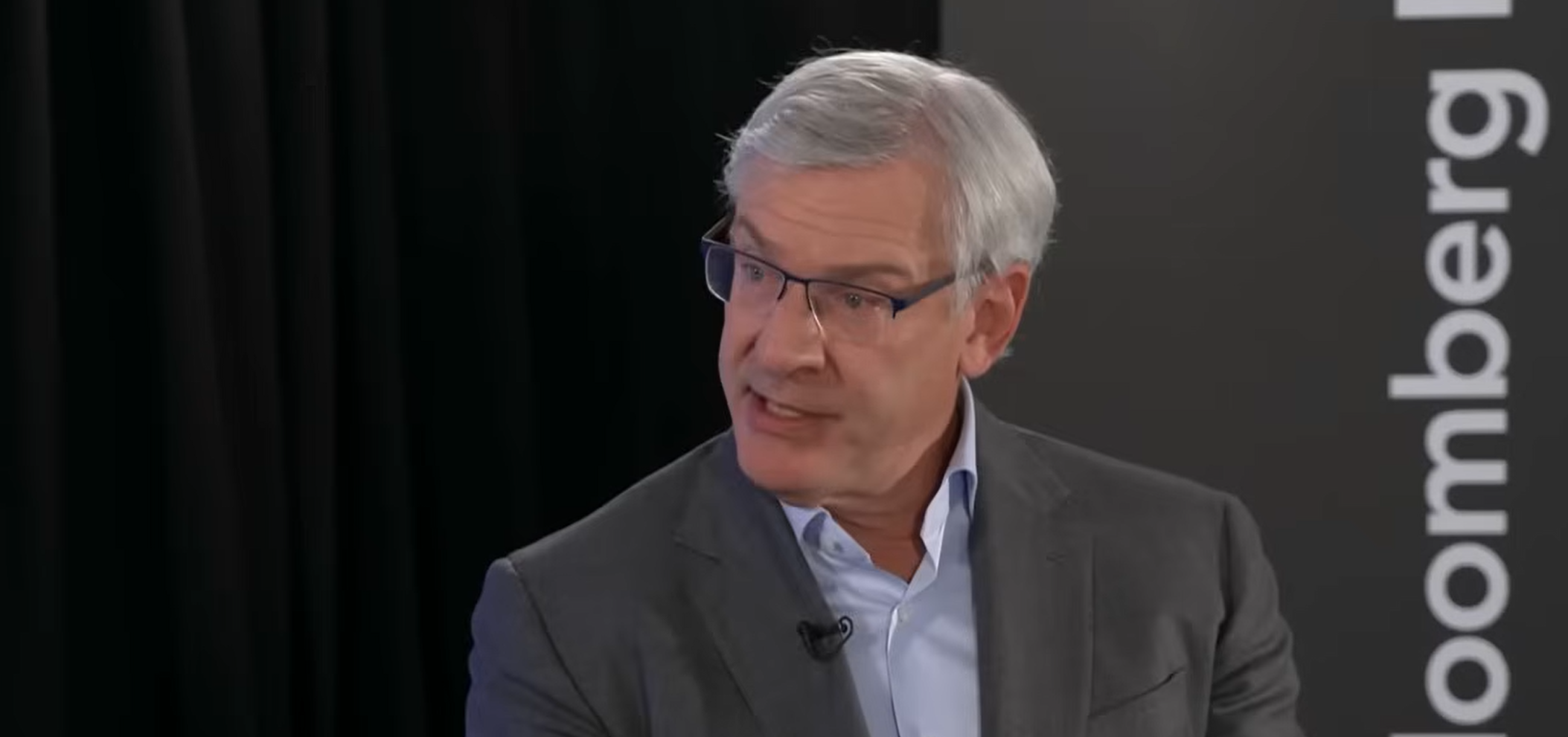
‘We could be a protein superpower. We've doubled our current capacity to grow food, particularly canola and wheat, and we think we can export more of that,’ says RBC President and CEO Dave McKay. / SCREENSHOT
RBC President and CEO Dave McKay said there’s an enormous appetite among investors to take risk, and the federal government’s push to diversify trade away from the United States is creating an “unprecedented opportunity” to grow Canada’s economy.
“There’s a real appetite to take risk,” McKay said in a recent fireside chat with Bloomberg’s Lisa Ambramowicz that was broadcast on YouTube. “We see that in Canada, you see that in the United States. It's absolutely risk-on right now.”
McKay highlighted Canada's agrifood sector as a leverage point for investors. “We could be a protein superpower. We've doubled our current capacity to grow food, particularly canola and wheat, and we think we can export more of that.”
McKay drew attention to value-added agriculture as a lucrative opportunity, and said RBC is considering investing in operations that leverage these processes. “We're looking seriously at our next investment in a protein plant, lentil-based protein with an innovative tech story on how to extract that protein out of lentils with off-take to Asia,” McKay told Ambramowicz.
In its 2019 report titled, Made in Canada: Growing Canada’s Value-Added Food Sector, the Senate defined value-added agriculture as “the production techniques and processes that add economic value to a raw agricultural product,” particularly food products. This process can lead to dramatic returns for farmers and investors. When one tonne of peas is processed into starch, protein and fibre, it generates more than 10 times the economic value than the harvested product alone, according to Protein Industries Canada.
New opportunities for Canadian investors amid geopolitical turmoil
In addition to maintaining trade with the U.S., “Canada is looking for more partners and wants to expand and diversify its economy,” said McKay, who spoke to Ambramowicz on June 16 from Bloomberg’s Toronto bureau. “That creates prosperity, that creates a greater ability to pay our own way.”
Pointing to the proposed West Coast Oil Pipeline, McKay noted that appetite for risk is growing among North American investors, especially as geo-political conflict exposes vulnerabilities in the nation’s energy supplies.
“There's a real focus on technology, without a doubt,” he said. “When we talk about building new pipelines, we talk about building rare earth mineral capability, we talk about exporting more food, the capital flow is very interesting, strong.”
Financial support needed
Despite this landscape, when asked about Canada’s ability to support domestic start-ups, McKay said the nation is “short” on scaling capital and heavily reliant on the U.S., leading companies to move abroad. He noted 70% of growth capital came from the U.S. “We have to put more equity into these companies, so they can scale here,” he said.
According to the National Angel Capital Organization (NACO), which represents 4,000 angel investors across the country, Canadian startups raise 40% less capital than similar U.S. firms and take more than five months longer to close financing rounds.
For Canada to compete on a global scale, it needs to build on its successes with previous start-ups and leverage its intellectual capital, said McKay. “We need [start-ups] to scale into larger companies and create that flywheel effect that you've seen with Shopify and BlackBerry and OpenText.”