Thinking beyond pipelines and minerals

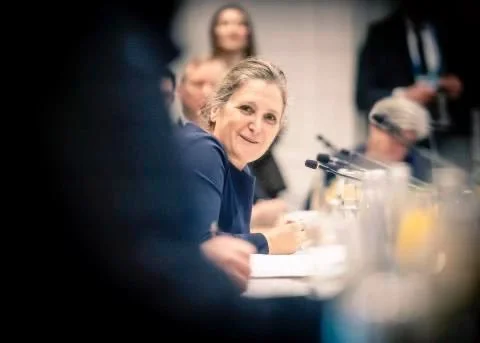
‘Let's look for practical changes that take us closer to a country that is fair and prosperous and competitive,’ says Canadian Tax Observatory CEO Heather Scoffield. / SUBMITTED PHOTO
With weak GDP and economic growth under pressure, it’s time to think about how to use tax policy to drive prosperity, says Heather Scoffield.
“We really do need to do something about growth,” Scoffield, CEO of the Canadian Tax Observatory, told Means & Ways. “But let's think hard about what we want to do about growth and how we use tax as a tool to drive the kind of growth that we as a country want.”
Scoffield said we must question whether any type of investment is beneficial, or if we should focus specifically on active investments that build Canadian businesses, generate real value, and distribute wealth to workers rather than just enriching the affluent. She believes we can use the tax system much more precisely to achieve this goal.
Scoffield — a former business and economics journalist, Ottawa bureau chief for The Canadian Press and senior vice-president of strategy at the Business Council of Canada — joined the Canadian Tax Observatory in September 2025. She said her mission is to “stir up the conversation” on tax policy and to propose “practical solutions around tax that is pro growth and pro equality and pro simplicity all at the same time.”
Leading a start up, she said, is a lot of fun.
“The timing is good. There's so much change in the wind, especially around economic policy and fiscal policy,” she said, adding there’s an appetite for deep research and trying to understand policy better. “I've landed at a good time to really put down some roots, but in terms of growing it, it's an adventure every single day, which keeps me motivated.”
Part of that adventure is navigating the uncertainty in the geopolitical and trade landscape on top of the “perpetual” and “overlapping crises” that have impacted the economy for the last decade. “Our economic models these days can't really be built on what was done in the past, because they were based on predictability, and we don't have much of that right now. So, I think we're going to an era where we really have to build up resilience,” she said. “Canada in all of that, has a competitive advantage — we are very predictable and stable and reliable. In the past that would be known as boring, but I think right now it's definitely our competitive advantage.”
The Liberal Party’s campaign platform last year noted that “having a fair tax system is how we make sure we have resources needed to support Canadians, protect institutions like public health care, and ensure we can make the critical investments needed to make Canada strong.” They promised to undergo an expert review of the corporate tax system, but have yet to do it. Finance Minister François-Philippe Champagne told The Globe and Mail a review is unlikely but that he's looking for “practical examples of where we can be more efficient, where we can make the tax system more fair, and better ways to support small and medium-sized businesses in the country.”
When asked what her advice would be for the finance minister, Scoffield said she agreed practical solutions are the way to go. A review, she said, would take too long and change is needed now.
“Let's look for practical changes that take us closer to a country that is fair and prosperous and competitive.” She said the research the Tax Observatory has done so far is focused on precisely that, including on housing affordability, disability and investment, specifically on how the tax system can be used better to address the underlying issues of complicated public policies and not just one aspect.
The following Q&A was edited for length and clarity.
M&W: What is the biggest issue with the tax system right now?
HS: The biggest issue right now for the federal government is that they have big ambitions for spending and the revenues are not there to match. The defence commitment in and of itself is enormous. Where are we going to get all that money? We can get it by running up the deficit, but there are huge prices to pay for that. The prime minister talks about wanting to partner with the private sector, but defence is really a government responsibility. … Who pays for it eventually? It's going to be the taxpayer.
Another problem we need to pay a lot of attention to is on the personal side of things. When we look at our income tax system, it does an okay job at evening out the differences between those who make a lot of money through their income, those with big wages, and those with not very many wages. But what it doesn't do a good job of, is evening out the wealth. … Our tax system has a history of being redistributive and looking at fairness, but it doesn't really tackle wealth in any kind of coherent way, so that's a pretty big miss for our tax system at large.
M&W: Finance Minister Champagne said he's looking for proposals that make it more attractive to invest in Canada. What's one ‘practical example’ to improve business investment using the tax code?
HS: The federal government did something quite useful in the last budget. What they did was look at the United States — there are new measures on accelerated capital cost allowances, and they temporarily match them in some areas. I like the idea, because generally what accelerated capital cost allowance does is give companies a tax break on something that they're doing right now. If they're investing to expand their capacity by buying machinery and equipment, for example, then they can get that excellent tax treatment. It rewards them for something that they're doing, as opposed to giving them a general tax break for something they may or may not do. It would be useful to make that more predictable over the long run, and to make it permanent, and know exactly which industries it's going to apply to. It's in our own interest to be as predictable and as certain as possible, so let's do that.
M&W: You've covered the intersection of politics, the economy and business for decades. How do you feel about the moment we're in right now?
HS: It's a very interesting moment. We’ve got a prime minister who thinks about these things all the time, too, so it's fascinating to watch and analyze. The prime minister is trying to move the Canadian economy out of its traditional path. He's got a bit of the Keynesian tendencies of the past to want to use the government balance sheet to help people along and help companies along as we deal with low growth and get us to the next stage, but he's also trying to lean hard into industrial policy. … It'll be very interesting to watch. I feel like he's got some new ideas. We don't yet know how they're going to work, and so that makes everybody who's participating in that kind of thought process pretty interested, but also, all those ideas are desperately needed right now.
M&W: What does ‘building Canada’ mean to you?
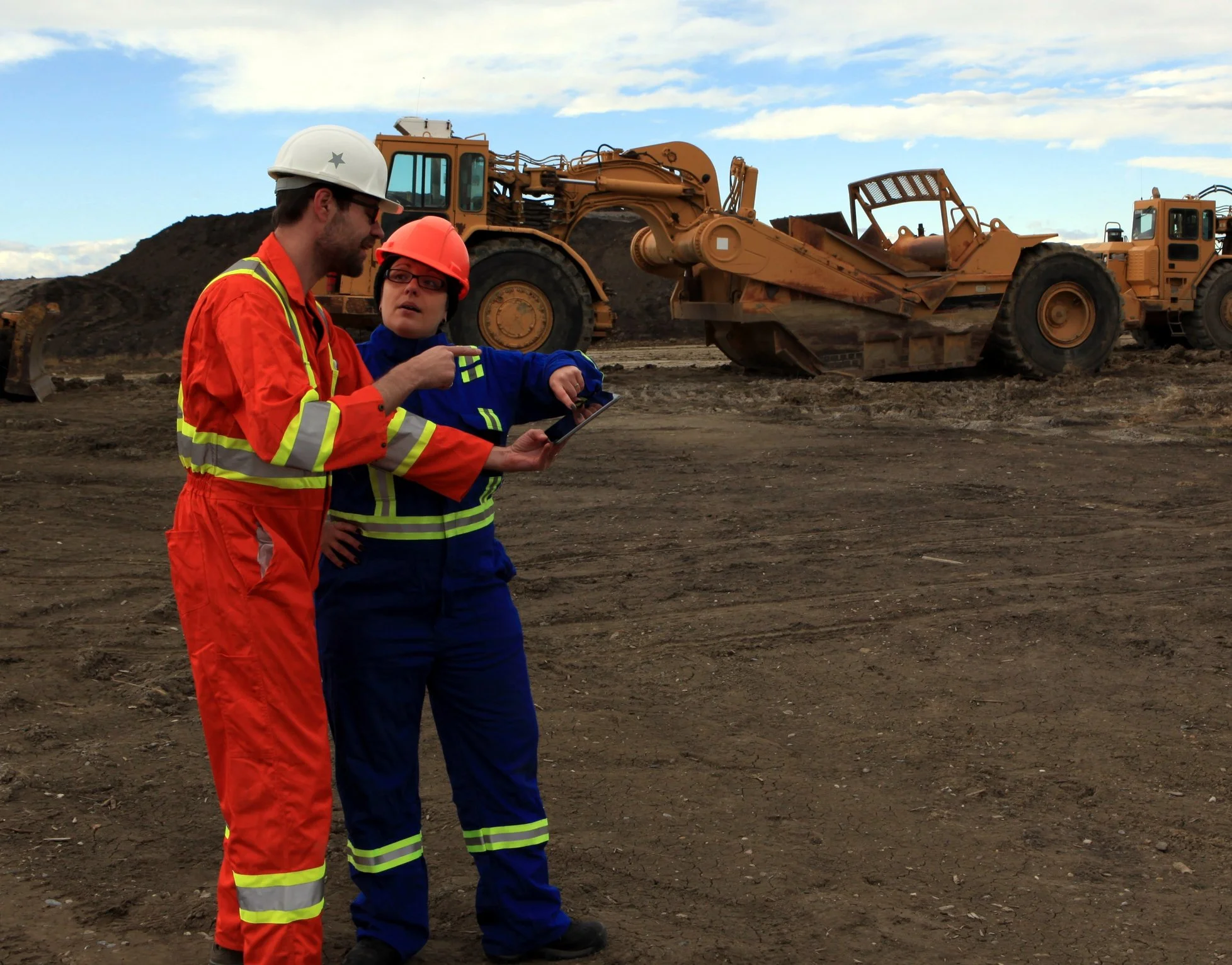
HS: When I hear government talk about that, they're talking about infrastructure to remove natural resources, and I wish that they would be thinking bigger than that. That's already a big project, for sure, and yes, we need infrastructure, but you know, infrastructure is also information technology, it's also healthcare. We are stumbling along on the healthcare front, and you can't make your society function unless you have a solid healthcare system that serves as the backbone for your workforce. So let's expand our thinking on that and build a Canada that is actually more than bricks and mortar — it's also services, it's support services, health, education and skills.
M&W: What are you reading right now?
HS: My son just came back from Newfoundland, where he was going to school at Memorial, and just brought me a book that he got from a second-hand bookstore, and I just started it. It’s called Weather's Edge: A Compendium of Women's Lives in Newfoundland and Labrador [edited by Linda Cullum, Carmelita McGrath, and Marilyn Porter.] It's fascinating. It’s a compendium or collection of essays and short stories, even poetry and research pieces of women in Newfoundland over many, many, many decades. It weaves together a picture about how women in Newfoundland saw themselves and developed over time.
M&W: What are you excited about right now in terms of the economy or public policy?
HS: What really intrigues me right now is artificial intelligence. As a country, we're grappling with adoption and low adoption rates, but I think there's a huge opportunity there for us. There's an opportunity to do a whole bunch of wonderful things if properly regulated. But let's also talk about what it's going to do to our economy. … We have an opportunity right now to really think about how we can not just deploy the technology into workplaces across the country, but how we're going to manage the fallout of that, or manage the benefits of it, not just in terms of, ‘okay, let's make this safe for children, let's make sure we don't get hurt by it,’ but also ‘how do we make sure that if there are huge benefits to be gained, how are they distributed fairly?’ How do we make sure that everybody comes along for the ride, and we don't just create a world where some people are able to operate very, very well and build up their assets in artificial intelligence, and others are left behind in a system of fiscal policy that is built for the last century?