Federal housing, infrastructure goals hinge on building skilled workforce: Blueprint

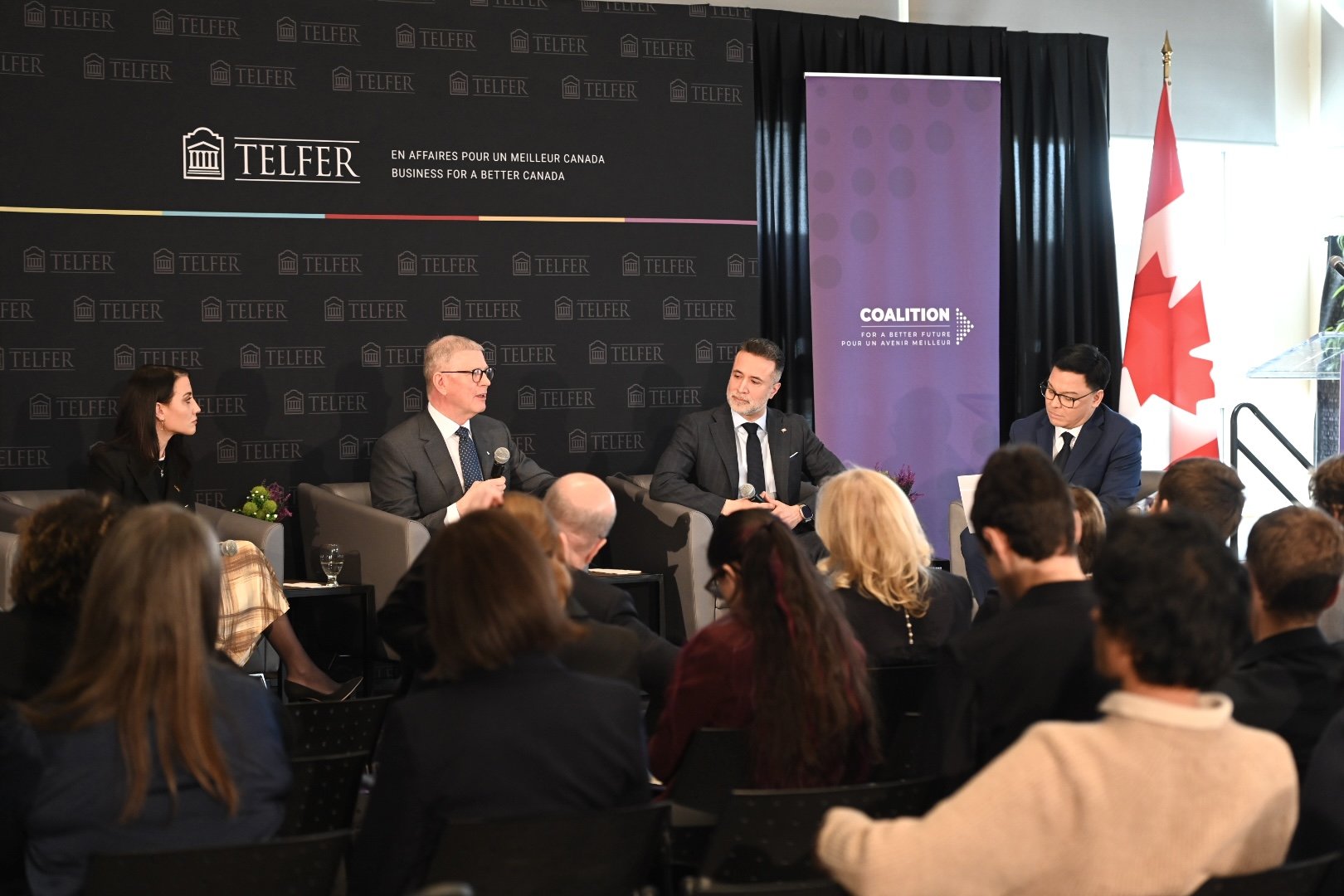
Canada's employment and training systems were not built for the moment the country now finds itself in — one where mid-career workers, not just new labour market entrants, need ways to adapt or risk being left behind, says Blueprint CEO Karen Myers. / SUBMITTED PHOTO
The federal government's ambitions on housing and major infrastructure projects will depend on whether the country can mobilize the workforce needed to deliver them, while coordinating with stakeholders to think long-term about what's needed for a thriving economy, says Karen Myers, President and CEO of Blueprint.
“Our federal government has goals and ambition to do things at speed and scale that haven't been seen in generations, and that is going to require a workforce. If we are going to dramatically increase the number of homes that are built, we need people who work in construction, who work in that value chain to build homes,” she told Means & Ways. “If we also at the same time are accelerating our major projects and getting things built, we're going to need workers all across that supply chain. So we need to ensure that we actually have that talent pool, really understand supply and demand in the labour market and how those dynamics are changing.”
Meeting that demand, she said, requires an industry sector lens along with a regional lens “to ensure that we have all orders of government and business at the table,” and proactive planning that reflects “systems-level, multi-actor, multi-stakeholder collaboration.”
“One-off training projects do not work for what we need to be able to do so. It's essential that we work together to get that right,” she said.
What that collaboration could look like is the subject of a new Blueprint report, Supporting Mid-Career Transitions: An Emerging Playbook. It notes that workforce disruption is accelerating, yet support for successful transitions often becomes available only after workers experience job loss — leaving them facing significant barriers to reskilling and re-employment. Rather than prescribing a single solution, the report compiles lessons from research and real-world projects to define the building blocks for a more proactive, coordinated training system.
Not built for the present moment
Canada's employment and training systems were not built for the moment the country now finds itself in, Myers said — one where mid-career workers, not just new labour market entrants, need ways to adapt or risk being left behind.
“Our employment and training systems are not designed for this; they're designed to support workers who are struggling to get a foothold in the labour market. They're not designed for mid-career workers who need to upskill or reskill, to respond to labour market change. As a result, we have a gap,” Myers said.
That gap matters, she said, because mid-career workers can't retrain the way new entrants can. “Mid-career workers cannot simply drop everything and retrain. They have families to support, and the answer isn't going back to college for a year or two. We need rapid reskilling that is recognized by employers, and either helps people upskill to stay in their current job, or with their existing employer, or will lead to a new job. We need to do this as proactively as possible before people become unemployed and fall into crisis,” she said.
Asked about the risks facing Canada's labour market, Myers pointed to the cost of waiting until workers lose their jobs before offering support. “I think the big risk is we keep doing what we're doing, which means we wait until people lose their job, and this puts a huge strain on our employment insurance system, and on workers and their families,” she said.
Our prosperity is at stake
She cited a Statistics Canada study of workers who lost their jobs in the 2008-2009 financial crisis and had not found new work within the first couple of months. Among that group, researchers tracked adjustment strategies over the following year and found low uptake. “Eight out of 10 didn't move to a new place where there was a job,” she said. “They didn't enroll in post-secondary, they didn't do an apprenticeship, and they didn't start a business.”
That pattern needs to change as disruption from artificial intelligence increases, Myers said. “We don't want workers on the sidelines and we can't afford that, as a country. Our prosperity is at stake.”
A related risk, she said, is a widening mismatch between where labour market growth is happening and where the available workforce is. “We create a scenario where there's growth in some areas of the labour market, and we don't have the talent or the workforce that we need,” she said.
Left unaddressed, the consequences extend beyond delay: “We end up with workers on the sidelines for longer than they need to be... we're introducing friction in the labour market that is avoidable, and we risk some workers actually disengaging from the labour market altogether, which is going to be a big problem.”
She tied that risk to Canada's aging workforce, saying, “we need everyone who is able to work productively engaged.”
Workforce alliances for agile planning
Myers pointed to the federal government's newly introduced workforce alliances as an example of the coordination needed. The alliances are designed to “bring together all of the key stakeholders in an industrial sector and do that workforce intelligence, do that workforce planning, understand what the needs are, what they might likely be,” and to identify “agile rapid pathways” for workers, approaches, she said, “that are going to meet the needs of workers who need to be able to learn and earn … and are going to meet the needs of businesses.”
The Blueprint report goes further, calling for dedicated training infrastructure. “We need planning tables, we need ways that businesses can come to the table and articulate their needs, and we need some certainty in the market so we can start designing high-quality training. Filling out a lot of forms to get a grant ... is bureaucratic, it's inefficient. We've got to make it easier for people to participate,” Myers said.
Despite the scale of the challenge, she said the playbook has found a receptive audience in government. She presented its findings to deputy ministers from every province and territory at a meeting of the Forum of Labour Market Ministers in April. “There was a lot of interest and recognition that we need to really be thinking about how we take our existing employment and training systems... to ensure that we're creating pathways for mid-career workers,” she said.
Training funded through short government contribution agreements isn't suited to the current moment, Myers said, noting that promising programs are often shut down just as they gain traction. “We have seen too many government investments in training projects that run for two years,” she said. “It's very hard to go from zero to delivering something that's high-quality that's going to meet the need.”
She pointed to Ireland's sector-based “skills nets,” which pool the training needs of multiple small and medium-sized businesses to build training at scale, as a model worth learning from. She also argued that funding needs to be shared more broadly among government, employers, and individuals. “Everyone needs to have some skin in the game,” Myers said. “Government can play a very important role in seed money. Government can play a role if there's a gap between what people can pay, but they can't be the only funder. I think that's something that needs to change.”
Myers also pointed to Indigenous-led training initiatives, such as the Indigenous Skills and Employment Training program, as another model sectors could learn from. “There is a deeper connection between supply and demand, more coordination, more collaboration,” she said. “There's a lot that is already working that we can build on.”