Trump’s ‘Delta Force’ oil exploration means more uncertainty for the Canadian economy
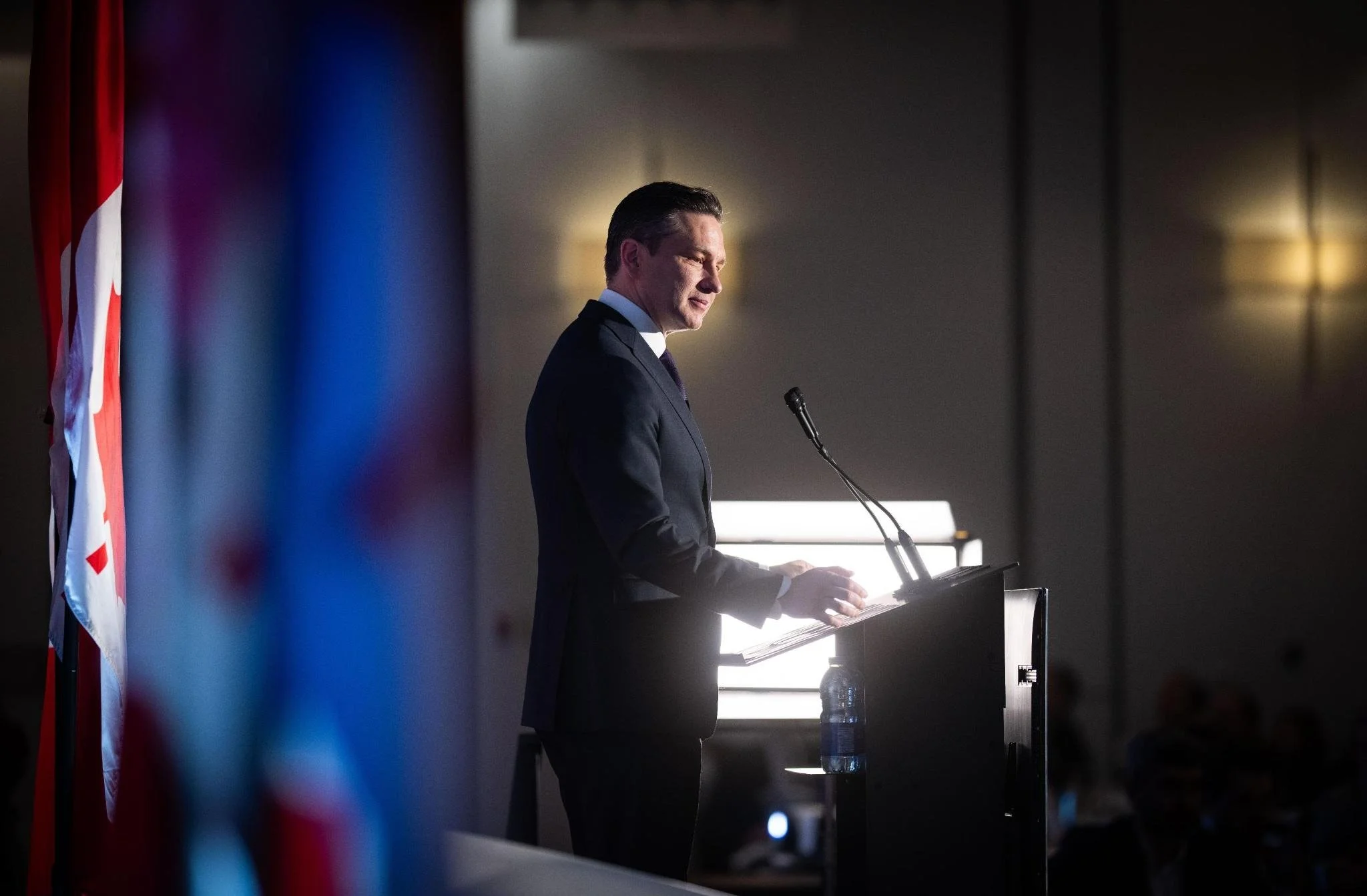
‘Each Venezuelan barrel the Americans take could therefore be a barrel less they will need from us,’ Conservative Leader Pierre Poilievre said in a Financial Post op-ed. / FACEBOOK PHOTO
Canada faces limited near-term economic fallout but growing strategic, market and political pressure following the dramatic U.S. seizure of Venezuela’s President Nicolás Maduro and moves by Washington to assert control over that country’s vast oil reserves, economists say.
Noah Buffam, director of fixed income, currencies and commodities strategy at CIBC, said recent events in Venezuela have had “little knock-on to major assets,” citing the absence of a confirmed regime change, no immediate lifting of U.S. oil sanctions and the “significant investment needed to meaningfully expand oil production.”
“We expect Venezuela developments have relatively little near term impact on the currency,” Buffam said. While both Canada and Venezuela produce heavy crude, he noted that only about 10% of Canadian oil exports to the U.S. are shipped to the Gulf Coast, where Venezuelan oil would likely be directed. He added that Canada’s relatively low breakeven production costs mean output could be sustained even if price differentials widen, and that the Canadian dollar has “largely lost its beta to oil prices” in recent years.
Despite this, uncertainty is rising. Fresh questions have emerged about future supply, pricing and whether Venezuelan crude could eventually crowd out Canadian oil of similar quality in U.S. refineries. Investor concerns sparked a selloff in shares of Canada’s major oil producers earlier this week.
BNN Bloomberg reported that weakness in Canadian oil stocks appears largely sentiment-driven, with producer fundamentals remaining intact. Canada’s oil industry continues to offer a lower-risk investment environment, supported by reliable reserves and improving access to global markets through potential export diversification, though volatility is expected to persist as investors react to geopolitical developments and key economic data.
The developments have also intensified political pressure on the federal government.
Alberta could be hit
In a Globe and Mail op-ed, Servus Credit Union chief economist Charles St-Arnaud wrote that even if Gulf Coast refiners switched entirely to Venezuelan crude, the impact to Canada’s economy would be limited, equating to a 2% decline in the country’s exports. Still, “the shock would be felt most acutely in Alberta, where such a drop could mean an 8-per-cent hit on provincial exports and a 3-per-cent reduction in GDP,” St-Arnaud wrote.
He said the more immediate impact may be felt through pricing rather than direct displacement, because increased imports of Venezuelan oil to the Gulf Coast could widen the price differential between West Texas Intermediate and Canadian crude, as well as putting downward pressure on global prices. “For Canada, the lesson is clear: Trade diversification is not merely a strategic objective. It has become an urgent necessity. The country’s heavy reliance on the U.S. market, where more than 90% of Canadian oil is exported, exposes it to significant risks.”
At RBC’s Canadian Bank CEO Conference, Scotiabank CEO Scott Thomson said geopolitical shifts—including a move toward right- or centre-right governments across much of Latin America and aspects of the so-called “Trump doctrine”—are medium- to long-term positives for growth and for Scotiabank, given its significant regional exposure. He cautioned, however, that renewed U.S. involvement in Venezuela’s oil sector could intensify competition for heavy crude, underscoring the need for Canada to accelerate pipeline and infrastructure development.
Conservative Leader Pierre Poilievre said Maduro’s arrest “resets the clock for global energy markets,” arguing that the possible return of Venezuelan oil poses a direct competitive threat to Canadian producers.
Needing less from Canada
“Venezuelan oil could soon return to its historic level of 3.5 million barrels per day, up from its current one million,” Poilievre wrote in the Financial Post. “Its heavy crude is very similar to Alberta’s oilsands, which means it will directly compete for scarce and specialized U.S. refinery capacity that can handle our bitumen. Each Venezuelan barrel the Americans take could therefore be a barrel less they will need from us.”
Poilievre said Canada needs “other customers fast” and called for immediate approval of a pipeline to the Pacific Coast. He criticized Prime Minister Carney’s commitment to refer such a project for consideration, asking, “Refer the project for consideration to a new office for years of further study? We don’t have time for politics, paperwork and bureaucratic busywork.”
“There is only one way to prove it: approve it,” Poilievre said, arguing that private capital, labour and resources are already available. “The only thing missing is a permit. A federal permit.”
Energy and Natural Resources Minister Tim Hodgson told Global News it was “too early to speculate” on potential impacts, but the government would continue its work to “transform our economy.”
“Regardless of any potential long-term impacts, our government is taking bold action to transform our economy and energy industry into one that is diverse, independent, and resilient to global shocks,” Hodgson’s statement said.
Meanwhile, oil could emerge as a major topic when Prime Minister Mark Carney meets Chinese President Xi Jinping next week. As the impact registered in Canada and abroad, early reports said President Donald Trump’s plan to restrict Venezuelan crude exports to the U.S. has Chinese refiners looking to Canada to replace lost supply from the South American country.
Venezuela needs a functioning economy
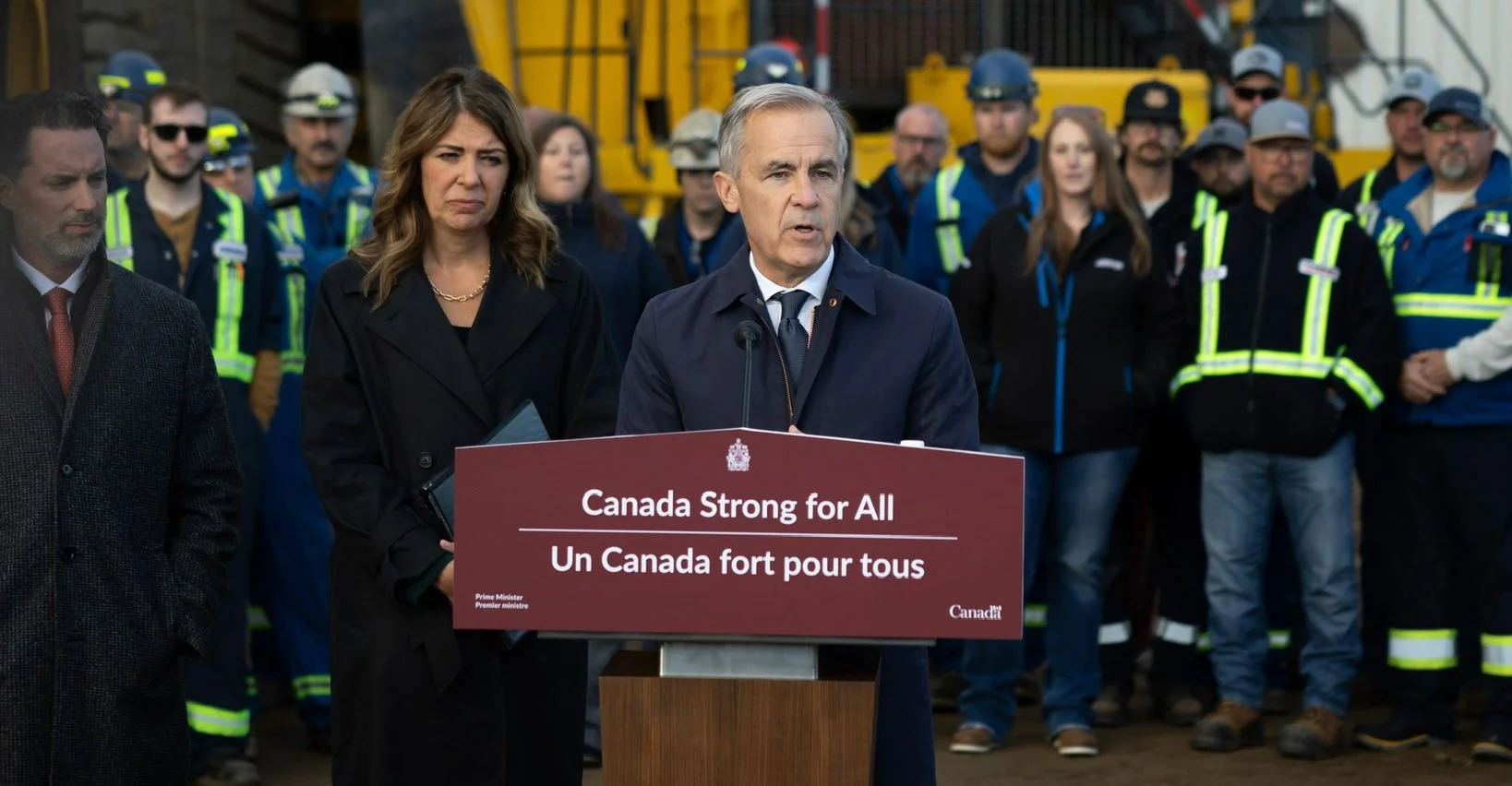
Carney noted during a press conference from Paris that Venezuela needs a functioning economy, not a corrupt one, to produce more oil. “It's been our view, and we're working towards this, that Canadian oil will be competitive because it is low risk.”
Carney said low cost and low carbon “makes Canadian oil competitive for the medium and long term. So we welcome the prospect of a peaceful transition, democratic Venezuela. We welcome the prospect of greater prosperity in Venezuela, but we also see the competitiveness of Canadian oil.”
Regarding exports to Asia, he said “we've got a competitive product and we will diversify in our markets and that's one of the reasons why we signed the comprehensive MOU with Alberta so we'd be working towards that.”
Bloomberg News noted that new interest from China, which already accounts for 64% of the crude sold via the Alberta-to-Vancouver TMX pipeline, could bring added pressure on Canada to expand its export potential.
Adding new capacity to TMX, which saw an expansion completed only last year, has attracted considerable support, including Thursday from Saskatchewan Premier Scott Moe, who told CTV’s Vassy Kapelos that doing so was a no-brainer in the aftermath of Trump’s actions in Venezuela. It could also shift the divided politics over Alberta’s plan to enlist private investors to go ahead with a controversial pipeline to ship oil sands crude to a northern B.C. export facility.