For Poilievre the curse of the ‘Orange God King’ abides
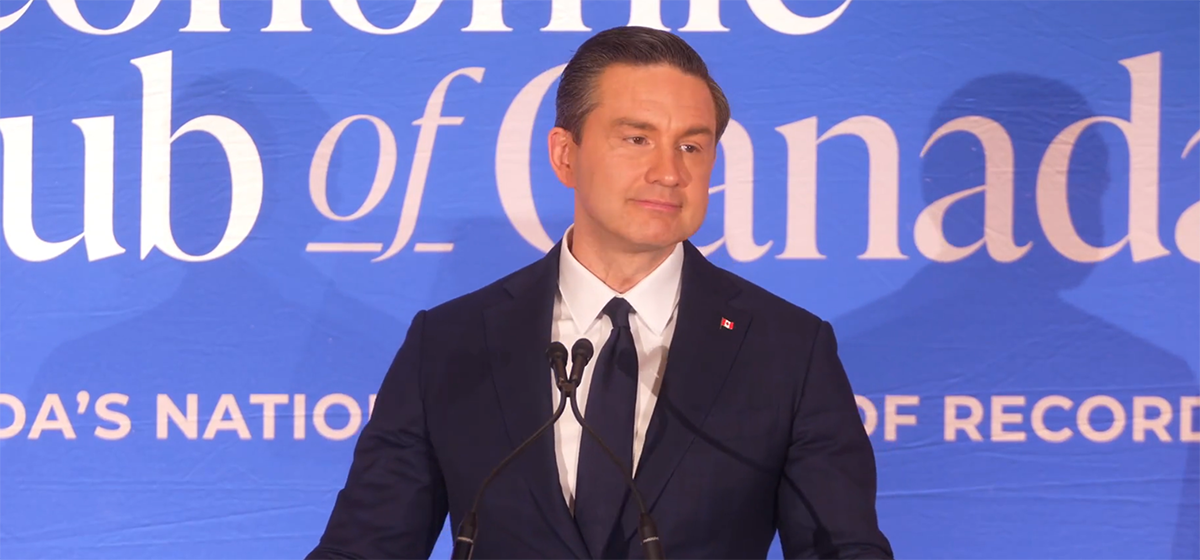
‘Canada's prosperity and security are inseparable from a stable relationship with the United States,’ says Conservative Leader Pierre Poilievre. / SCREENSHOT
Opposition Leader Pierre Poilievre gave in to the inevitable this week: he formally and publicly rebuked President Donald Trump four times.
It is not as though he hasn’t gone after Trump before. He has. But he has never done so the headline-grabbing way he did this week, as part of a major foreign policy address before a blue-chip audience at the Economic Club of Toronto.
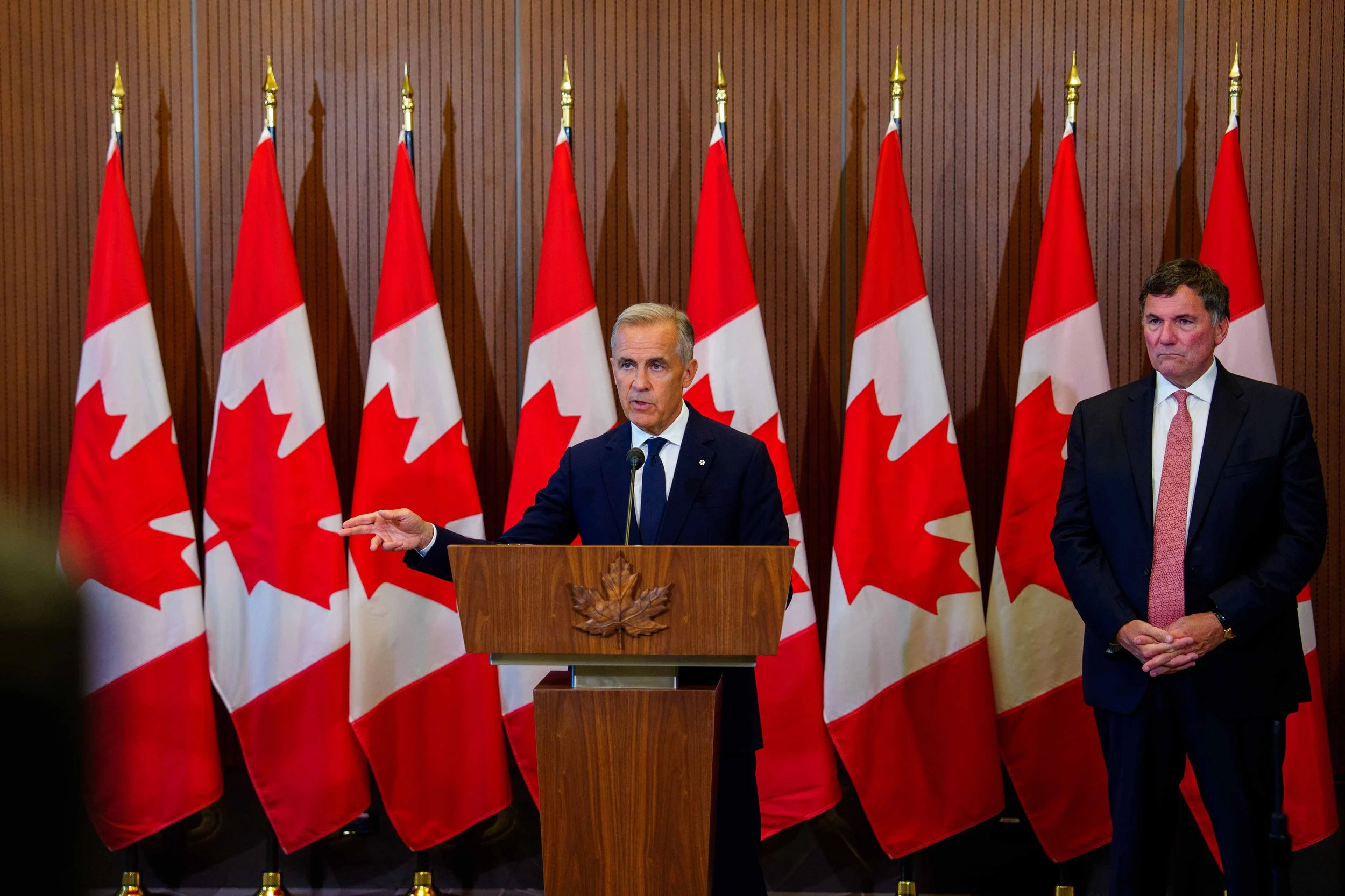
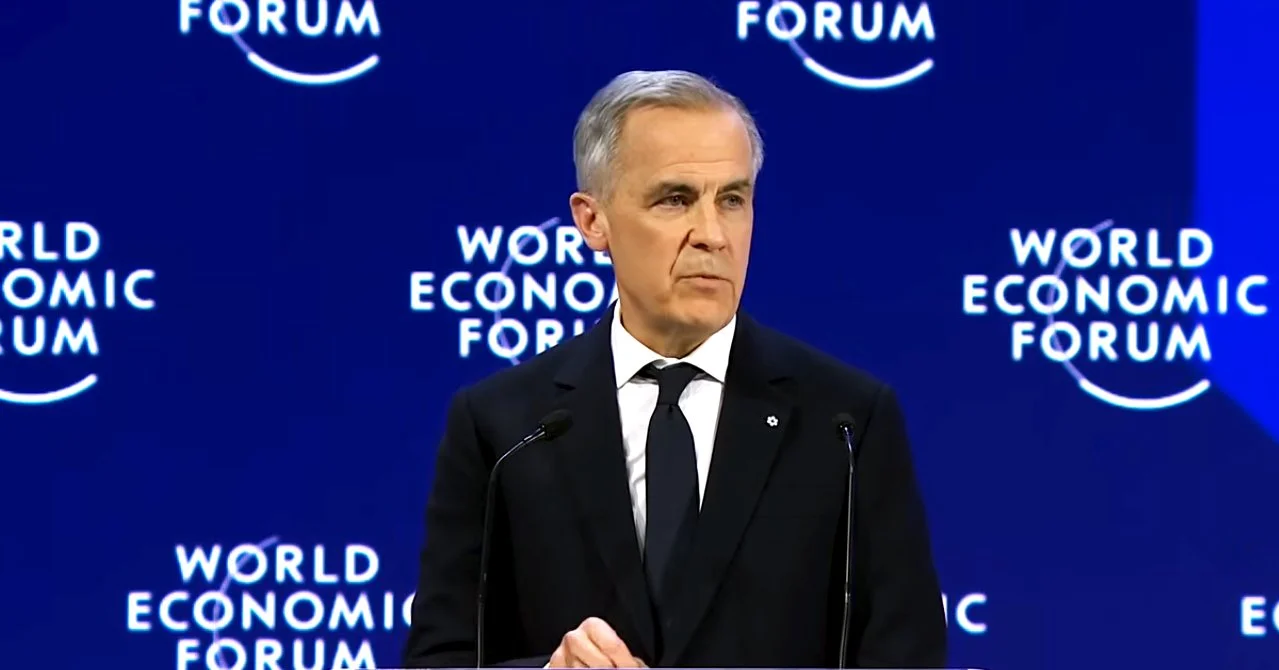
The speech itself was a fine, well-thought-out, coherent statement on how to build Canada's economic strength at home and to leverage its economic and strategic position abroad in the age of Trump. It broadly mirrored the agenda Prime Minister Mark Carney has laid out since taking office. In the wake of the Prime Minister’s widely acclaimed and globally noted address at Davos, Poilievre clearly felt he had to lay down his own views on how Canada can respond to the Trump threat.
Poilievre speech tried to play against type
Getting headlines for an Opposition Leader is always challenging, especially at a time when the Prime Minister and his government are very popular. Beyond the clear, positive media hit, the speech was notable for a couple of things.
First, Poilievre took a moment to shed his preferred role as political attack dog, “proposing an all-party committee: a team, a task force that will work together as part of an effort to defend and fight for Canada in the CUSMA review.” The election result and every poll since have shown that Canadians have doubts about Poilievre’s willingness to rise above narrow partisanship and to unify Canadians, a quality they expect in times of national challenge from a Prime Minister. This pledge reads as a first step in that direction.
Second, he laid down a few substantive criticisms of Carney’s agenda to insulate Canada from the capricious administration to the south. He said, “We should not declare a permanent rupture with our biggest customer and closest neighbour in favour of a strategic partnership for a new world order with Beijing — a regime the Prime Minister himself said was the biggest threat to Canada just a year ago.”
These are sound criticisms that will resonate with Canadian business leaders whose economic interests remain firmly anchored in the U.S. market, and with those who worry about the geopolitical intentions of a rising, non-democratic Chinese power. They make a solid base for reasoned criticism of the Prime Minister's agenda, should it run aground.
The curse of the Orange God King
But the headline coverage of the speech focused on his rebuke of Trump. Poilievre strongly rejected Trump’s call for Canada to become the 51st state, saying, “whether it is a joke or not, it is unacceptable. It goes without saying there is zero chance of Canada ever being a part of the United States.” He also rejected Trump’s mercantilist resort to tariffs against Canada and the President’s distortion of the meaning of Canada’s trade surplus with the U.S.
There was, however, another line on Trump that, no doubt inadvertently, revealed the abiding Achilles heel that Trump and his MAGA world remain for Poilievre. He said, “We cannot control Trump,” later adding, “We cannot allow President Trump to distract us from the work we need to do here at home.”
That is obviously true. It has also been repeatedly stated by the Prime Minister. But it has contrasting political meanings for them. For Carney, Trump’s errant threats are a strength that fueled his historic come-from-behind win against Poilievre last spring.
For Poilievre, they are a weakness, an implicit rebuke expressed last year by voters of Poilievre’s own brand of aggressive attack politics, which has been referred to as “Trump lite.” Canadians loathe Trump’s actions down south, and they want no part of a leader or party that sounds like they want to import Trump’s transgressive style of politics up north.
So the speech was a game effort to argue that Canadians should ignore Trump and instead focus on the comparative plans the two main parties have proposed to deal with him; to try and shift voters’ attention from the things that anger them but that they cannot control, to the thing that they really care about and want fixed: the high cost of living, high taxes and big, job killing government.
Poilievre has to do this because the Orange God King, as Trump is frequently referred to in critical chat groups for his quasi-regal approach to presidential power, isn’t going anywhere, at least not until 2028. So he has started shoring up this weakness as best he can prior to the next election.
Of course, he might be helped in this effort if he weren’t still so attracted to hardy Trumpian themes, to whit highlighting alleged abuses of immigrants. Looking for a way to pierce the seemingly impenetrable shield of Carney’s popularity, the Conservatives marked the return this week of Parliament by launching a fusillade against what Immigration critic Michelle Rempel Garner called the “boondoggle” of asylum seekers receiving health care coverage.
Elsewhere, we learned from Global News that Conservative MP Garnett Genuis “wants to identify federal public servants or members of the Canadian Armed Forces who sympathize with the left-wing antifa movement.” “Antifa” is a name that has been given in U.S. political discourse to describe groups who oppose what they view to be fascist or fascist leaning politicians and policies. The name has become something of an obsession for President Trump, who has directed the Department of Justice to investigate such organizations.
This week's mixed messaging highlights the fundamental dilemma for Poilievre: a good chunk of his party base supports both Trump and his policies. It will remain a challenging political circle for him to square in the weeks and months ahead.
It may ultimately be a doomed effort. But the Opposition Leader has to at least try. Indeed, he may, at one level, hope that the Liberals finally secure a majority in the upcoming by-elections. That would keep Poilievre safe from having to face voters until 2029, after the Orange God King has, presumably, left the scene.