LeBlanc ‘not pessimistic’ about CUSMA’s future, says review is not a renegotiation
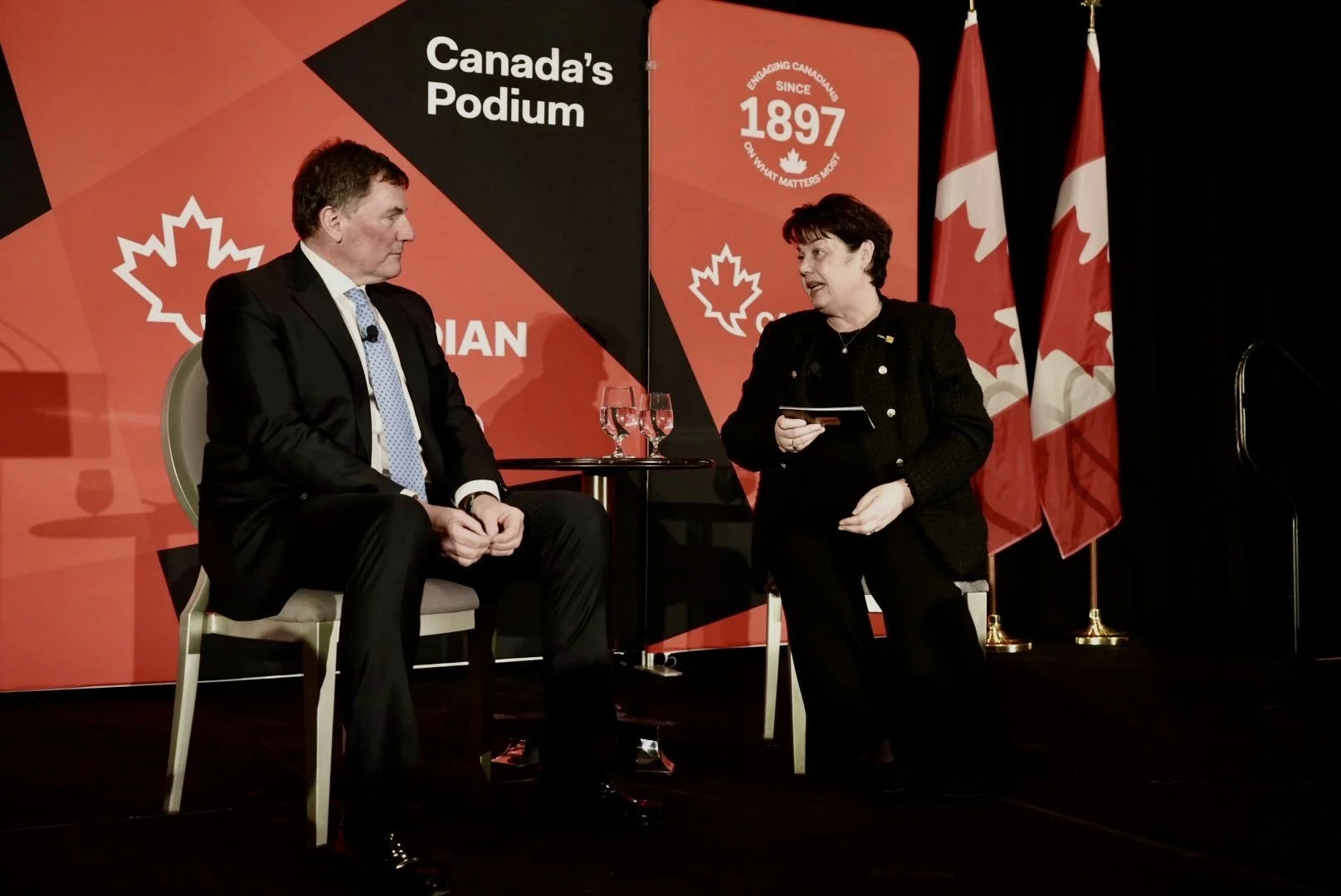
‘As Canada diversifies its trading partners and prepares for the upcoming CUSMA joint review, our focus is clear: protect Canadian workers and businesses, strengthen North American partnerships, and build a strong Canadian economy,’ Minister Dominic LeBlanc wrote on social media. / TWITTER PHOTO
Canada-U.S. Minister Dominic LeBlanc says he is “not pessimistic” about the CUSMA renewal and that Canada is focused on managing uncertainty and strengthening economic ties, particularly with Mexico, while maintaining a stable trilateral framework.
“I'm not pessimistic about renewing the trilateral frame. It doesn't expire. It expires in 2036. The review is not a renegotiation,” he told a Canadian Club of Toronto audience in conversation with Interac Chief Strategy & Marketing Officer Debbie Gamble on Thursday. “I've said to Canadian business leaders, it's not 2016 again. You don't need to camp out in a hotel lobby waiting for an update in Washington. We're not going chapter by chapter, and this month it's going to be this sector, and everybody goes down and waits around hotel lobbies for updates. It's not that. It's a review. And if there's no consensus in the review, the agreement continues on. Then, there's an annual review that starts.”
LeBlanc acknowledged uncertainty could still be used as a negotiating tactic. “If uncertainty is one of the objectives from one of our CUSMA partners, you can imagine scenarios of how this might go,” he said. "We have to control what we can control. We have to acknowledge what we can't control, and manage our way through the turbulence in the best way possible."
Still, he said recent U.S. actions reinforce his confidence, citing the recent U.S. Supreme Court decision striking down President Donald Trump's "Liberation Day" tariffs.
LeBlanc added that U.S. business groups are increasingly supportive of maintaining the agreement. “American business leaders and American business associations are also speaking up more now than perhaps six months ago,” he said. “People didn’t get there and say, we’ve got to rip this agreement up. We’ve got to cancel this.”
He said bilateral arrangements alongside the trilateral pact are nothing new and could help ease sector-specific pressures. “We were close in the fall. This is in the public domain, steel, aluminum, energy," he said. "We thought we were close to a deal that would have significantly improved our position now in those critical sectors.”
Looking ahead, LeBlanc said he plans to travel to Washington next week to meet with U.S. Trade Representative Jamieson Greer and others. “The conversations are businesslike cordial. They’re very friendly. And I think we’re getting to a position where the United States will get specific with Canada and Mexico about specific things that they may want to see adjusted, and we’re ready for those conversations. We’re actually anxious to have them.”
Greer told Fox Business Network that Canada has “a few ideas” on the future of a deal.
“We’re obviously open to that,” he said, adding that the U.S. is focused on domestic manufacturing.
“We don’t necessarily want to be dependent on China, Canada, or anybody else for things like cars and that kind of thing,” Greer also said. “But we’re open to talk, and we’ll see what they have to say.”
Beyond the trilateral relationship, LeBlanc pointed to significant opportunities to deepen Canada’s bilateral trade with Mexico.
He highlighted recent announcements of cross-border investments, including a Mexican mining company committing “almost three quarters of a billion dollars in a gold mine in Quebec,” and a Quebec-based firm investing in port infrastructure in Mexico. He also pointed to major infrastructure spending by CPKC Rail, calling it “massive investments in Mexico, upgrading big intermodal terminals.”
He also highlighted what he called a successful trade mission to Mexico, and feeling aligned with the country:
“The Prime Minister and President [Claudia] Sheinbaum speak regularly. There's a desire to work very collaboratively to renew the trilateral agreement, or to recommit to the trilateral agreement. So that was good. I'm not concerned about Mexico having a divergent interest from us in that process, but there's a huge opportunity to improve the bilateral trade with a big, growing economy and a dominant player in Latin America.”
LeBlanc, who is also Minister of Intergovernmental Affairs, Internal Trade and One Canadian Economy, spoke about a broader strategy to unlock private investment and reduce internal barriers to trade within Canada.
“There is a broad consensus. Business organizations, business leaders, have been pushing that for a long time — the provinces, everybody says, absolutely, we’re all in,” he said about the one Canadian economy. “But like so many things… it’s way too slow. It’s way too slow.”
He cited heavy bureaucracy for holding back progress but pointed out the government's role in eliminating federal exemptions to internal free trade rules to help spur growth.
LeBlanc said the federal government is also pressing provinces to move faster, noting the prime minister’s stance on tying funding to results.
“The prime minister is very aggressive in this regard. He has said to the premiers that if we’re transferring billions of dollars in labour, labour force training, monies to the provinces, and we’re not making progress together collectively, then the Government of Canada will look at, why are we paying billions of dollars without [progress],” he said.
On major projects, Leblanc said Dawn Farrell is experienced and working to ensure progress. "She's grinding it out, and she's herding in and crowding in private investment," he said, noting that the Major Projects Office is not a federal program that is giving out funding. “That was not the intention. The intention was to find these nation building projects — back to controlling what we can control — unlocking private investment in the vast majority of cases that will go to a project that's viable, has defined timelines and outcomes that people can rely on.”