Trigon CEO Craig Olley: It’s go time!
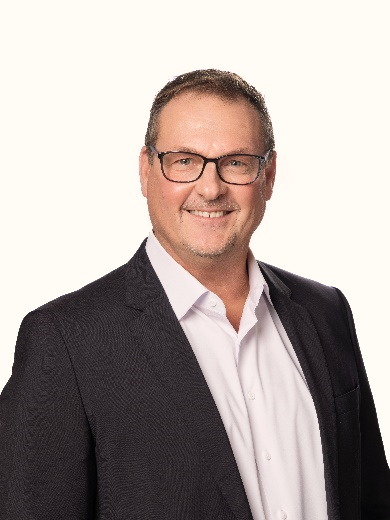
‘Canada produces world-class energy and resource commodities. But too often we lack sufficient competitive access to global markets, particularly into Asia-Pacific,’ says Trigon President and CEO Craig Olley.
As geopolitical uncertainty reshapes global trade, infrastructure that allows Canadian businesses to export more easily is the backbone of economic growth, says Craig Olley, President and Chief Executive Officer of Trigon Pacific Terminals.
“Infrastructure becomes strategic, and countries that can move their products efficiently and reliably are far better positioned to weather global disruption,” Olley told Means & Ways.
Olley also emphasized Trigon’s role in strengthening energy security and trade diversification, noting that Canada’s geographic advantages provide a strategic edge in global markets. Olley has been president since November 2024 and was appointed CEO last month. Prior to that, he spent 25 years at Teck Resources and most recently was Vice-President Operations at Neptune Terminals. He holds an executive MBA and has a graduate diploma in business administration from Simon Fraser University. As he steps into his new role he said his immediate focus is ensuring operational excellence, strategic growth and positioning Trigon to play a central role in Canada’s long-term economic resilience.
Based at the Port of Prince Rupert, Trigon operates a multi-commodity export terminal that Olley said serves as a critical link between Western Canadian producers and Asia-Pacific markets.
The following was edited for length and clarity.
M&W: Your website says “Trigon is ideally located between Western Canadian producers and Asia-Pacific customers and aims to become Canada’s west coast export hub.” Can you tell me more about that? Why is it important?
CO: Canada produces world-class energy and resource commodities. But too often we lack sufficient competitive access to global markets, particularly into Asia-Pacific. Trigon sits as the closest major Canadian port to Asia with direct rail access to many Western Canadian producers and conflict free shipping routes. Geography matters — it lowers transportation costs, it improves reliability and it has the ability to strengthen Canada's reputation as a dependable trading partner.
Becoming a true export hub isn't just about one commodity. It's about creating flexible infrastructure that can handle traditional exports today and lower carbon commodities tomorrow, and that sort of helps and supports Canada to diversify trade beyond the U.S. and reduce exposure to global risk.
M&W: Given recent geopolitical shifts and trade uncertainty, what do you see the role of companies like Trigon is in helping Canada grow its economy and long-term resiliency?
CO: Companies like Trigon provide the physical backbone that allows Canada to diversify export markets and really deepen our relationships in Asia-Pacific and support domestic investment in energy and resources. When producers know that they can reach global customers, it spurs confidence with their investments. Those investments support jobs, government revenues, and long-term economic growth. So with geopolitical uncertainty, infrastructure becomes strategic and countries that can move their products efficiently and reliably are far better positioned to weather global disruption.
M&W: The government says it wants Canada to be an energy superpower, and your website says you’re building a second berth and exploring a range of new low-carbon commodities that could be handled through your terminal. What are some of the opportunities you see in this area?
CO: It was designed with the flexibility to handle new energy commodities, including hydrogen-derived ammonia alongside existing exports. Ammonia, in particular, is emerging as a cornerstone of global decarbonization strategies, not just for power generation, but also for shipping and industrial use. Producers are participating in this transition and we hear Prime Minister Carney speaking about Canada as being a superpower in this space. Well, that takes infrastructure. So that's why we built that.
We think hydrogen-derived ammonia and also critical minerals could ship through that berth. Liquefied petroleum gas or LPG could also ship through that berth. We ship LPG for AltaGas through our current berth and we can continue to do that in the future as well if we're able to get our LPG project built. It's critical for us. It's critical for Canada. It gives us additional export capacity.
M&W: What is the biggest challenge you're facing right now in your sector and your role?
CO: The single biggest challenge we're facing is the restricted competition and export capacity on Canada's West Coast at Prince Rupert. There's a broad exclusivity arrangement granted years ago that now limits the ability of new projects, including our very own LPG project, to proceed even where there's a clear market demand and strong Indigenous and community support.
It's frustrating. There is supply that could and should be shipped off the West Coast of Canada. Trigon announced an FID [final investment decision] last June to build a $750 million LPG project that will enable the movement of LPG that currently is moving south off the U.S. Gulf and providing the boost to the U.S. that should be going west.
There's a monopoly. [Producers] have to deal with one proponent in that space. We're just trying to provide an opportunity for the producers in British Columbia, the producers in Alberta, to have some optionality on who moves their LPG through what terminal.
We think that it'll certainly benefit Canada and it certainly aligns with Prime Minister Carney's vision of doubling the value of non-exported U.S. shipment. We're just trying to provide some competition, some open market access.
M&W: What's keeping you up at night?
CO: What keeps me up at night is the risk of Canada missing opportunities that we can never get back. Global buyers are making long-term decisions now about where they source energy and investor capital. If Canada can't provide timely competitive access to tidewater, those investments will go to other jurisdictions. So my focus remains on making sure Trigon does everything it can responsibly and constructively and inclusively to ensure Canada remains part of those decisions.
If we don't act now, we don't take advantage of the opportunity, those decisions may not be in front of us when we're ready, so the time is now. It's go time.