A very public man takes another run at retirement
As he wraps up nearly five years as Canada’s High Commissioner to the U.K., Ralph Goodale is departing amid economic and geopolitical uncertainty. In an exit interview with Means & Ways, the veteran Liberal said those crises have exposed what Prime Minister Carney says is a major “rupture” in the global order, pushing Canada to strengthen economic resilience and deepen security ties with key allies, particularly the United Kingdom.
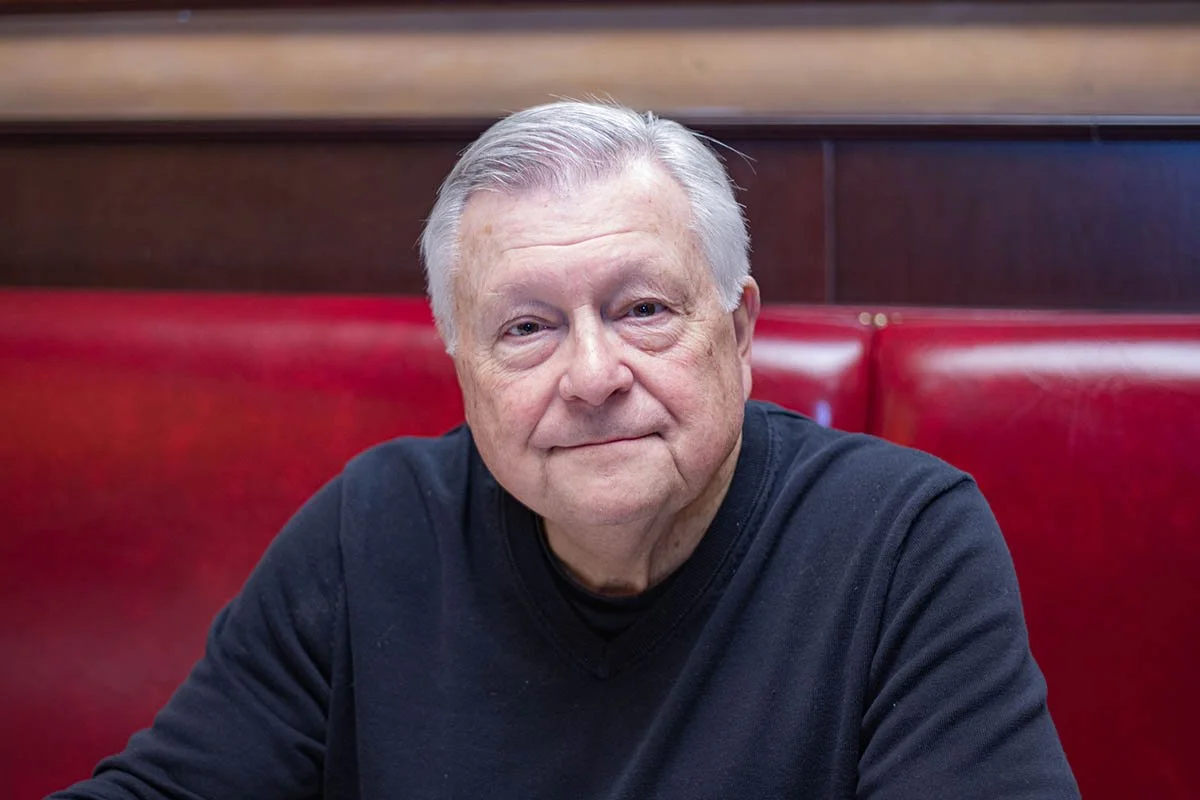
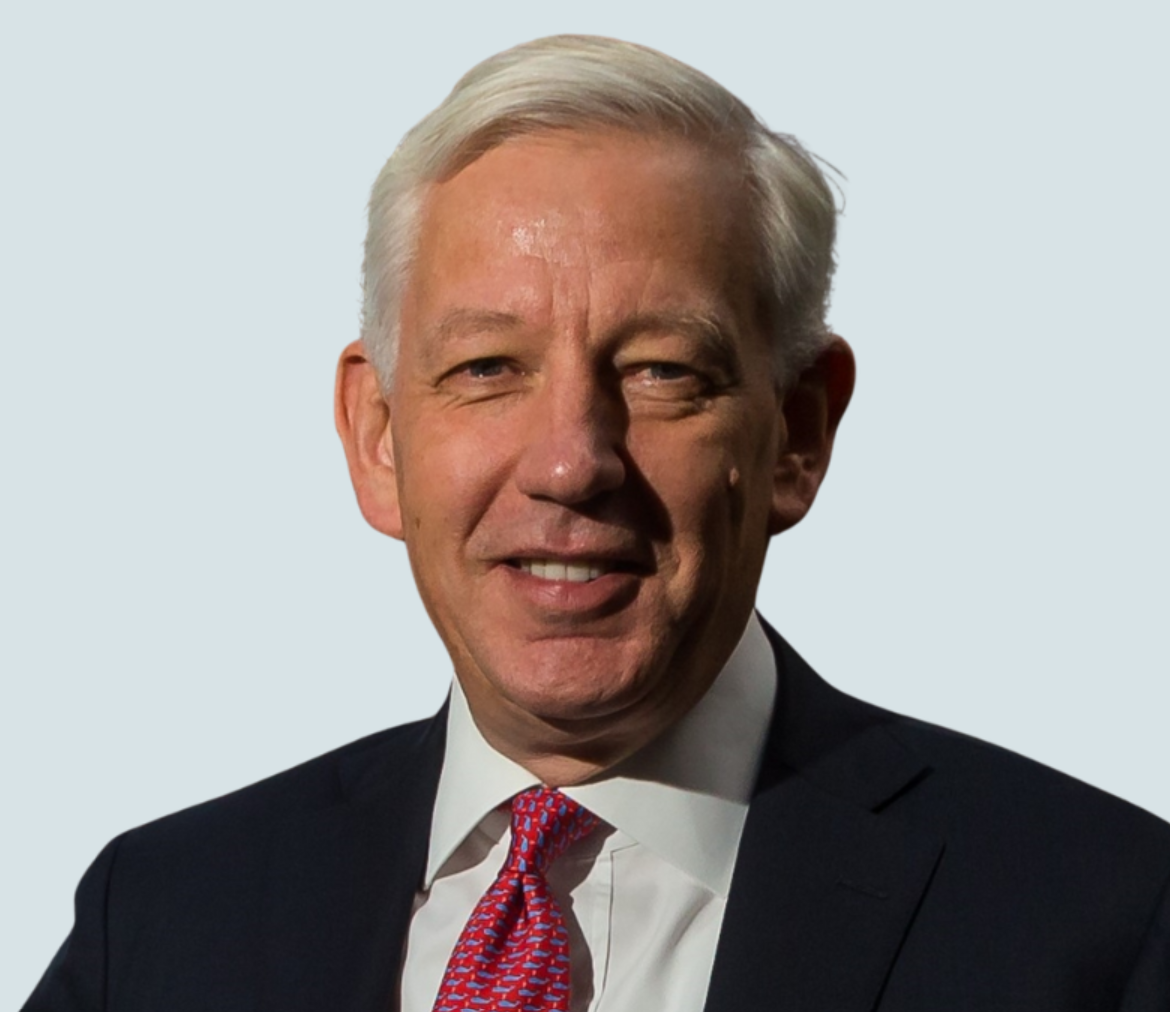
‘Stay calm and keep your nerve. This is the long game,’ says outgoing High Commissioner to the U.K. Ralph Goodale, on Canada-U.S. relations. / MEANS & WAYS PHOTO
As Canada’s High Commissioner to the U.K., Ralph Goodale has had a front row seat to dealing with COVID, Brexit, the British government changing three times in one year, King Charles’ ascension to the throne, the Russian invasion of Ukraine, the war in Gaza, and most recently, the impact of Donald Trump’s presidency forcing deeper ties between Canada and its other allies.
The pace and significance of these events made the nearly five-year posting extraordinarily active, challenging at times, but ultimately deeply rewarding, he told Means & Ways in an exit interview.
“The Prime Minister uses the word rupture, and it’s very true. You just watch that all unfolding around the world and try to understand the impact on Canada. So yeah, you put all that together in slightly less than five years, it was very active,” he said.
Goodale — a former Liberal MP who served many roles including as minister of natural resources, minister of finance and government leader — said the biggest challenge to the economy right now is how Canada prepares itself in the face of this geopolitical and global trade rupture.
“We've got to be better able to stand on our own two feet,” he said. “And so, building that kind of an economy in a world that’s under a huge amount of stress for a whole bunch of other reasons, that's the challenge and it's huge. It's a fascinating world. It's a dangerous world.”
In addition to more economic cooperation, Canada and the UK are deepening security and defence cooperation. Noting Carney and U.K. Prime Minister Keir Starmer met three times in one year, Goodale said there is now “a real recognition by both our countries that in the very difficult and divided world in which we live, there is a real need for like-minded countries with similar international values to work together.”
There’s a lot that Canada and the U.K. are already working on together because of shared values and history but it “will undoubtedly expand” in the future to bring some reliability on the economic and security front, he said, adding he expects those agreements to “bear fruit” in other areas, such as sovereign AI infrastructure and supporting Canada’s private sector to become world leaders.
Carney appointed Liberal MP Bill Blair as the next High Commissioner to the U.K. this week. When asked if he had any advice for him, Goodale said while every person in the role will carve out their own way, there’s a team ready to support him on the busy agenda ahead of him.
“There's lots to do on the economic and trade side and on the defence and security and intelligence side,” he said. “Now you take that joint statement from Carney and Starmer from last year, and superimpose Davos on top of it, and that gives it a level of gravitas and urgency that makes the work program even more important.”
Goodale was first elected to Parliament in 1974, serving in opposition and government, in addition to serving in the provincial Saskatchewan legislature. He also previously served as Special Advisor to the Government of Canada's response to Ukraine International Airlines Flight 752 crash. He said he is grateful for these opportunities, including to represent Canada outside of the country.
As for what’s next: “I’m going to try my best to retire for the second time.”
The following was edited for length and clarity.
M&W: What is keeping you up at night?
RG: It's got to be the huge change in attitude and orientation within the United States. We're dealing with so many annoyances and insults and aggravations and nuisances, all of which are very counterproductive on a daily basis. And you just sort of fret about how you get from one day to the next, one week to the next, one month to the next and what nonsensical thing is going to happen tomorrow. But if you just step back from that immediate chaos for a moment the larger question is how does the world function successfully? If you take the central pillar away from what's been holding up the tent for 80 years with all its bumps and warts and imperfections, the United States playing the role that we've been used to for those last 80 years has been the major bulwark for international peace, security and prosperity. Now, it seems abundantly clear that that central pillar is gone or at least it’s much different than it used to be. Where does that leave peace, security and prosperity going forward? We will need to find the alternative.
Will the United States return in some way, or will it be something else entirely? While we figure that out, that's where I think the Prime Minister's advice in Davos becomes critically important. Like-minded, middle-size countries with similar value sets need to collaborate very closely together. They need to work with each other, understand each other, support each other, do business with each other, have each other's backs. Because if we don't have that kind of collective effort to insist on our place at the table, as the Prime Minister said, we’ll be on the menu.
M&W: What do you think the role of business leaders is during this time?
RG: There might be an instinct to kind of hunker down, withdraw, be invisible as possible for fear of becoming impacted in a way that it is hard to predict, but this is exactly the time when Canada needs business leaders to be actively involved in two ways: making sure that the governments fully appreciate the issues of the sensitivities and the impacts business is dealing with, but also providing tangible material, very real support and encouragement for economic growth, economic sovereignty, Canada's ability to survive and thrive in these circumstances. The sum of that will run against the common instinct of business knowledge and business judgment. These are times that you need very, very creative, proactive, engaged business leadership. At the end of the day, as I said, the greatest impact will come not from our lobby of the Americans, but Americans talking to Americans within the United States.
M&W: What do you think the outcome of trade negotiations with the U.S. will be? Will we have to make concessions on things like supply management or the online streaming act? And what do you think some of the red lines for Canada should be?
RG: Well, that will be up to the government, in all of its consultation with Canadians to determine, but my advice would be don't be quick to make concessions, be strong in putting forward the Canadian point of view. And be patient, because as we've seen in the last year, the one consistent American tactic is to create chaos, create uncertainty and then pick up the pieces afterward.
A corollary of that is, in a little while they often change their mind too. I guess in war tactics they would say that’s a strategy of shock and awe. And so your opponent is just left bedazzled and dazed. Let's not be bedazzled and dazed. Be patient, be mature. Don't overreact to every insult or innuendo that is specifically designed to snooker you into overreacting. Stay calm and keep your nerve. This is the long game. And we want to make sure that we don't allow ourselves to be frightened into making concessions that may well prove to be counterproductive.
M&W: Are you hopeful about the new world order that we’re in?
RG: I am a fundamental optimist about Canada. I don't want to underestimate or understate the size of the challenges that we've got before us, economically and from a defence and security point of view, but I have every expectation that we will work our way through it, as will our best friends and colleagues and allies like the U.K. and will come out the other side.
M&W: You are a former Finance Minister. I was just wondering how you feel about the Carney government’s move to a fall budget cycle, and also the change in fiscal anchors from the declining federal debt to GDP ratio to balancing operating spending with revenues and maintaining a declining deficit to GDP ratio. Are those the right moves?
RG: It's a matter of establishing the practice and then sticking with it so that you can see the trajectory of public finances in a way that allows for measurement and comparison and therefore, knowledge and understanding about whether progress is being made. And clearly the government has shifted emphasis from daily operations to mid-term and long-term investment. The country undoubtedly needs that, and as long as the things calculated as investment are contributing to productivity, innovation and growth in tangible ways, then that is the right emphasis to have for this period of time.
M&W: What will you miss most about the U.K.?
RG: There's so many good things about it. You know two things, the polite, decorous way they have of dealing with issues. In some ways, it's a frustrating smokescreen, and in some ways it is an amazing way to get things done. No one in the world is better at pomp and ceremony than the British. In some ways it’s almost laughable. Like all the ribbons and the feathers and the badges and the uniforms. You go to some of the original diplomatic events and think, oh, my Lord. This is a bit overdone, but then you step back a bit, it's amazing how they use all of this pomp and ceremony to grease the wheels of international diplomacy, deal with some terribly difficult issues and still keep the conversation going tomorrow. That is an amazing British skill. There are days when you want to say, oh, for heaven's sake, stop it already. But, it's amazing how that capacity for ceremony is used by them as a very effective diplomatic tool.
M&W: I have to ask, have you watched The Diplomat? And what are your thoughts?
RG: I watched season one. It's very fascinating to see the venues used in the program and figure out where exactly the filming was being done. Some of it is authentic location stuff in and around London. Obviously, it is hyped from an American perspective and it's closer to being a work of fiction than reality.