Canada in the Dragons’ Den
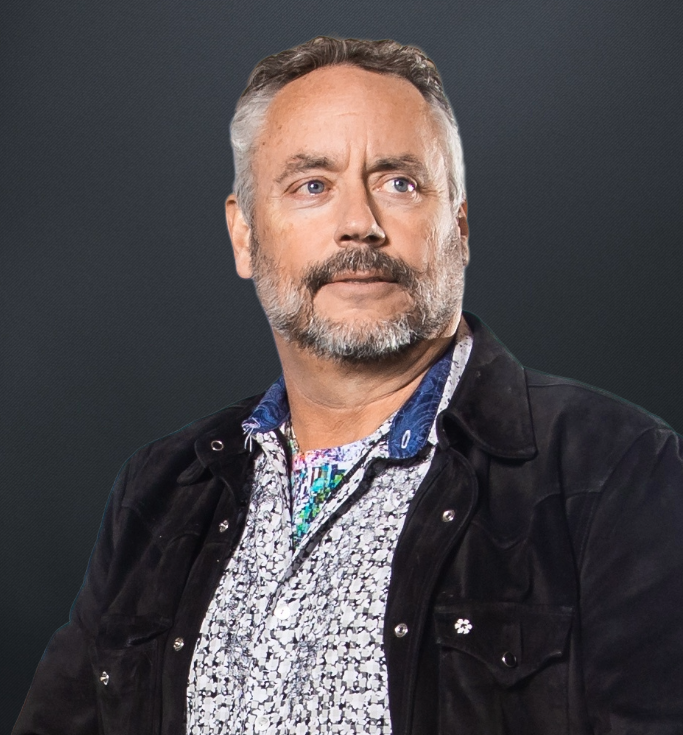
‘I want more Canadian-made steel, and at the same time, I want to produce steel-making coal for the world,’ says W. Brett Wilson. / SUBMITTED PHOTO
The economic implications of Canada’s approach to metallurgical coal development could be substantial with the potential to attract investment, generate thousands of direct and indirect jobs and produce billions of dollars in revenue. It's why metallurgical coal — which is used to make steel and is different from coal used for electricity — should be listed as a critical mineral, particularly as Canada attempts to align industrial policy goals with economic performance, says W. Brett Wilson.
“A year and a half ago, Canada defined iron ore as a critical mineral because it was important to the steelmaking industry. Equally important to the steelmaking industry, maybe even more so, is steel making coal, metallurgical coal,” Wilson, an entrepreneur, former investment banker and former star of CBC’s Dragons’ Den, told Means & Ways. “I genuinely believe that metallurgical coal is of national interest. ... We import steel-making coal because it's cheaper than buying it inside Canada. Well, we're going to try and fix that.”
Wilson sits on the board of Valory Resources, a Canadian mining company currently developing two underground metallurgical coal projects in Alberta.
Proposals to expand metallurgical coal production face opposition from environmental groups, who argue that coal development contributes to greenhouse gas emissions and environmental risks. The steel industry accounts for 7-8% of global emissions. In Canada, steel accounted for 2% of national emissions, approximately 13.1 megatonnes of CO2 in 2023 — equal to three million gas-powered cars.
In response, Wilson said environmental protection is important. “There's no question that there are emissions associated with it,” he said, adding however, that the industry has to ensure it is doing things “properly.”
“We need to make sure that the mines, if they’re open, that they’re properly reclaimed; if they’re underground, that no selenium leaks anywhere,” he said.
While acknowledging steel production’s climate impacts, he emphasized the role steel plays in modern economies.
“Walk me through who can live without steel,” he said. “We can talk about electric vehicles being an answer, but we need steel. Nothing’s made of glue.”
The following was edited for length and clarity.
M&W: There's obviously political shifts and trade policies that are reshaping the global steel supply chains. Where do you see Canada's met coal sector in this landscape?
BW: Right now, 29 million tons of metallurgical coal are produced in B.C. and shipped to the world. Right now, half a million tons of metallurgical coal are produced in Alberta, also shipped to the world. Valory is looking at adding about 1.5 million tons of shippable metallurgical steel making coal. What's also interesting is that right now, in Canada, all of the metallurgical coal used to make steel is brought in from the Appalachian in the United States. In other words, Canada doesn't burn its own metallurgical coal to make its own steel, and that's where the whole situation gets interesting, because I want more Canadian-made steel, and at the same time, I want to produce steel-making coal for the world. There's a bit of confusion over what the future of metallurgical coal is, but I'm still amplifying the need to define metallurgical coal as a critical mineral, because I believe that will give everyone a better understanding of the benefit of Canada producing steel-making metallurgical coal.
Right now, the U.S. ships coal through the Port of Vancouver. They ship it up and out through Vancouver. So the whole situation is a bit big picture, a bit complicated. But again, what we're trying to do is for the benefit of Canada.
M&W: What is your message to government?
BW: If we say we want to be a global leader in natural resources, defining metallurgical coal as a critical mineral is one of the easiest steps to take.
M&W: What are the economic impacts if we don’t list metallurgical coal as a critical mineral?
BW: The economic impacts are difficult to measure. It comes down to, can we minimize or make the noise that’s being created by the green groups appropriate? They want environmental responsibility. So do we. They don’t want any coal produced. We do. So we’re going to have to find how to get past the noise. And often it’s quite misleading. So A is pushing back on B, and B is accelerating for the benefit of people in the communities where these coal mines are being built. The employment factor, local, regional and indirect is incredible. That’s the goal, to get a few billion dollars worth of investment in Alberta to produce $2 billion worth of revenue.
M&W: What do you think is the biggest economic challenge Canada’s facing right now?
BW: It's the gap between the promise and the performance. The promise, for example, the memorandum of understanding [with Alberta on pipelines] and what we're trying to do to grow Ontario and Quebec, but certainly grow Western Canada. That’s a promise. Now we need performance. ... There’s some work to be done on managing the conversation and using the major projects office to actually get things done.
M&W: What is keeping you up at night?
BW: Frustration with provincial, federal and global politics is probably the most obvious. I'm okay with municipal. I like our new mayor of Calgary. I'm a huge fan of Danielle Smith and Scott Moe, but the challenges we're having running our nation for the benefit of Canadians is bizarre.