Quebec: Inhaling the ‘hopeium’ of the next ‘Mark Carney’
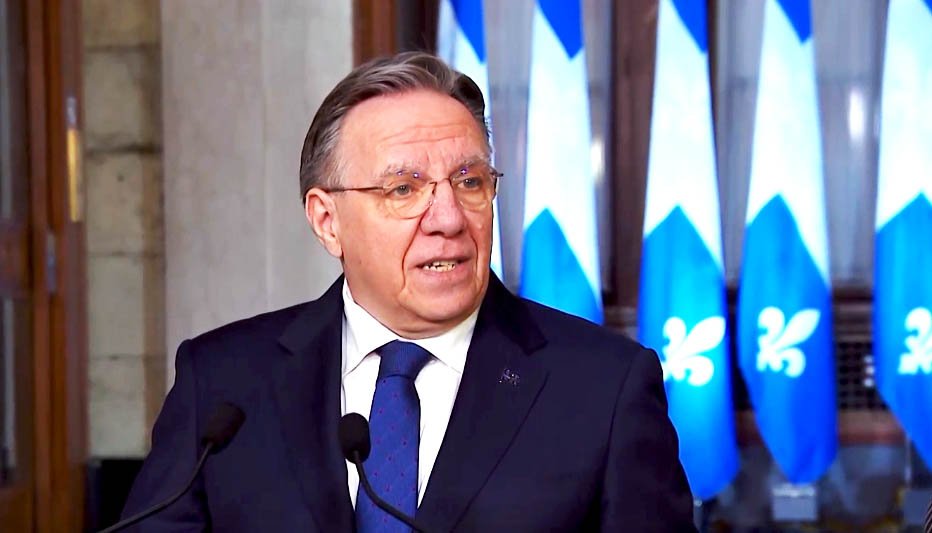
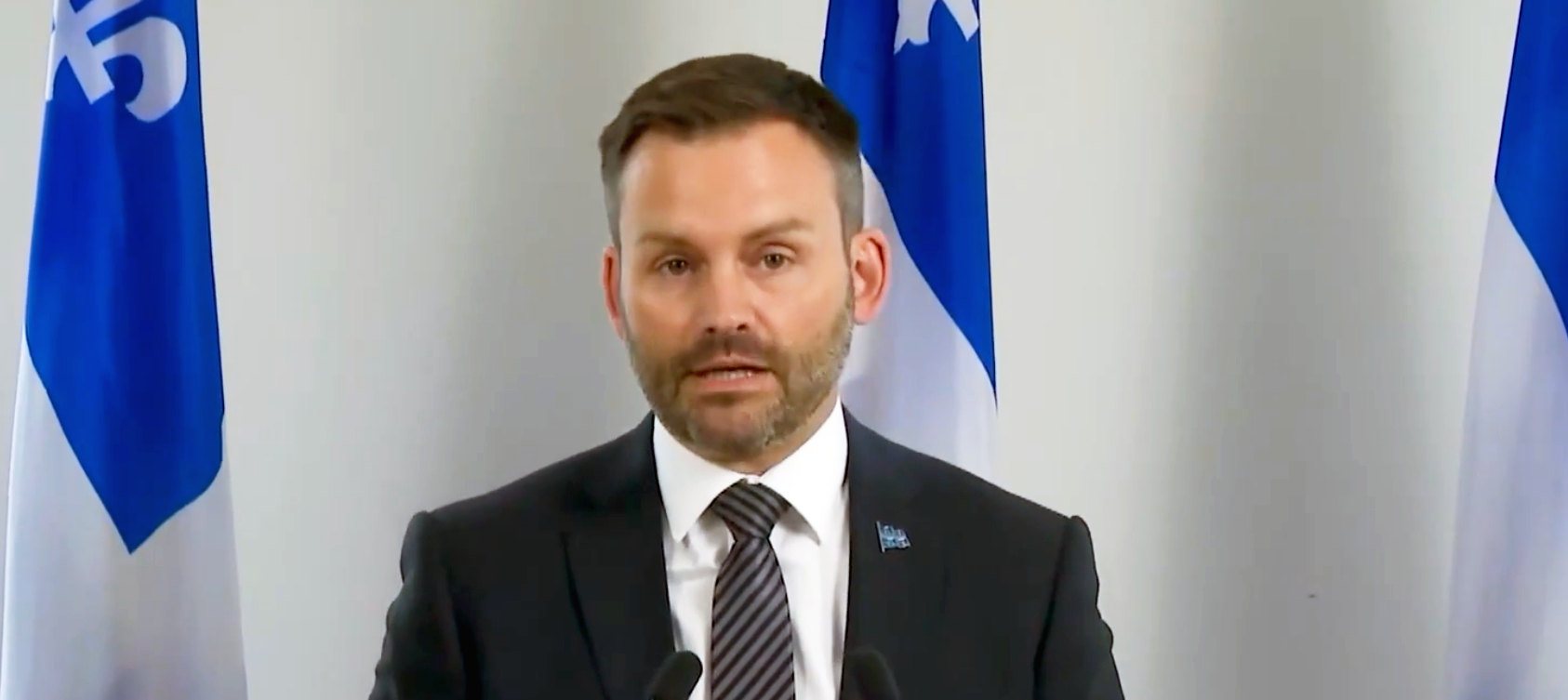
‘I can see that, right now, a lot of Quebecers want change first and foremost, and among other things, a change in premier,’ Quebec Premier François Legault said at a news conference. ‘I truly hope the next election focuses on the major challenges facing Quebec, rather than a simple desire for change.’ / SCREENSHOT
Time is the Grim Reaper for all elected leaders. Last year, it claimed Justin Trudeau. This week, it ushered Quebec Premier François Legault into his political grave.
After years of accumulated problems, criticism and grievances, voters simply become tired of seeing the same face and hearing the same answers. They start looking elsewhere for solutions. It takes a truly extraordinary confluence of circumstances for a political party to win government again after the departure of an unpopular leader.
All of which has some looking at the miraculous recovery last spring, under newcomer Mark Carney, of the federal Liberals, who seemed doomed to defeat. It is not surprising, then, to see some reaching for this analogy since it is so fresh in the political hive mind. This is especially so among Coalition Avenir Québec strategists, for whom Premier Legault’s personal approval ratings and the party’s fourth-place standing in the polls seem to them an apt parallel to the dire fix the federal Liberals were in late 2024.
This is, of course, understandable. They have to say something to keep giving the battered CAQ hope. But there is hope, and then there is hopeium. The search for the next Mark Carney is pure hopeium.
The CAQ may disappear without Legault
First, no one being mooted as a Legault replacement could credibly be pitched as a newcomer with the same profile and private-sector credibility as Carney. The names being bandied about are all either current or former CAQ cabinet ministers. This may reflect the fact that the CAQ itself was Legault's personal creation.
A Parti Québécois (PQ) cabinet minister, Legault felt that a lot of Quebec nationalists, like himself, were tired of the PQ’s decades-old fixation on sovereignty referendums but wanted an alternative that was safely nationalist in orientation. Quebec voters would be hard-pressed to name anyone in his government other than the Premier, so the party’s very existence may come into question now that the founder is leaving.
Second, the Quebec Liberal Party already has the lead in the “next Carney” sweepstakes. It is also holding an accelerated leadership election to replace Pablo Rodriguez, whose short-lived leadership came a cropper amid allegations of corruption linked to his campaign.
Charles Millard, former president of the Quebec Federation of Chambers of Commerce, has declared his candidacy. There has also been leadership speculation about other business leaders, such as Sophie Brochu, former President and CEO of Hydro-Québec, and Louis Vachon, former CEO of the National Bank of Canada. However, the prospect of an investigation into the party in the wake of the leadership corruption allegations suggests the party will be in bad public odour in the run-up to the October election.
Francophone voters may return to the PQ
Third, Leagault's departure may substantially strengthen the PQ’s hold on francophone voters. The party has been leading the polls in Quebec for two years, but still faced a significant vulnerability on its nationalist flank from the CAQ. Legault and the CAQ drew off a substantial portion of the francophone vote that had traditionally gone to the PQ in elections since its creation in 1968. Indeed, PQ majorities have been built squarely on its hold on francophone voters. Legault's resignation may see that vote return to its old PQ home, making a PQ government far more likely.
PQ leader Paul St-Pierre Plamondon seems to be aware of this tantalizing possibility. His statement on Legault’s resignation was in many ways a tribute to the Premier, saying, “François Legault has always been sincere in his desire to improve the lot of the Quebec nation. He spent more than a decade in the Parti Québécois vigorously defending the necessity of Quebec becoming a country. By founding the Coalition Avenir Québec, he continued his commitment to Quebec by trying to achieve gains for Quebec within Canada.”
The tone itself is also a key obstacle to a CAQ miracle comeback. No one would ever expect federal Opposition Leader Pierre Poilievre to say anything even remotely similar in reference to any of the departures of his political opponents. Indeed, it was Poilievre’s slash-and-burn approach to politics, his Trumpian tactics, that seemed to facilitate the charge of voters to Carney — back to the Liberals — in the context of the Trump tariff war. By virtue of the tone and content of his statement on Legault, St-Pierre Plamondon seems intent on demonstrating the statesmanship that voters — francophone or not — expect from a premier.
As I have written before, the PQ’s continued fealty to the idea of Quebec sovereignty and its promise of another referendum by 2030, could be a significant obstacle to a PQ return to government. But if St-Pierre Plamondon handles that issue with the same dexterity as he has dealt with Legault's resignation, then this worry may be muted in the election.
True, President Donald Trump’s rhetorical and tariff assault on Canada, the factor that led more than any other to Carney’s win, remains a major preoccupation in Quebec as it is across Canada. So the prospect of another sovereignty referendum may be too much political uncertainty for Quebecers to tolerate come election time.
But this is quite apart from the stew of political circumstances from which the Carney miracle emerged.
Premier Pierre Legault’s resignation certainly shuffles the political deck in Quebec in uncertain ways. But the potential evanescence of a CAQ without Legault in all probability increases the likelihood of a PQ win in October. Investors already concerned about that prospect will be looking to consider attaching an additional risk premium to any opportunities in Quebec because of the fundamental political uncertainty associated with a PQ win. No doubt that will not overshadow the uncertainty Trump has created for proponents of growth and investment across Canada. The sovereignty premium will be small. But it will be real.
But expecting a Carney-like deliverance for the CAQ is simply political hopeium. And hope, like hopeium, is not a strategy.