Newfoundland is in ‘golden age of opportunity’ for energy and natural resources: Champagne
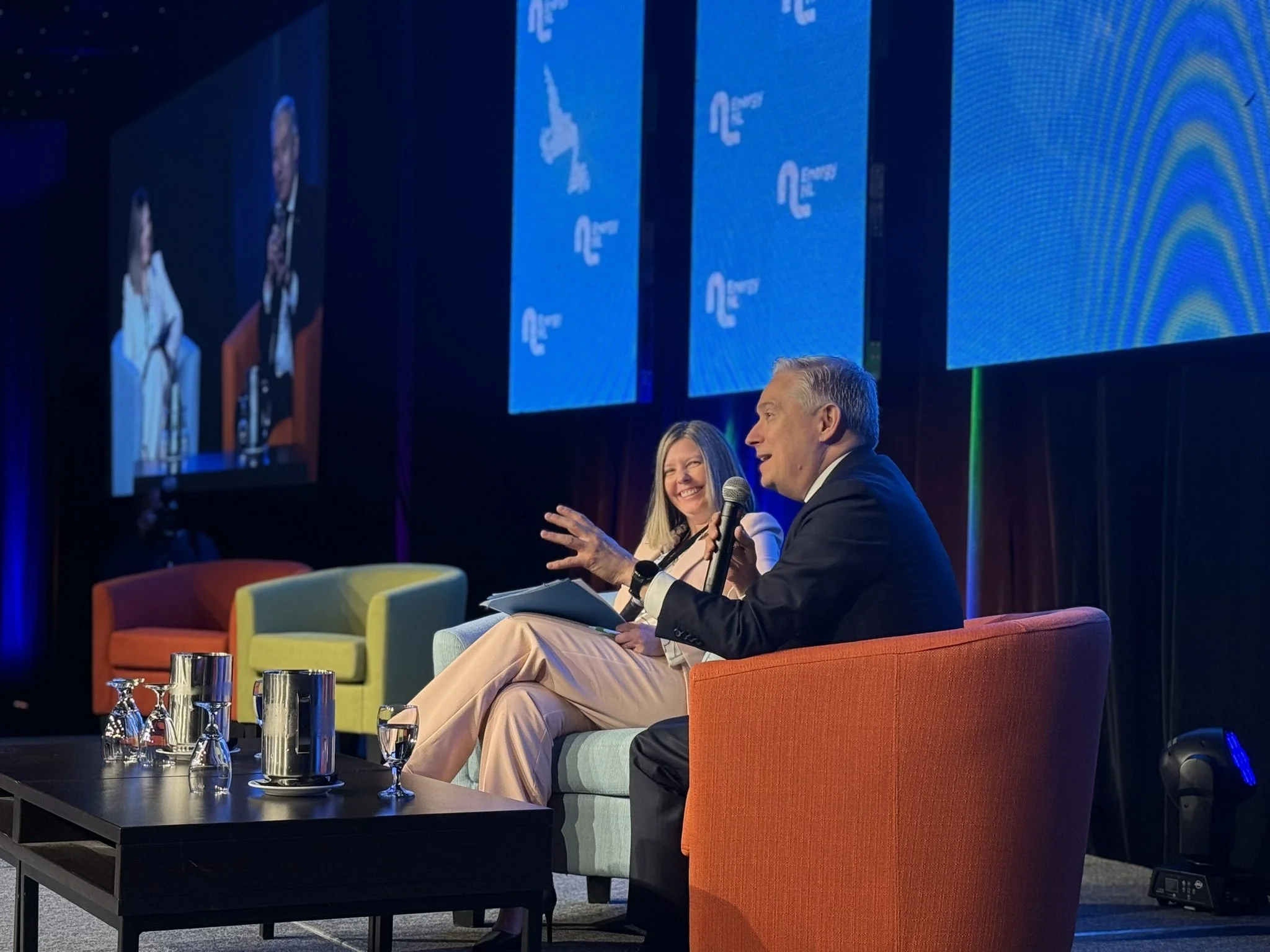
‘Great to be in St. John’s for what many call the Super Bowl of conferences in Newfoundland and Labrador. I joined Energy NL’s fireside chat today to talk about why NL is central to Canada’s energy future — Bay du Nord, Churchill Falls, and the energy mix that makes this province uniquely placed to lead. The world is looking for trusted energy partners, and Canada is ready to deliver,’ Finance Minister François-Philippe Champagne, pictured with Energy NL CEO Charlene Johnson, wrote on social media. / TWITTER PHOTO.
Newfoundland and Labrador is entering a “golden age of opportunity” and industry and governments should “seize the moment” as global demand for trusted energy partners intensifies, Finance Minister François-Philippe Champagne told the Energy NL Conference this week.
Participating in a fireside chat with Energy NL CEO Charlene Johnson, Champagne said the province’s “deep expertise, excellence, and know-how in oil and gas, energy … is part of the DNA of this province and in Canada.”
Energy NL represents energy producers and their supply and service contractors. The conference ran from June 2 to 4 at the St. John's Convention Centre, bringing together stakeholders from industry and federal and provincial governments.
“Over the past three days we have heard thoughtful discussions on the important issues facing our industry, including local content, global energy demand and energy security, regulatory certainty, Indigenous involvement, project development, emissions reduction, and the evolving role of Newfoundland and Labrador in supplying responsibly produced energy to the world,” Johnson said in a press release. “What remains clear is that Newfoundland and Labrador is exceptionally well-positioned to be a global leader in lower-carbon energy supply.”
Champagne underscored how energy, food, economic, and national security now intersect, saying the links between them have “never been greater,” and that “everything we do now has a component of national security.”
Champagne called on industry leaders to move quickly, saying the “window of opportunity is time-limited.” He urged the province to capitalize on its geographic advantage, deep expertise, and access to global markets, particularly in Europe. “My dream… is to make sure that in this new energy ecosystem, St. John's and Newfoundland and Labrador is at the core of the new energy security architecture of the world.”
Addressing the province’s potential for renewables, Champagne said, “Those who are going to be producing more electricity are going to win the economy of the 21st century.”
On carbon capture and technology, he stated, “Technology is our friend to be that responsible and sustainable energy partner to the world.”
Looking ahead, Champagne said federal support will continue for hydroelectric and renewable energy expansion, as well as innovation in carbon capture and storage.
Champagne pointed to Canada’s competitive tax environment for new investment, saying, “Canada has the lowest marginal effective tax rate for new investments of all the G7 countries, 3% lower than the United States of America.” He also referenced the new Canada Strong Fund, describing it as a “game changer for the country” that will help support projects of national interest.
The minister closed with a call for ambition, saying, “Let’s together really make this reality of being a key trusted partner in this new energy ecosystem in the world. And I think future generations are going to look back at what we have done at a time where people were talking about great challenges, that we've been able to seize the opportunities to put St. John's, to put this province, and to put Canada at the forefront of the energy future.”
N.L. Premier Tony Wakeham expressed his support for off-shore oil exploration at the conference as well, expressing support for the Carney government’s approach to energy and natural resources. "Now we have a new prime minister and a new government who actually want to build things and want to get things done," he said.
Wakeham highlighted the federal government’s support for the proposed Bay du Nord project, which would have a full production capacity of 160,000–175,000 bbl/d. He also reiterated the province’s commitment to provide $30 million for offshore well exploration.
The federal government also announced a $2.6 million investment into energy-saving projects in the province, allowing existing diesel-powered facilities to optimize their energy usage.