Never mind the bollocks: call it a bagel!

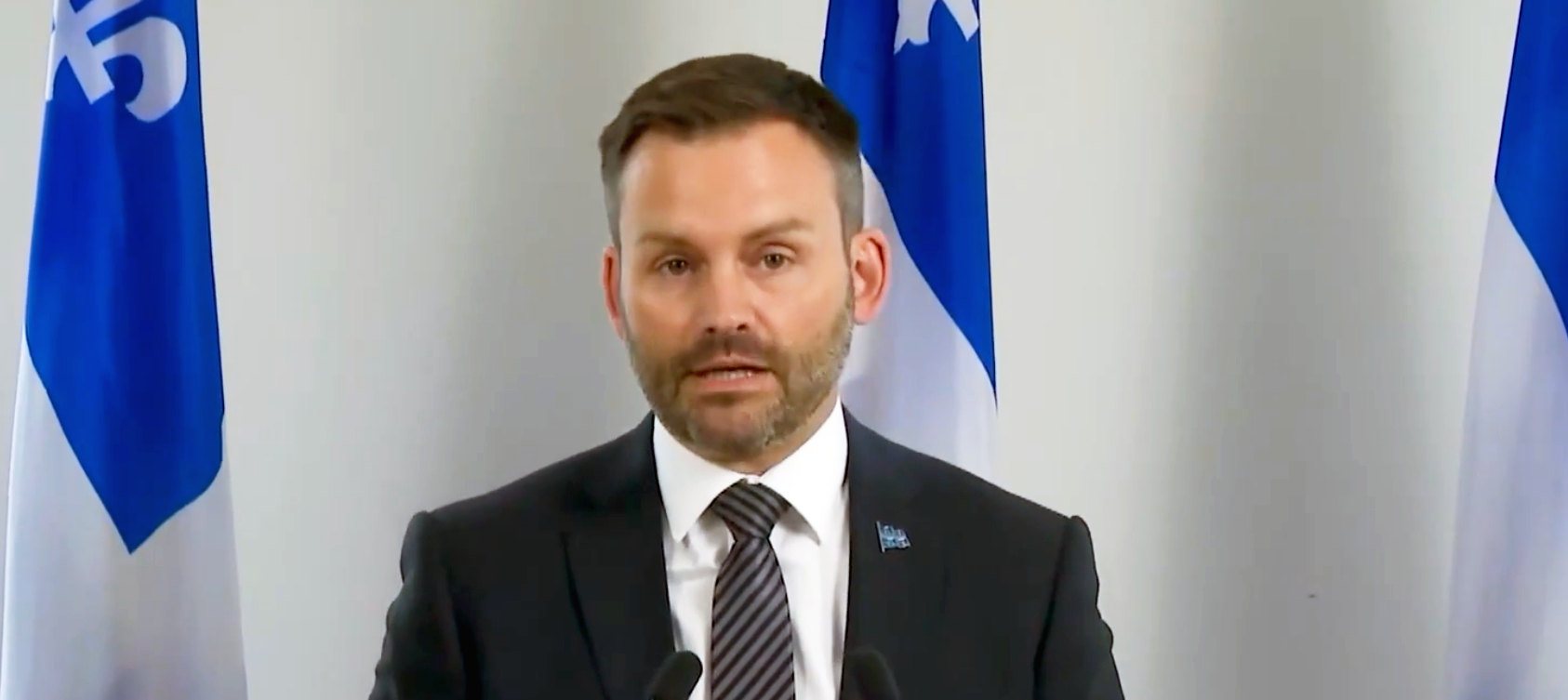
Prime Minister Mark Carney and Conservative Leader Pierre Poilievre contend with the definition of a recession following a StatsCan report showing GDP has decreased. / FACEBOOK PHOTOS
It must have seemed like an early birthday present this week for Opposition Leader Pierre Poilievre.
After a year of unremittingly bad political news — from losing the election, losing MPs, losing much of his platform to Prime Minister Mark Carney — the Statistics Canada report that the Canadian economy has shrunk for the second consecutive quarter was bad news more to his liking.
And like someone seemingly drowning in stormy political seas, Poilievre grabbed at this statistical life preserver for all it was worth, putting the spotlight on what he alleges is Carney's economic incompetence, and getting it off the narrative of his own political weakness.
Attack, rinse, repeat
Poilievre, the political strategist, is a master of the tactic of repetitive assault — attack, rinse, repeat. It worked for him, with painful evanescence, against former Prime Minister Justin Trudeau. And he has to hope it works again.
Upon the release of the Statistics Canada report, he promptly asked the Speaker of the House of Commons for an emergency debate on the economy (declined), held a press conference flanked by his Conservative MPs and used virtually all Conservative questions in Question Period demanding that the Prime Minister admit that Canada is in a recession.
His flair for pithy attack lines, a skill that once powered his now long-lost hold on Canadian voters, was back on full display: “This is an emergency in the lives of people who have empty fridges, empty stomachs and empty bank accounts. And they expect the prime minister, who promised that he was a great economic genius, to get in here and explain how he managed to be the only leader in the G7 to cause a recession.”
In fairness to Poilievre, his slashing rhetorical style has, with some few exceptions, never disappeared. It has simply been oddly discordant in the absence of Liberal vulnerability. Just a few weeks ago, for example, he described the prime minister as being “not quite as nauseating” as former prime minister Justin Trudeau.
But the hook that Canada seems to be the only G7 country to be in a recession gave him the political spear he has been looking for to penetrate the Carney’s seemingly impregnable armour. In short, his rhetoric met the moment.
The one thing that the Conservatives have over the Liberals is a reliably fatter bank account. And the Statistics Canada report serendipitously aligned with the Conservatives’ relentless paid media assault — across all platforms — on Carney’s economic reputation.
Most notably, the Conservative ads have been competing aggressively for airtime with the almost ubiquitous online sports betting commercials during NHL playoff broadcasts. (And if you are a Liberal, you may be wondering why the once equally frequent “Canada Strong” ads seem to have disappeared without a trace at a most inopportune time.)
And if nothing else, the spectre of a recession gave Poilievre and his caucus reason to feel a bit better about themselves as the memories of a miserable winter begin to recede and the summer parliamentary recess beckons.
How many ‘technical recessions’ can fit on the head of a pin
Poilievre is not an economist. He just plays one on TV. Carney is an economist, which may explain the somewhat bloodless response he has made so far against Poilievre’s assault.
The reflex of governments to refuse to utter the “R-word” is bred in the bone. It was perhaps most comically captured in an episode of The West Wing, where the staff agreed to refer to it as “a bagel.” So it was perhaps not surprising that Carney refused to concede that Canada is in a recession or that his technocratic reflexes kicked in.
From Question Period to scrums to photo ops, the Carney’s response can be encapsulated by this citation from CBC News: “This government’s been in the process of laying the foundations for a stronger, more resilient, more independent Canadian economy. That process is settling in during that time as we make major investments and major changes to how the government operates, how we do major projects and how we enter new trade agreements with other countries. We see some weakness, in part because of clear decisions by the government.”
He also cited a range of economists who argued either that the recession was “only technical” or that projected growth numbers for Canada placed us in second place in the G7. This overlooked the well-established fact that economists’ opinions have virtually no political pull when voters feel anxious. The polls on affordability and consumer confidence indicate that they are indeed anxious.
The tiresome debate about what “technical recession” means had descended to such depths of academic absurdity by week’s end that it called to mind medieval theological speculation about how many angels could fit on the head of a pin.
So adding some empathy to his messaging would be advisable. Above all, he has to avoid that kind of bizarre denial of reality that was a feature of the Trudeau Liberals’ response to the affordability crisis. Former Finance Minister Chrystia Freeland, referring to a “vibe-cession” was perhaps the nadir of this politically lethal tendency.
For his part, Carney may continue to get a pass from voters on economic weakness because they blame President Trump for it. And the president’s renewed call for a “51st state” was a timely reminder of that.
Of course, Carney's chief asset in political combat with Poilievre is the fact that he is not, well, Poilievre, who continues to lag far behind the prime minister in voter approval.
There are four coming by-elections in the offing — two in Quebec, and one each in Ontario and British Columbia. With his polls still strong and the Conservatives likely to lose all four, calling the by-elections soon could give Carney a chance to reaffirm Poilievre’s political marginalization.
Only time will tell whether Canadian growth rebounds. In the meantime, let's call off the recession debate. Never mind the bollocks: call it a bagel!