Conservatives finally enter ‘acceptance’ stage of political grief
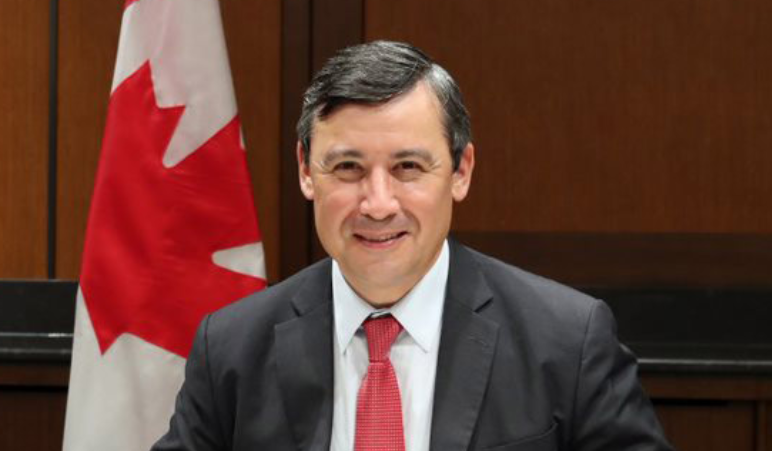
Conservative MP Michael Chong was appointed his party’s finance critic./ ‘No one would argue that Chong was a corporate titan, but his appointment means that Poilievre is extending an olive branch to Bay Street,’ writes Ken Polk.
Opposition Leader Pierre Poilievre’s appointment of veteran Ontario MP Michael Chong as Conservative finance critic suggests that Poilievre is finally coming to terms with his loss in the last election.
Of the well-known “five stages of grief,” Poilievre has spent most of the last year or so hovering between denial and anger. In fairness, any party leader who snatched defeat from the jaws of what seemed like certain victory in 2025 would likely be in mad mode for a while. The fact that he then had to suffer the defection of four caucus members to the Liberals, on top of losing, would understandably have extended his sour mood considerably.
Just two months ago, Poilievre's bitterness was still showing when he referred to Prime Minister Carney as “slightly less nauseating than Justin Trudeau,” the criticism of whom Poilievre and his colleagues just can’t seem to let go, almost a year and a half before Trudeau slipped quietly into the political void. (At least a touch of denial there.)
Two months on, Chong is selected as finance critic, a major economic role for the Conservatives. It’s one that should see him front and centre on budget days and in the development of the party’s next election platform. Of course, the extent of Chong's say in Conservative economic policy, or his profile as a spokesperson, remains to be seen. And as leader, Poilievre will still be driving the Conservative bus.
An appointment with a difference
But there are a few things that make Chong’s appointment notable.
First, he comes from the Progressive Conservative (PC) side of the Conservative family tree. He first ran for Parliament in 2000 as a PC candidate. For those who are always on the lookout for signs of life among so-called Red Tories, this is interesting.
Second, before he went into politics, Chong worked on Bay Street, most notably for the Canadian investment arm of the U.K.’s giant Barclays Bank. Since becoming leader, Poilievre has treated corporate Canada as the political equivalent of anthrax, frequently characterizing it as a hive of lazy insider “elites” who put their own interests above those of workers.
No one would argue that Chong was a corporate titan, but his appointment means that Poilievre is extending an olive branch to Bay Street. Chong’s comments after his appointment makes that clear, saying that he will be “talking to people from Main Street to Bay Street because at the end of the day, the affordability crisis needs all hands on deck to address it.”
Second, he has a record of bucking the party line if he felt it violated deeply-held personal beliefs. As minister of intergovernmental affairs, he resigned from Stephen Harper’s cabinet in 2006 because he could not support a motion Harper put forward in Parliament recognizing "the Québécois as a nation within a united Canada." If Chong had the gumption to stand up to a prime minister known for his toughness, then making him his economic point person indicates that Poilievre is not scared of having a strong-willed person on his A-Team.
Third, he was the author of The Reform Act, which gives a parliamentary caucus the power to remove a leader if they see fit. Erin O’Toole, Poilievre’s predecessor as Tory leader, can tell you that the act has teeth. In this light, making the act’s creator into a higher-profile political role sends a message of respect to a restive caucus. It also suggests that Poilievre feels that there will be no further defections.
A salutary change of tone
But aside from such advanced political tea leaf reading, to me, the greatest significance of Chong's elevation lies in his public tone and perspective.
In one of his first interviews as finance critic, this is how Chong explained Carney’s enduring popularity: “I think Canadians are a fair-minded and generous people. With the appointment of a new prime minister 15 months ago, I think they were willing to give him some time to present an economic plan that would turn things around, but I now think that Canadians are looking for results. We will be holding the government accountable on delivering results, and I think that message will begin to resonate with Canadians going forward.”
When asked how the Conservatives could start a comeback, Chong said the critic shuffle is “part of the plan to do that,” adding, “I also think part of the solution is time. Now that 15 months have passed, they’re now starting to ask for results and so as time moves on, you know, I think an increasing number of Canadians will be looking for results rather than just for announcements. So we’re going to make the case that the data show that the results are not coming in and that the government needs to change course.”
You would have to look long and hard to find a message from Poilievre or his front bench that is similarly calm and forward-looking. It accepts that Canadians like what they have seen of Carney so far and, more importantly, that it will take time for Canadians to see that Carney is not delivering.
Nothing about Carney being “nauseating;” nothing about Carney being “badly educated,” nothing about Carney being a “Bay Street bigwig” or a member of the “global elite.” There were none of the angry, politically tin-eared messages that have featured in Poilievre’s post-election attacks on Carney, which, though they may resonate with the Conservative base, have had no purchase with the broader voting public.
In contrast, Chong’s comments accept with equanimity that the Conservatives lost and that it will take time for the government to do what governments always do: defeat themselves through the accretion of unpopular decisions. This, of course, will take time, but the positioning has the commendable common-sense virtue of accepting where the Conservatives are: in opposition, as well as the fact that the road back may be a long one.
Carney's economic delivery window has opened
This week, the prime minister educated the Conservatives about just how long that road could be.
He announced that Alberta’s proposed pipeline project was being referred to the Major Projects Office for fast approval. The same day, he announced a Canada-British Columbia Cooperative Prosperity Agreement, which, among other things, “will further accelerate the construction of major energy and trade corridors” including: LNG Canada Phase 2, Ksi Lisims LNG, Cedar LNG and Woodfibre LNG, and major expansion at the Port of Vancouver.
These are the kind of big, meaty economic announcements that Poilievre must have been savouring when he was the prime minister in waiting. But he is not the prime minister.
Accepting political grief doesn't mean feeling “okay” about the loss — it means finding a way to move forward. With Chong's initial understated, matter-of-fact performance as finance critic, the way forward for still-grieving Conservatives and their leader is not easy, but it is nonetheless clear.