Loffreda’s advice to government: focus on finishing fewer things, but better things
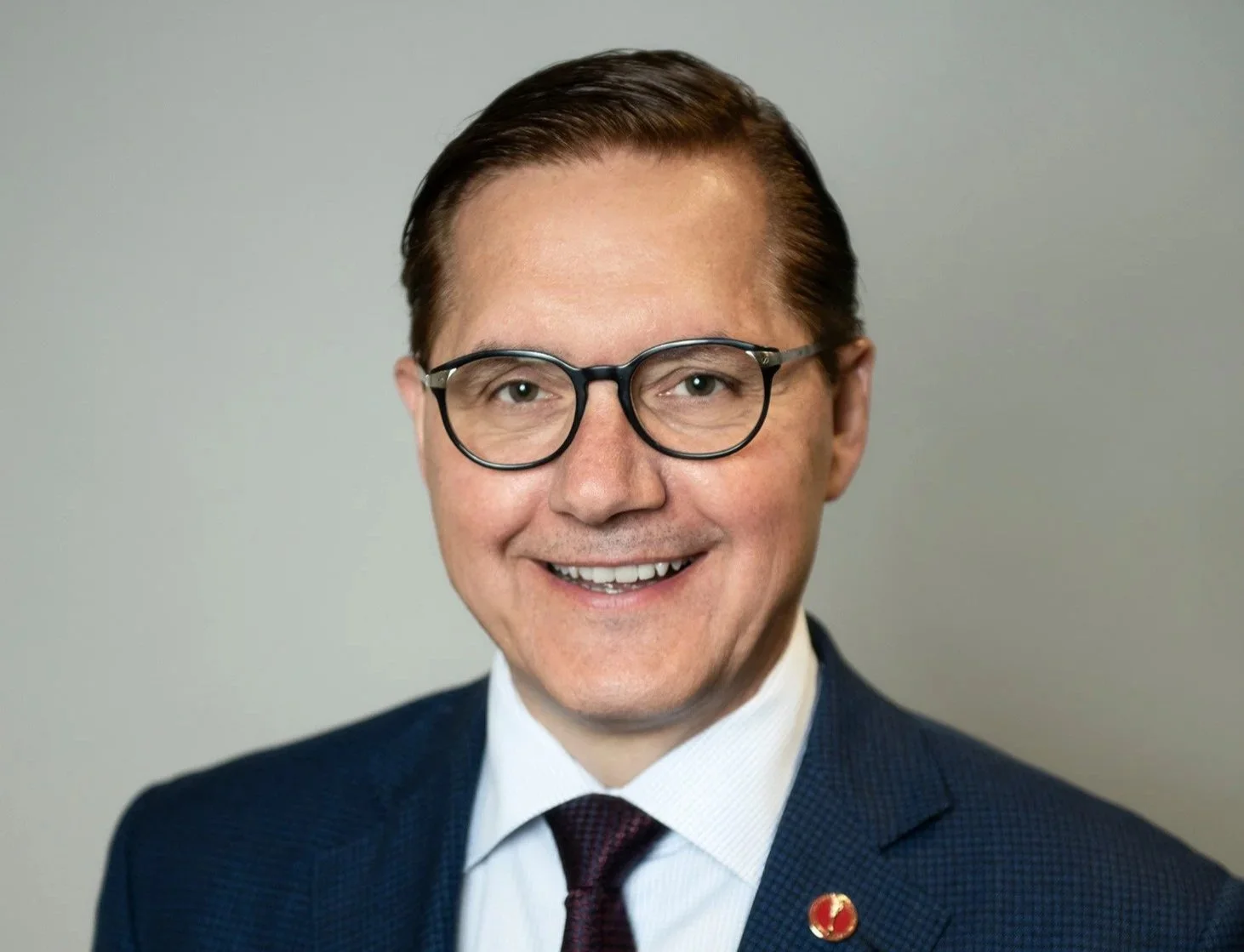
‘We’ll have to start shifting some of those supply chains and sales forces and start looking at other markets,’ says Senator Tony Loffreda about trade diversification away from the U.S.
Global uncertainty is likely to continue into 2026, even if it becomes more familiar, says Senator Tony Loffreda, adding that the coming year may be “more predictable, but not necessarily easier.”
In an interview with Means & Ways, Loffreda said: “The global disorder is more predictable at this point” and the current moment reflects a retreat from the postwar order that had underpinned decades of relative stability.
But Loffreda, a self-described optimist, has confidence in Canada’s long-term economic prospects despite ongoing trade tensions with the U.S.
“You know, we have a lot of things going for us in Canada,” he said. “We have energy. We have rare minerals. We have an educated population.”
He believes Canada does R&D well, but should improve the ability to turn research into large multinational companies.
Loffreda, appointed to the Senate in 2019, is a former vice-chairman of Royal Bank of Canada Wealth Management. He said Canada’s economy is resilient because of the industries that are largely shielded from U.S. tariffs such as financial services and many small and medium-sized businesses focused on the domestic market as well as the industries that operate under the existing CUSMA free trade agreement. Even with the affected sectors like steel and aluminum, while acknowledging that it’s been more difficult, he said, “The world needs those products.”
As midterm elections in the U.S. approach, Loffreda said there may be pressure on Trump to negotiate a better deal than what he is signalling now. Any new agreement is unlikely to eliminate tariffs entirely, he said. Rather than relying solely on the U.S. market, Canadian companies should diversify.
“We’ll have to start shifting some of those supply chains and sales forces and start looking at other markets,” he said, noting Canada has 15 active Free Trade Agreements (FTAs) with 51 countries, representing 63% of the world’s GDP.
“Listen, there’s always concern. I can’t say I’m not concerned. At this point, the economy is never static. It's always dynamic, but it's predictable as to how President Trump will act. We know that there's no surprises anymore.”
Meanwhile, when asked what is the one thing Canadians should be looking for in 2026, Loffreda said “execution.”
Execution, he said, depends less on political will than on institutional capacity. “The key question there is not whether governments want to act. It’s whether systems are capable of acting at speed.”
Improvement will come but “only if the governments resist the temptation to announce more and instead focus on finishing fewer things, but better things,” he said.
Five questions with Senator Tony Loffreda
M&W: How would you describe 2025 in one word? Why?
TL: Transitional — Unpredictable.
Trump 2
Liberal Government
Global Trade war
New World order or disorder
Lower inflation, lower interest rates but much higher food and housing costs
2025 felt like a bridge year. Canada — and much of the world — moved from crisis management toward recalibration. Inflation eased, interest rates peaked, and attention shifted back to productivity, housing supply, and long-term growth. It wasn’t a year of dramatic breakthroughs, but one of laying the groundwork for more sustainable decisions ahead.
M&W: What is the one thing Canadians should be looking for in 2026?
TL: Execution. Canadians don’t need more announcements — they need delivery. In 2026, success will be measured by whether governments actually implement policies on housing, affordability, infrastructure, and workforce development. The focus must shift from intent to outcomes that people can feel in their daily lives.
M&W: Which underrated public policy should governments address to grow the economy in 2026? Why?
TL: Business succession and employee ownership. Canada faces a quiet but massive transition as hundreds of thousands of small and medium-sized business owners approach retirement. Policies that support employee ownership — such as Employee Ownership Trusts — can preserve jobs, keep businesses rooted in communities, and strengthen productivity. It’s economic growth that is inclusive, resilient, and Canadian.
M&W: What is the best economic or public policy book of the year?
TL: Abundance by Ezra Klein and Derek Thompson. It reframes the policy debate around a simple but powerful idea: growth and affordability require the capacity to build — housing, infrastructure, energy, and institutions. It’s a timely reminder that good intentions must be matched by systems that actually deliver results.
M&W: What is keeping you up at night?
TL: Complacency about productivity and trust in institutions. Canada has strong fundamentals, but productivity growth has lagged, and public confidence in institutions is fragile. If we don’t modernize how we make decisions — faster, more transparent, more accountable—we risk drifting. Economic strength and democratic legitimacy ultimately depend on one another.