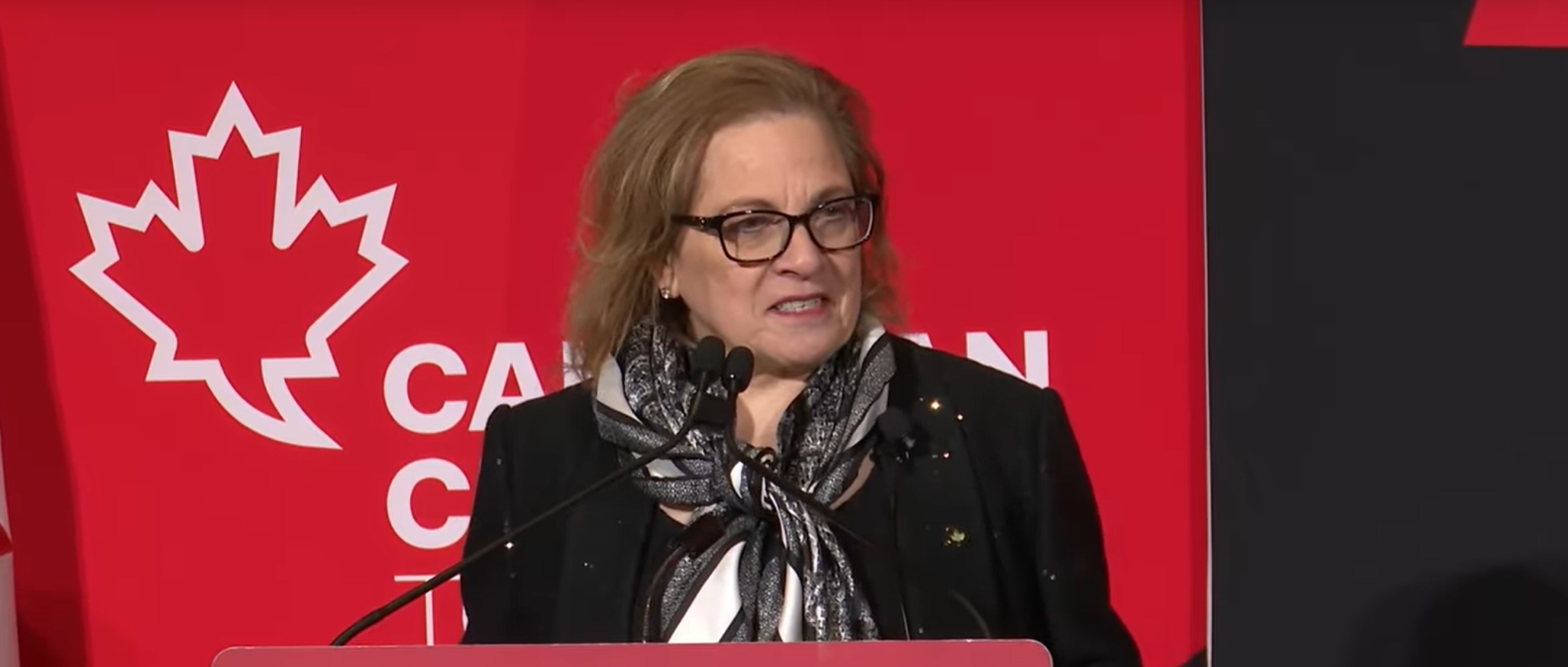
Immigration not ‘abstract political debate’: Loffreda

‘If we aspire to remain economically strong, socially cohesive and confident in our future, then we must remain a country that believes in the power of immigration,’ says Sen. Tony Loffreda.
Immigration is not a secondary feature of Canada’s success; it is one of its defining strengths. It is at the heart of most policy discussions and decisions in our country.
Our economic growth, our resilient workforce and our vibrant entrepreneurial ecosystem are closely linked with the people who choose Canada as a place to build their lives. Immigrants fill important skill gaps, create companies at a solid pace and offer up international networks, new ideas and cultural perspectives that make our economy more competitive and innovative.
Statistics Canada regularly reports that Canada has one of the highest proportions of immigrants among developed countries. Immigrants are also more likely to own a business than persons born in Canada.
In a country that is dealing with a demographic crunch and an aging population, sustained immigration is not an option. In fact, it is essential if we want to maintain productivity, support public services and ensure that future generations will inherit a confident and flourishing nation.
Yet, in recent years, opposition to immigration has grown louder. Newcomers are sometimes portrayed as a strain rather than a strength. These arguments tend to isolate short-term pressures — housing comes to mind — while ignoring the long-term economic and social dividends immigration delivers.
More concerning still, rhetoric that frames immigration as a problem risks eroding the very social cohesion that distinguishes Canada. It is neither necessary nor helpful to pit communities against one another when history and evidence show that inclusive growth strengthens us all.
Canada’s story is, at its core, a story of contribution. Immigrants do not simply participate in our economy; they shape it, and they expand it. They are job creators, innovators, community builders and leaders whose impact ripples across generations. Recognizing their achievements is not about dismissing challenges; it is about acknowledging where our true advantage lies.
Canada’s immigration system is designed to welcome newcomers who can contribute to our economy and strengthen our communities and country. I have seen this first-hand over my 35 years in the banking sector. I had the privilege of working alongside thousands of entrepreneurs. I have seen first-hand the risks they assume and the sacrifices they make. Business owners put everything on the line every single day.
In 1950, Gerardo D’Argenio left post-war Italy aboard the ship Argentina and arrived at Pier 21 in Halifax on Christmas Eve with his mother. Each was given $5 before boarding a train to Montreal. Like so many newcomers, he carried little more than hope, something my own parents could relate to when they chose Canada from among so many other nations a decade later.
Those early years were difficult for the family, as they are for most newcomers, but his perseverance paid off. Through perseverance and discipline, he eventually co-founded a modest automobile dealership in Laval, mortgaging everything he had. That enterprise grew into one of the largest and most respected BMW dealerships in the country, BMW Laval.
Today, it remains a family enterprise. His son Carmine serves as president, alongside the next generation of D’Argenios. The company employs more than 200 people and is deeply engaged in community philanthropy, supporting numerous charitable causes and organizations. For the D’Argenio family, success has not been measured solely in sales but in impact, in giving back to the country that has given them so much for so long.
As Carmine often says, lasting success is rooted in hard work, accountability and initiative. There is even a unique moment of national pride tied to this story. During the recent opening of Parliament, the blue BMW used by His Majesty King Charles III was provided by BMW Laval, a symbolic testament to how far one immigrant family has come.
The second story begins like the first, with parents who arrived with little but ambition. From Greece, the Mammas family came to Canada seeking opportunity.
Having grown up working in his family’s restaurant business and gaining experience in operations, customer service and entrepreneurship, Peter Mammas learned early on the value of small business ownership as a pathway to opportunity and integration. In 2016, despite some challenges and financial hurdles, he successfully founded Foodtastic Inc. in Montreal with a clear objective: to build a Canadian platform that supports independent entrepreneurs and strengthens local communities.
Today, Foodtastic Inc. supports more than 25,000 jobs nationwide through a portfolio of well-known restaurant brands in urban, suburban and regional markets. Its system generates approximately $1.2 billion in annual sales and sustains more than 1,000 franchised small businesses, many owned by first- or second-generation immigrants. Canadians across the country know its brands: Second Cup, Milestones Grill and Bar, Freshii, Shoeless Joe’s Sports Grill and Pita Pit, among others. Today, the business is global, operating in 17 other countries.
Through franchising, Foodtastic Inc. creates entry points into the workforce for newcomers and young Canadians alike. It invests in supply chains, real estate, construction and local partnerships, and its franchisees give back through charitable initiatives and food security programs in their communities.
The third story begins in very different circumstances. In August 1975, as civil war engulfed Lebanon, the Afeyan family arrived in Canada as refugees with their children still in high school. They came seeking safety and stability and found in Canada the chance to rebuild.
Soon after settling, the family launched a business. What began as an import venture evolved into manufacturing. At just 18 years old, Levon Afeyan joined the family enterprise while attending CEGEP in Quebec. By 1981, the family had established a manufacturing operation producing vinyl-upholstered cushions for the chair industry. They soon expanded into curved plywood production, earning a reputation for technical excellence and innovation.
In 1994, Levon took over the business known today as Seatply. Under his leadership, the company pursued an ambitious growth strategy. Through sustained investment in technology and research and development, it became the largest producer of its kind in Canada. It expanded into U.S. markets, and by 2025, more than 65% of its sales were exported to the United States and Mexico.
Growth did not come at the expense of the community. The company acquired and revitalized struggling Quebec manufacturers in 2018 and 2020, preserving jobs and expanding its overall operations to 160,000 square feet, with more than 150 employees. In 2021, it also stepped in to save a veneer mill in Lac-Mégantic, protecting 100 jobs and sustaining a century-old industrial legacy.
Equally important is its human impact. Over the decades, it has hired and trained individuals with limited skills, offering stable employment and dignity. In 2015, when thousands of Syrian refugees arrived in Canada, the company welcomed more than 40 into its workforce, many of whom continue to thrive today.
Honourable senators, these families did not simply build businesses. They created thousands of jobs. They invested in research, expanded into international markets, revitalized industries and strengthened local communities.
They prove to us that immigration is not an abstract political debate, but a living force that shapes our economy and strengthens our communities every day.
If we aspire to remain economically strong, socially cohesive and confident in our future, then we must remain a country that believes in the power of immigration. Canada succeeds when we open our doors and those who walk through them build, give back, and help write the next chapter of our shared history.
Ask the D’Argenio family. Ask the Mammas family. Ask the Afeyan family. Ask the Loffreda family for that matter. Ask millions of Canadians whose stories began somewhere else. When asked who they are, their answer would not be hyphenated or hesitant. It would be clear, proud and loud: They are Canadian.
Sen. Loffreda originally gave this speech in the Senate Chamber on Feb. 24 to announce that he would begin an inquiry into the vital role that immigrants have played — and continue to play — in shaping Canada’s economic growth, cultural richness and social fabric. It was edited for length.