Did Carney just throw CUSMA under the bus?

Prime Minister Mark Carney, pictured with U.S. President Donald Trump at the G7 Summit in Kananaskis, Alta. / GOVERNMENT OF CANADA PHOTO
The future of Canada’s economic dealings with the U.S.—still the cornerstone of Canadians’ standard of living—appeared more troubled than ever after a tumultuous week in bilateral affairs.
Mark Carney’s relations with Donald Trump appeared to hit a low point after the prime minister stole the show at the World Economic Forum by calling out the president’s destructive policies.
Carney urged middle powers to pull together to survive. Although not naming Trump, the prime minister said this was crucial in an era when the U.S. has wrecked the postwar trade and diplomatic norms in place for 75 years.
Carney’s Davos remarks touched off a heated exchange with Trump over several days, with the president basically saying Canada only exists because of the U.S. and the prime minister replying that Trump was talking nonsense.
Building new alliances
As such, it raised very worrisome questions about the review of the Canada-U.S.-Mexico free trade agreement that is just getting underway.
At Davos and earlier in China, Carney has made much of his strategy of building new trading alliances across the globe to guarantee Canadian independence at a time when this country’s traditional commercial ties to the Americans are in doubt.
Worthwhile as that may be, the real question for Canada’s immediate economic well-being is whether CUSMA can be preserved, numerous observers said this week. It has been widely noted that 70 per cent of our exports are still destined for the U.S. and the exclusion under CUSMA from huge tariffs on the bulk of Canadian goods going to the American market kept Canada from plunging into a recession last year.
As a former Wall Street executive and holder of the prestigious Bank of England governorship, Carney is believed to have benefitted from Trump’s respect. Carney certainly has had better dealings with the right-wing U.S. president than left-leaning former prime minister Justin Trudeau.
But an all-out spat with the touchy U.S. president, who takes everything personally, does not add up to a promising start for the make-or-break CUSMA negotiations. It is worth remembering that talks on reducing tariffs against Canadian steel and aluminum were said to be going well until Ontario Premier Doug Ford’s hard-hitting anti-tariff ads aired on American TV in October. Since then, Ottawa’s talks with the White House have been adrift.
LeBlanc still heading to Washington
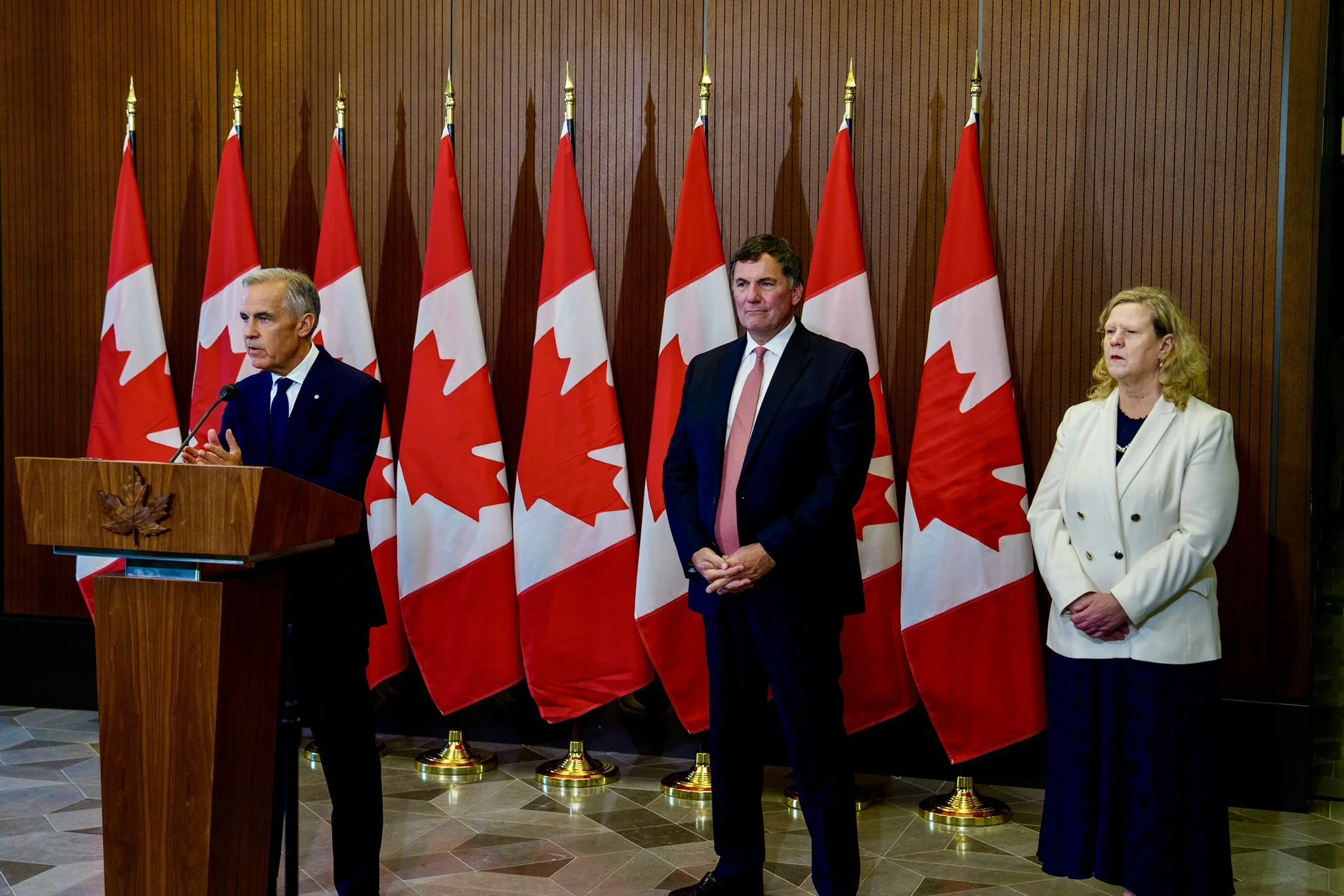
Nonetheless, Carney’s aides are telling reporters that Dominic LeBlanc, who heads up this file in cabinet, will soon be going to Washington as planned to begin talks on the CUSMA review.
The prime minister’s current strategy, assuming he has one beyond telling it like it is after months of fruitless discussions with the president, was not immediately clear.
One has to assume that Carney is betting that dismantling CUSMA, as Trump has threatened, would be too much of a political risk in advance of this fall’s U.S. Congressional midterm elections.
The American corporate world has said the U.S. economy cannot be easily disentangled from Canada and Mexico. And Trump’s anti-trade policies in the form of globe-encompassing tariffs have contributed to U.S. inflation, which is one of the sources of the president’s decline in popularity at a time when Republicans are worried by the November elections.
John Bolton, a former national security adviser to the president, said the apparent breakdown in Carney’s relations with Trump “is not a good sign.” But he said the long-term value of CUSMA cannot be ignored by the White House. “It’s clear that the two countries’ economies are not going to be divorced from each other,” he told CTV, adding that economists have made clear that an all-out trade war would hurt both countries.
According to media reports, Carney’s office was suggesting that the prime minister’s unflinching words at Davos have given Canada an advantage in talks with the U.S. because they have unequivocally established Ottawa’s position.
Whether that’s true or not, it does seem that the prime minister has moved beyond the stage of trying to win favour with the mercurial, untrustworthy president, gambling that Trump responds better to a challenge than the habitual appeasement shown him by most foreign leaders in the past year. Canadians will have to await the outcome on that one.