Churchill Falls reboot hinges on upcoming provincial election outcome
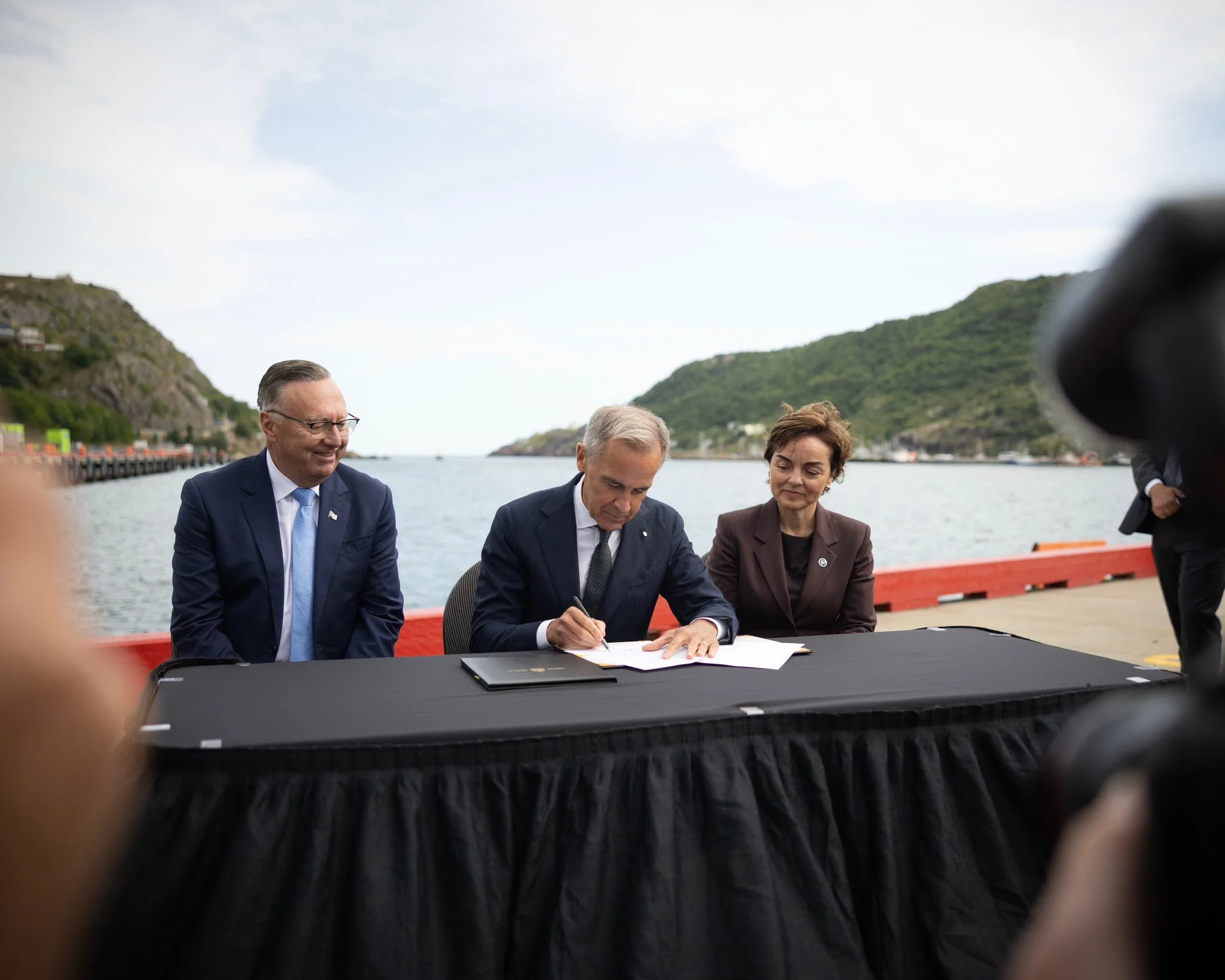
‘Our new partnership with Newfoundland and Labrador and Québec will generate 14,000 megawatts of clean power — that’s enough to light, heat and cool every home in Toronto, Montréal and Vancouver combined. Proof that when we build together, we build big,’ Prime Minister Mark Carney wrote on social media. / TWITTER PHOTO
The Churchill Falls agreement remains up in the air ahead of Quebec's provincial election, says Kelly Blidook, an associate professor at Memorial University.
“I can appreciate the politics around wanting to do the announcement now,” Blidook told CBC, adding he expects the Parti Québécois to form the next government following the Oct. 5 election. But if the PQ doesn’t like the deal, “it will not happen.”
The governments of Canada, Quebec and Newfoundland and Labrador this week announced a new agreement to expand Labrador's Churchill Falls hydroelectric plant and develop new electricity generation and transmission projects in “one of the largest electricity projects in North America.”
Prime Minister Mark Carney, who said the project would generate enough power to light, heat and cool the homes in Toronto, Montreal and Vancouver combined, joined Newfoundland and Labrador Premier Tony Wakeham and Quebec Premier Christine Fréchette in St. John’s on Monday to announce $10 billion in federal financing to upgrade and expand the Churchill Falls Generating Station, develop the Gull Island project, build new transmission lines and support a major onshore wind project in Labrador.
With an overall investment of almost $70 billion, the projects are together projected to generate 14,000 megawatts of renewable power, nearly three times Churchill Falls’ current generating capacity. Wakeham said the new deal will give Newfoundland and Labrador access to up to 2,750 megawatts of electricity, 760 megawatts more than under the 2024 MOU, including 400 megawatts from a proposed 2,000-megawatt wind project.
He said the province will retain “complete optionality” over how to use or sell its power, and Quebec is “committed to paying a premium price of 150 per cent over PPA‑based pricing.” The agreement also gives Newfoundland and Labrador guaranteed transmission access through Quebec, allowing it to sell power to markets in New York and New England.
Newfoundland has secured a portfolio of up to 985 megawatts of transmission capacity into external markets, and the deal provides $49 billion in financial benefit to the province on a 2026 net present value basis, with a total nominal value of $273 billion over its life, he said.
Turning the page on a ‘dark chapter’
The two premiers also announced that Newfoundland and Labrador Hydro and Hydro‑Québec have signed a Definitive Cooperation and Implementation Agreement setting out the terms for replacing the 1969 Churchill Falls contract and forming the basis for final binding agreements between the parties. The 1969 contract has long been a point of resentment in N.L., where it has been perceived as heavily favouring Quebec.
“We are finally turning the page on one of the darkest chapters in our past and replacing both the notorious August 1969 Churchill Falls Agreement and the 2024 MOU with a better deal for all of us,” said Wakeham.
The framework announced Monday between the two provinces terminates no later than March 31, 2027 unless extended, with the parties aiming to conclude the final binding agreements by Dec. 31.
Fréchette said Quebec and Newfoundland and Labrador will together invest $60 billion to double electricity production in Labrador.
The Parti Québécois, currently leading in the polls, has criticized Fréchette for moving quickly on the arrangement and accused her of rushing it for electoral reasons. However, PQ Leader Paul St‑Pierre Plamondon said the party would consider maintaining the agreement if it is beneficial for Quebec.
Fréchette said the two provinces negotiated the deal with the federal government acting as a “catalyst” to speed up the agreement. “This is to secure the energy flow in Quebec,” she said, while questioning the PQ’s position on the deal.
Wakeham acknowledged reversing a campaign pledge to put any new Churchill Falls agreement to a referendum. “Yes, that was a difficult decision for me to make,” he said, noting that the House of Assembly will meet Sept. 14 to allow members of the Newfoundland and Labrador legislature to debate the deal.
The federal government also announced funding for pre‑development work, including transmission studies and a critical minerals corridor referred to the Major Projects Office for review.