Pacific Link: a $40-billion bet on markets beyond the U.S.
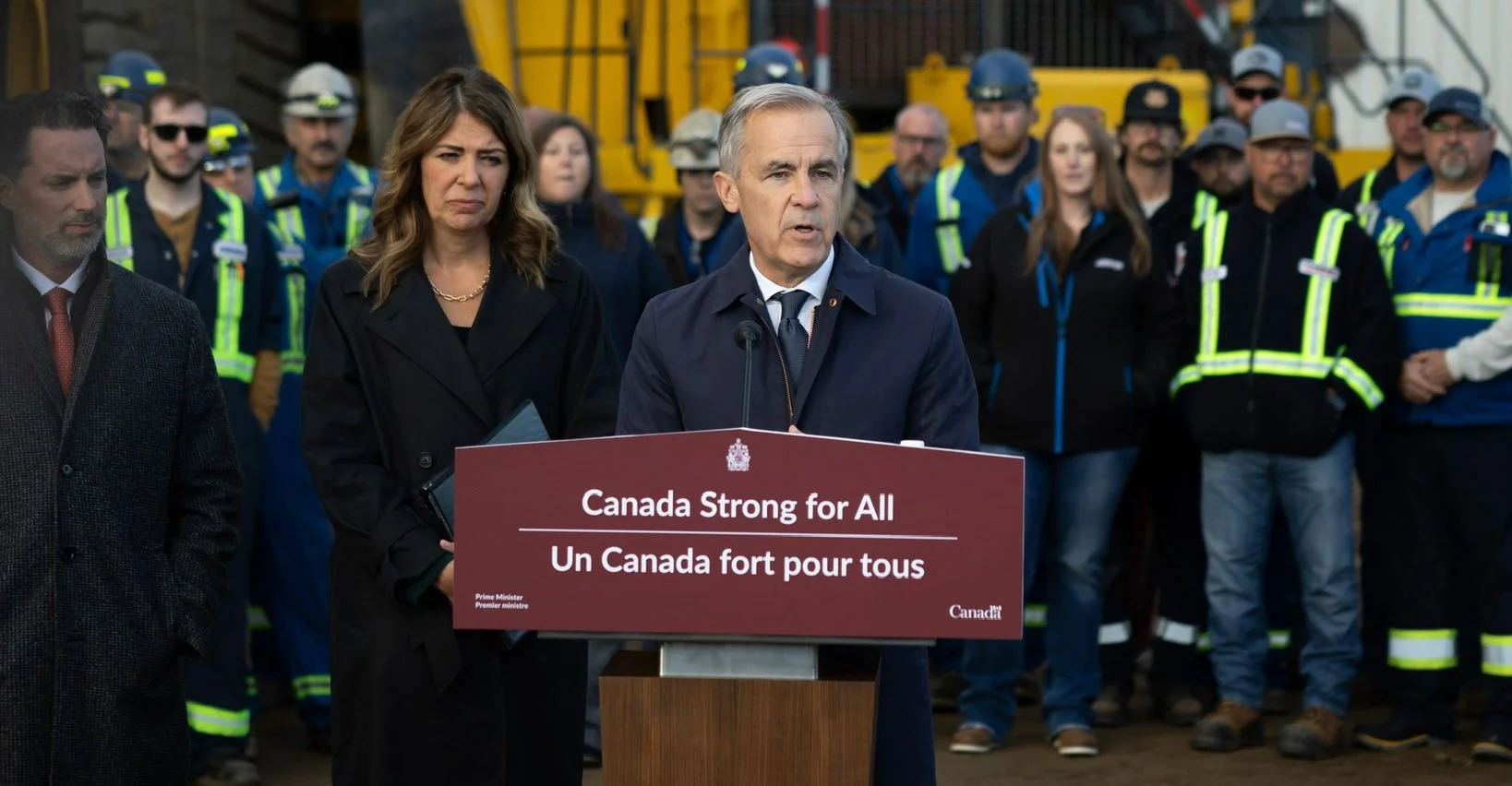
‘Canada will remain a country of high standards, but high standards do not require slow decisions,’ says Prime Minister Mark Carney. / TWITTER PHOTO
The designation of the Pacific Link pipeline as a project of national interest is an opportunity to usher in a new investment era, says Bridgitte Anderson, CEO of the Greater Vancouver Board of Trade.
“Recent geopolitical and trade disruptions have exposed the risks of Canada's dependence on too few export markets,” Anderson said in a statement. “To strengthen our economic security, Canada must expand its ability to get energy, resources, and other products to customers around the world. Designating a new west coast oil pipeline, Pacific Link, as a project of national interest would be an important step toward that goal. Canada now has an opportunity to launch a new cycle of nation-building investment.”
She noted the LNG Canada Phase 2 expansion project in Kitimat, B.C., which reached final investment decision this week, demonstrates investor confidence in Canadian projects. “By advancing projects that connect Canadian products to global markets, we can attract investment, strengthen our competitiveness, and build a more resilient economy.”
Prime Minister Mark Carney says Pacific Link could be cleared to break ground by Sept. 1, 2027, making way for 140,000 jobs and the export of an additional one million barrels of oil a day to Asian markets.
“This is Team Canada at work,” Carney said in announcing that the government had officially listed Alberta’s West Coast Oil Pipeline, now known as Pacific Link, as a project of national interest. “The speed of this project shows that now, when Canadians want something built, we get it built."
Over the next year, the Major Projects Office, supported by Canada's Energy Regulator, will lead consultations to set the project’s conditions, including ownership, benefits, environmental protections, and the local hiring, contracting, and oversight.
“We're a country of high standards, but high standards don't require slow decision. They require focused government,” Carney said at a press conference in Fort McMurray, Alta., alongside Alberta Premier Danielle Smith.
The 1,200-kilometre conduit from Bruderheim, Alta., to Delta, B.C., is expected to cost between $35 billion and $43 billion and be completed by 2032-33. The government estimates it will generate $20 billion in GDP annually and $100 billion in revenue by 2060.
‘Significant tailwinds’ to growth
Carney said the Major Projects Office has received more than 100 submissions from Indigenous rights holders over the past three months and consulted more than 130 Indigenous communities near the potential routes in Alberta and B.C. While today 90% of Alberta's oil goes to the U.S., he said Pacific Link will materially reduce that dependence.
Andrew Hencic, TD Director & Senior Economist, said Pacific Link and Kitimat “could be significant tailwinds to growth.” While construction is still uncertain, “this week’s announcements present material upsides for the Canadian economy in 2027 and beyond.”
Business Council of Canada CEO Goldy Hyder also welcomed the announcement. “To invest with confidence in Canada, investors need certainty. Today’s announcement delivers it,” he said in a statement.
To unlock the pipeline’s potential, Carney said Ottawa is working with B.C. to expand the Pacific Gateway, including a $10 billion federal investment in Roberts Bank Terminal, which will serve as the landing point for crude moving through Pacific Link.
The government also announced a total $1.2 billion in environmental measures:
$740 million over four years for marine conservation, Coast Guard monitoring and search-and-rescue, radar and radio coverage, pollution response and marine safety and enforcement.
$136 million to protect marine mammals, including better oil-spill response and reduced underwater vessel noise.
$186 million for the Northern Shelf Bioregion Reconciliation Framework Agreement, advancing Indigenous partnerships, conservation and emergency preparedness in the Great Bear Sea region, alongside Indigenous-led stewardship in the Lower Fraser River Estuary.
Carney said the project will prioritize Canadian material, including "Canadian steel with Canadian workers trained by Canadian unions.” Smith called the announcement “monumental” and an “important step” for “turning this project from a vision into a reality.”
Indigenous communities will have a 10% equity ownership stake.
Indigenous leaders are raising concerns, however, about the consultation process for the pipeline, citing a compressed timeline, insufficient project information and potential impacts on Indigenous and treaty rights. The consultation period was initially planned for about a month before the deadline was extended from Aug. 28 to Sept. 18 after communities raised concerns.
The Assembly of First Nations said it identified “many red flags” in the designation, arguing the government appeared to be making decisions before meaningful consultation had occurred.
“First Nations support economic development and prosperity for all, but not at the expense of our rights, the planet, and the government’s legal obligations to our people,” the AFN told The Canadian Press.
Cold Lake First Nations Chief Kelsey Jacko said communities facing direct impacts should have had a greater role. “Today, the leaders of the Nations and communities that will be heavily impacted should have been in the room. This runs right through our territory,” Jacko said.
Fort McKay First Nation Chief Raymond Powder welcomed the equity and economic opportunities while acknowledging environmental concerns. “We’ve had some respectful conversations,” he told CP.
Anderson noted that projects of this size “must be developed responsibly” with Indigenous partnership. “There is important work ahead to address community priorities, environmental considerations, and shared economic opportunities.”