Can Toronto investment summits truly revitalize Canada's economy?
Canada is making a renewed push to attract foreign investment as it seeks greater economic resilience, new trade relationships and more domestic capacity in sectors such as defence, energy, infrastructure and critical minerals. But as governments and investors gather in Toronto next month, the central question will be whether that capital does more than finance major projects or acquisitions — and instead helps Canadian companies, entrepreneurs and mid-sized businesses scale, stay in Canada and build the long-term capacity the economy needs.

There will be three investment summits in Toronto on Sept. 14, convening global business leaders, investors and policymakers. The stakes are high, say experts.
Canada is trying to attract more foreign investment at a time when the country is seeking stronger economic resilience, new trade relationships and more domestic capacity in areas including defence, energy, infrastructure and critical minerals.
But business and entrepreneurship advocates say attracting capital is only part of the challenge. The harder question is whether new investment will reach the companies, entrepreneurs and projects that can build long-term capacity in Canada.
That debate will be in focus as governments, investors and business leaders gather for investment-related discussions next month in Toronto.

Canada has strong companies, reliable institutions, trade access and the rule of law — assets that can make it an attractive destination for global capital, says former International Trade Minister Mary Ng. / MILKEN INSTITUTE PHOTO
“Having this interest in Canada by global investors at this particular moment is not an accident,” former International Trade Minister Mary Ng told Means & Ways.
It's a response to the trade and geopolitical uncertainty globally, said Ng, a senior fellow with the Milken Institute, a California-based organization.
She said Canada has strong companies, reliable institutions, trade access and the rule of law — assets that can make it an attractive destination for global capital. Investors can trust the Canadian economy and have predictability. “I hope that when we have a conversation like this in a couple or few years down the road that you're actually seeing some of those investments deployed into Canada for the purpose of Canadian growth.”
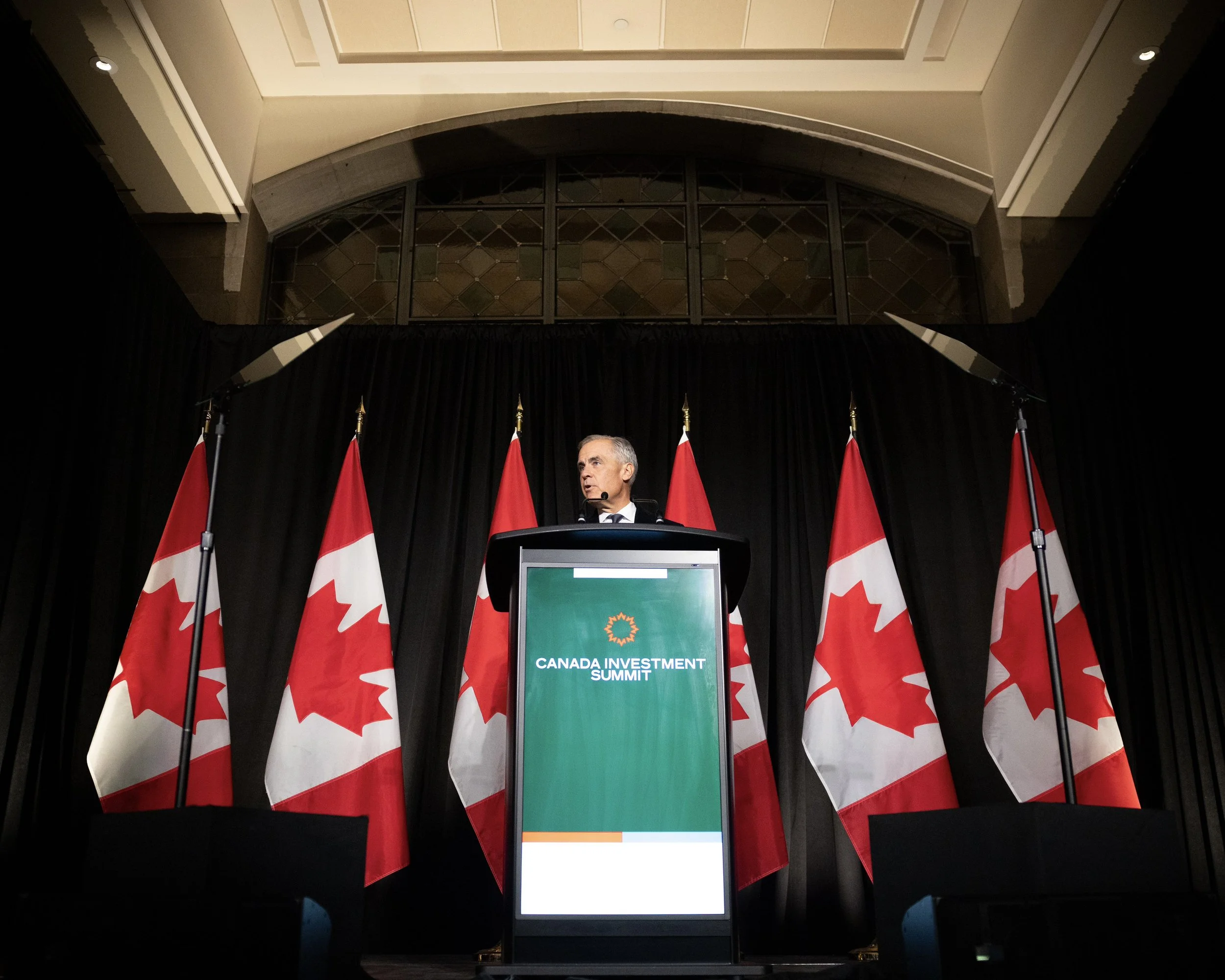
The Milken Institute is holding an event, Global Dialogues Toronto, on Sept. 14 featuring international investors and business leaders. At the same time, Prime Minister Mark Carney is hosting the inaugural Canada Investment Summit, Sept. 14-15 in Toronto, bringing together 250 executives from 100 global investment organizations that manage $120 trillion in capital. And, the Canadian Venture Capital & Private Equity Association (CVCA) is hosting the Canadian Global Growth Forum, also in Toronto on Sept. 14 to discuss some of the same issues, aiming to connect international investors with Canadian fund managers and businesses.
Canada’s investment position has changed significantly over the past decade. Candace Laing, CEO of the Canadian Chamber of Commerce, told Means & Ways that in 2015, Canadian direct investment abroad started to outpace foreign investment into Canada. “Inbound and outbound investment used to stay fairly on par, but as of 2025, the gap is an incredible $828 billion.”
The government needs to make a compelling case that ‘we can win’

‘The government needs to make a compelling case at September’s Investment Summit that we can compete and win,’ says Canadian Chamber of Commerce CEO Candace Laing. / CCC PHOTO
Laing sees the current moment as an opportunity for Canada to reverse that trend. “The last year and a half has been defined by readying our economy for this moment. … The government needs to make a compelling case at September’s Investment Summit that we can compete and win,” she said. “If we fail, a few years from now, we’re going to look back and notice a lot of what didn’t happen. The cost of this extended period of suspended animation for business will be felt in incomes that didn’t keep up with inflation, industries that did not keep pace with peers, and young people missing out on the opportunities they needed.”
Alex Ciappara, Vice President, Head Economist of the Canadian Bankers Association, agreed that foreign investment is important to the Canadian economy but it also has multiplier benefits.
“While the banking sector is a major source of debt financing, foreign investment particularly in the form of direct and portfolio equity investment injects outside capital, knowledge and expertise as well as relationships with other external markets into the Canadian economy,” he told Means & Ways in a statement.
But attracting investment does not automatically solve Canada’s financing problems, particularly for mid-sized companies and startups.

Success at the investment summit would be measured by more than the size of any announcement, but rather the “diversity in the actors” around the table, says Laurel Steinfield, Assistant Professor, Entrepreneurship & Sustainability at Western University's Ivey School of Business. / WESTERN UNIVERSITY PHOTO
Laurel Steinfield, Assistant Professor, Entrepreneurship & Sustainability at Western University's Ivey School of Business, said while investment in major projects is good, the entrepreneurial ecosystem also needs to be addressed to ensure that Canadian companies can grow and scale in Canada.
The biggest risk is creating a system in which large, established players become more powerful while innovative companies remain unable to scale, she told Means & Ways.
“There's a great worry that it'll just actually magnify the difference between those who have and are connected with government, and those who aren't,” she said, adding that Canada needs policies that encourage investors to back Canadian entrepreneurs rather than simply acquire existing assets or companies.
The country also needs to close what she describes as a financing gap between early-stage support and the capital required to scale.
“Canada is known for high education, for providing startup grants. Great. What we're not known for is that next phase,” she said, referring to the financing needed to secure customers, procurement and growth.
Companies need growth capital to stay in Canada
Without that capital, entrepreneurs may still leave Canada to raise money elsewhere.
Ng agreed, saying that small and mid-market companies need growth capital. She said Canadian businesses often need capital precisely when they have demonstrated that their products or services have a market.
She pointed to companies with annual revenues of roughly $50 million to $500 million as an important part of the gap. “They have customers, they have been validated, they're growing, they need investment. They need capital for growth,” Ng said.
Canada already has companies in sectors ranging from artificial intelligence and engineering services to health innovation and advanced manufacturing, she said. The challenge is helping those companies remain and expand in Canada rather than moving elsewhere in search of capital.
“Our opportunity and objective” should be to “keep them here,” she said.
Ng sees the potential for foreign investment to help fill that gap, and the investment summit as a good start.
“It would be really terrific to also diversify the sources of capital and where capital is looking for a good return on their investment,” she said of the investment summit.
She argued that Canada needs investors ranging from private-equity firms to sovereign wealth funds and international investment networks.
Ciappara likewise said the broader investment strategy must be supported by domestic policy reforms.
The CBA has recommended an expert review of the corporate tax system and measures to remove internal trade barriers so goods and services can move more easily across the country.
Steinfield said government also needs to improve the way it funds the organizations that support entrepreneurs. Requiring programs to constantly create something new can lead to duplication and competition for limited funding, she said.
Instead, “if what they're doing already works, let's keep doing what they're doing instead of having to pay the money to reinvent the wheel.”
The stakes are high and success at the investment summit would be measured by more than the size of any announcement, but rather the “diversity in the actors” around the table, said Steinfeld.
And the opportunity is significant. “It could revitalize the Canadian economy,” she said.

SAVE THE DATE: Means & Ways will host a webinar to dig into what came out of the summit and what kind of investment landscape do we need to truly build Canada? Even if Canada does attract the capital needed, can we build the companies, the major projects and infrastructure quickly enough to make a difference? This solutions-oriented panel discussion will tackle the issues around what’s preventing investors from coming to Canada, what needs to change, and what it means for the economy if we don’t deliver.
Registration link and panellists to be shared soon.