As Heated Rivalry captivates global audiences, Canada’s creative industries face economic uncertainty
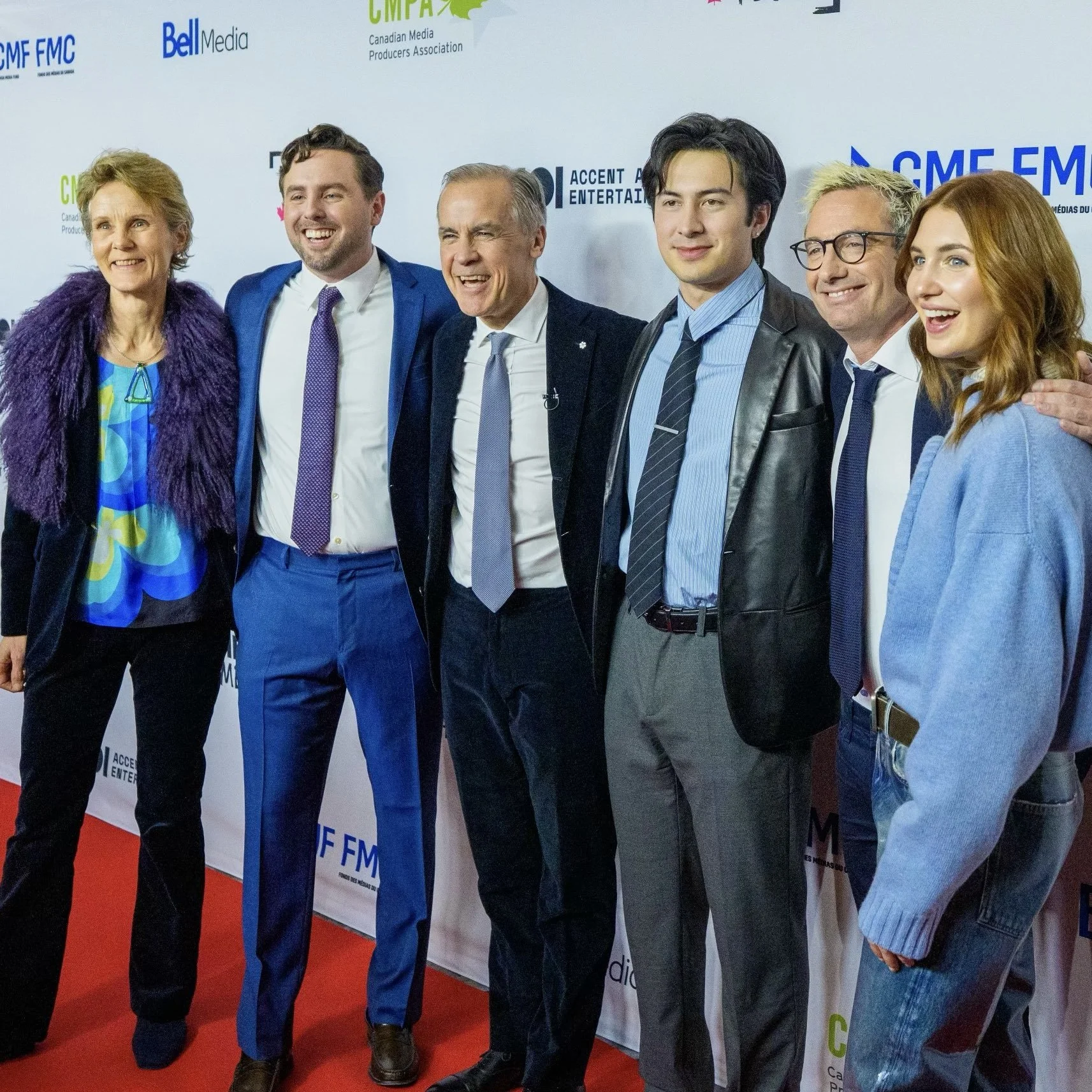
‘Canada is a nation that welcomes storytellers, listens to their stories, and celebrates our differences. We’re proud that Jacob Tierney, Brendan Brady, and the Heated Rivalry team chose to tell their story here,’ Prime Minister Mark Carney wrote on social media. / TWITTER PHOTO
Canada’s creative industries are attracting growing international attention with the hit series Heated Rivalry making waves with global audiences. At the same time, however, the sector continues to face significant structural and economic challenges, particularly as geopolitical tensions, shifting trade dynamics, the rise of AI and a funding decline create uncertainty for long-term planning.
“Canada is, as we all know, having a moment,” said Jenn Kuzmyk, Executive Director of the Banff World Media Festival and Publisher of Playback. “We've moved beyond elbows up to just straight out admiration and support.”
Kuzmyk was referring to the show but also to Prime Minister Mark Carney’s recent speech at the World Economic Forum. Comments around working with middle powers and trade diversification are not lost on the creative industries.
Canada’s cultural exemption under the Canada-U.S.-Mexico Agreement protects policies supporting public broadcasting, production funds, tax incentives, and cultural obligations for global media companies. However, the exemption also allows the United States to impose retaliatory measures in other sectors, raising fears that culture could become leverage during negotiations.
“If that’s used as a bargaining chip, there’s real worry,” Kuzmyk told Means & Ways following the Canadian Media Producers Association’s annual Prime Time conference, where Carney, AI Minister Evan Solomon and Canadian Identity Minister Marc Miller all spoke.
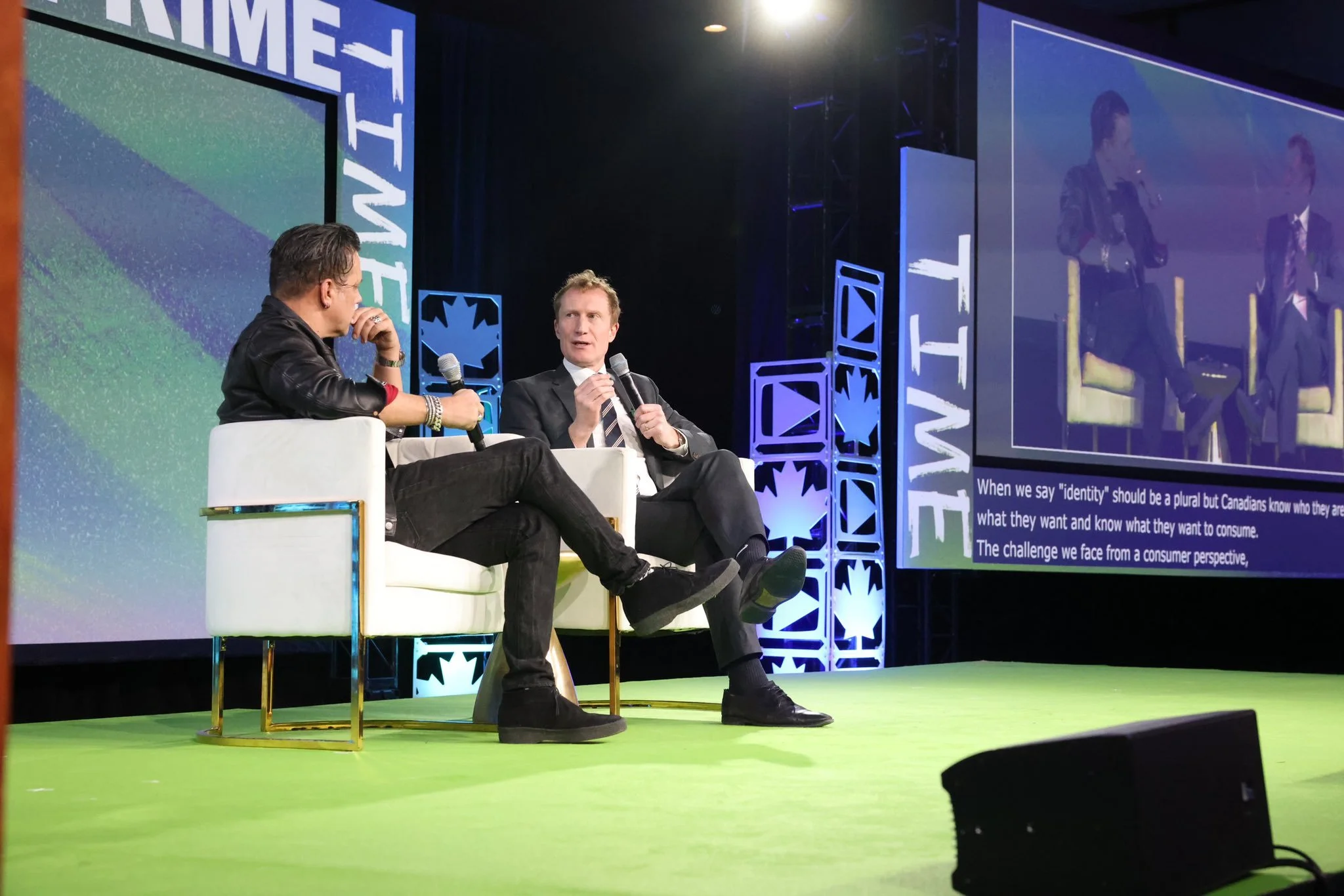
Canadian Identity Minister Marc Miller spoke to George Stroumboulopoulos at Prime Time. ‘Our Canadian productions don’t succeed despite being Canadian — they succeed because they are Canadian,’ Miller wrote on social media. / TWITTER PHOTO
Miller acknowledged the U.S. position that the Online Streaming Act and Online News Act are trade irritants
“We’re facing a very tough trade negotiation with the U.S. that is shamelessly using asymmetrical economic tactics,” Miller said while speaking to George Stroumboulopoulos on stage. “They have made no secret that part of our industries are ones that they would like to see change on. … But there are red lines in and around culture, arts, protecting artists, that we can't and shouldn’t cross.”
The Online Streaming Act requires online streaming companies (mostly U.S. tech companies) to pay 5% of their Canadian revenues to support the Canadian broadcasting system.
Miller did not specify what the regulations would look like, or if maintaining the five-per-cent contribution requirement would be included. He said the CRTC hasn’t completed the full regulatory process to finalize how much streamers should be required to contribute, adding: “I hesitate to pick a number.”
Heated Rivalry creator Jacob Tierney, who was on a Prime Time panel, said the act should be maintained and implemented. “People have got to negotiate the way they’ve got to negotiate, but I think it would be really, really bad … if we lost it,” he said.
Solomon said he had discussed the Online Streaming Act with the Heated Rivalry creators. The minister also shared that Miller was preparing an Online Harms segment of it, though there is no timeline set yet.
Meanwhile, in comments this week to the New York Post, Trump said, “I’m going to be putting tariffs on movies from outside of the country — if they’re made in Canada, if they’re made in all these places, because Los Angeles has lost the movie industry. ... And so I’m going to put tariffs on and we’re going to be doing bonds, some bonds, some low-interest bonds, for the movie industry. We’ll bring it back.”
If this happens, it would decimate the Canadian creative services industry, Kuzmyk said.
“There would be massive disruption and economic hardship to the media production sectors, both in Canada and the U.S.,” she said.
Total film and television production in Canada is already falling, according to the CMPA’s 2024 Profile report, showing an 18.5% decline because of the Hollywood labour strikes and reduced spending by Canadian private broadcasters. Overall production volume declined to $9.58 billion from $11.75 billion the previous year. Canadian-owned production accounted for $3.69 billion, compared with $4.16 billion in 2022–23. Foreign location and service production experienced the steepest decline, falling more than 26% to $4.73 billion — its lowest level since 2016–17.
“The question is, how does this $4.73 billion reduction or disappearance affect the industry? It would be catastrophic. There would be job loss and a huge economic hit. It would be terrible for the industry. It would be terrible for Canadians,” Kuzmyk said, adding there’s also a risk of foreign productions in Canada no longer being training grounds for domestic talent.
All of this adds to the uncertainty and the volatility in the economy that’s affecting the sector, which Kuzmyk said is the biggest challenge the creative industries are facing.
“It's risky financially to plan productions with so much hanging in the balance from a policy and regulatory and trade perspective,” she said.
Preparing for potential outcomes means securing stable domestic funding and expanding partnerships beyond the U.S. While Canadian producers increasingly collaborate with partners in Europe, the U.K., Asia-Pacific, and Latin America, international deals depend on reliable Canadian financing.
Bring more to the table
“Canadians have to be able to bring something to the table beyond tax credits,” Kuzmyk said.
Funding from Telefilm Canada, the Canada Media Fund, and domestic broadcasters has declined in recent years and without predictable support, Kuzmyk said, Canada’s ability to initiate and anchor large-scale film and television projects could be weakened.
Canada’s creative industries contribute more than $20 billion annually to the national economy. Film and television production alone added over $11 billion to GDP, generated $5.6 billion in foreign investment, and supported approximately 271,000 jobs in 2024. The audiovisual sector’s economic impact is comparable to that of the automotive, fisheries, and aerospace industries.
Beyond direct economic impact, creative industries play a role in Canada’s international profile. Cultural exports can support tourism, attract investment, and contribute to broader trade relationships.
“If Canada treats creative industries as both culture policy and economic policy, the growth potential is significant,” Kuzmyk said.
“The creative industries reinforce the Canada brand in global markets,” she said. “So our cultural industries are our biggest marketing tool.”
She argued that the federal government should prioritize support not only for production but also for events that support the sector nationwide. Citing the government’s $23-million investment in the Toronto International Film Festival, she raised concerns about regional imbalance, noting that support concentrated in one location can disadvantage long-standing events elsewhere, such as the Banff World Media Festival.
Kuzmyk described the festival as a B2B market where “the most influential people in media in Canada and around the world, from the biggest companies, not just in media, but the biggest companies in the world” gather to discuss investment opportunities, expanding trade and export markets and public policies affecting the creative industries.
“The C-suite from those companies is there, right alongside Canadian independent producers and the rest of the media industry. When you get people like that in a room, there's a certain amount of alchemy that happens.”
She called for a more equitable, national approach to funding, recognizing that different organizations serve distinct but complementary roles within the industry.
Funding hasn’t kept pace with cost increases
“Our costs have gone up by about 40% since the pandemic, but funding hasn’t,” she said of the Banff World Media Festival. “That creates risk, not just for events, but for the broader ecosystem they support. … Not having a bit of a more level playing field can be detrimental.”
She highlighted the festival’s programs supporting diversity and inclusion in the Canadian media sector, including the Diversity of Voices program for Black, Indigenous, and People of Colour creators, the Banff Spark program for women entrepreneurs, and the Indigenous Screen Summit. Since their launch in 2018, these initiatives have created over 1,070 opportunities for underrepresented creators, helping remove barriers and meaningfully reshape the industry. However, she warned that all these programs are at risk without sustained funding.
“My job is to continue to be innovative, continue to lobby in every way… for why what we do is important and special,” she said.
Five questions with Jenn Kuzmyk

Jenn Kuzmyk is Executive Director of the Banff World Media Festival and Publisher of Playback.
M&W: Given the geopolitical and global trade issues we are facing as a country, what role do the creative industries have in growing our economy and trade?
JK: If Canada treats creative industries as both culture policy and economic policy, the role in the growth and potential for trade growth is significant. In terms of economic policy, the creative industries become a way to scale IP, attract foreign investment, grow jobs, grow GDP and launch new businesses, which really means that practically building those businesses that own and license rights internationally. That's something we hear a lot about, protecting our IP is so important. And on the cultural policy side, using Canadian strength and creativity in film and TV production, but also services, things like VFX and animation, games, music, selling those services abroad and anchoring production and technology investment here at home.
M&W: What are some of the solutions for Canadian governments to ensure a thriving domestic creative industry?
JK: I think it means fighting for secure and predictable funding systems. So that's then back on the government and our industry organizations to jointly work together to backstop or mitigate any major fallout from tough or damaging decisions as a result of those trade negotiations. It means big swings for the industry, the audiovisual industry and the cultural industries and doing what is being done in other sectors, namely, securing agreements, partnerships, solutions in countries other than the US.
There's not a television series or a feature film of scale that is made without funds from outside of Canada which often includes financing from the U.S., either as part of the production budget or after the fact. There's a huge world out there, and there is will to work with Canadians, because we've proven time and time again that we can make high-calibre content. The thing is, without secure, predictable domestic funding, including, you know, Telefilm, CMF, tax credits and potentially other things, Canadians don't have anything to go out and make it happen.
The Canadian government needs to do everything possible to give the creative industry stable and predictable funding to protect ownership of IP, to fund not just production, but marketing, discoverability, export and international funding efforts. It's also important to fund the imperative organizations and events that support the creative industries directly.
M&W: We've all now heard of Heated Rivalry. What underrated movie or show should Canadians be watching right now?
JK: It was so fun to watch, you know, because I knew the people who made it and it is just a joy to see how it's been received. So that's great. I wouldn't call it underrated, but there is another Netflix series, Wayward, which is incredible. North of North, also on Netflix and CBC and APTN. But the series that I would really point out, that I think every Canadian should see, is a Bell Media/Crave series called Empathie. It’s a French Canadian series. It is truly one of the best, special, creative, beautiful, important series that I think has come out of this country, possibly ever. It stands up with anything that has been made by any of the big global powerhouse studios or streamers, and it is so creative and beautiful. And I think also you know, that speaks to what comes out of the Quebec industry, because there is a very special kind of creativity that is encouraged and flourishes there.
M&W: Just going back to Heated Rivalry, though - what does a show like that do for Canadian identity or cultural sovereignty?
JK: If you could somehow figure out or monetize the media value of what has happened with Heated Rivalry in connection to, you know, Canadian identity and cultural sovereignty, it's probably priceless. It's probably incalculable. I think something like that has given us national pride. I mean, [Hudson Williams] is going to be one of our torchbearers at the Olympics. It is not only being proud of how great it is and beautiful and fun to watch, but the messaging around it, or what that has done for the LGBTQ community has changed the game.”
M&W: What are you looking forward to most at the Banff World Media Festival this year?
JK: I'm looking forward to it happening again. It drives the economy in terms of what our industry does, and obviously, locally in Alberta, too. I'm super excited about bringing more internationals to the festival for that inbound trade mission.
I'm hoping that for Canadian producers and Canadian media companies things will be a little more defined, or a lot more defined by that time. We're working hard to put on a bigger and better festival than ever, despite all the challenges.