Risks haven’t disappeared, they’ve moved, Bank of Canada warns
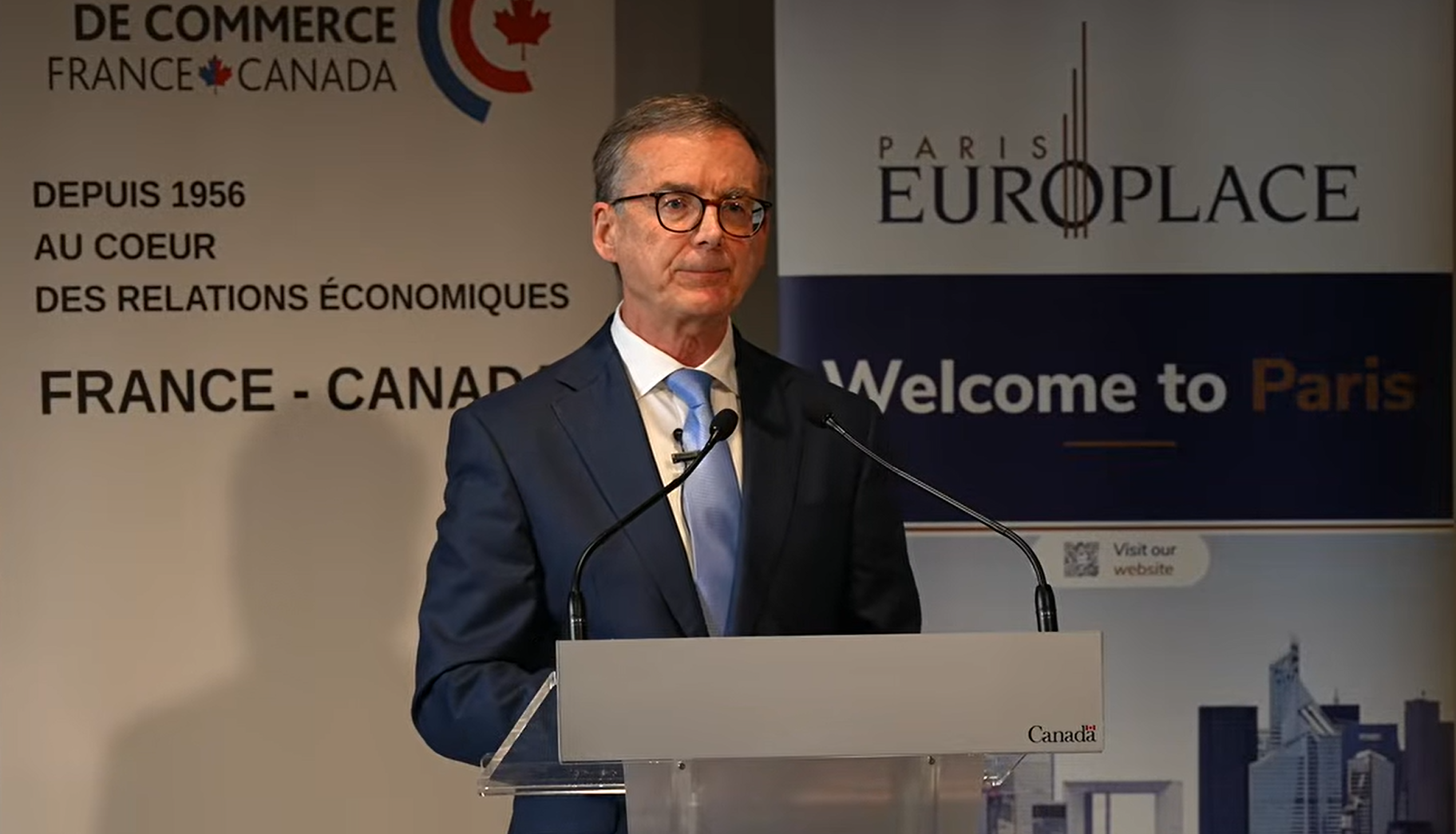
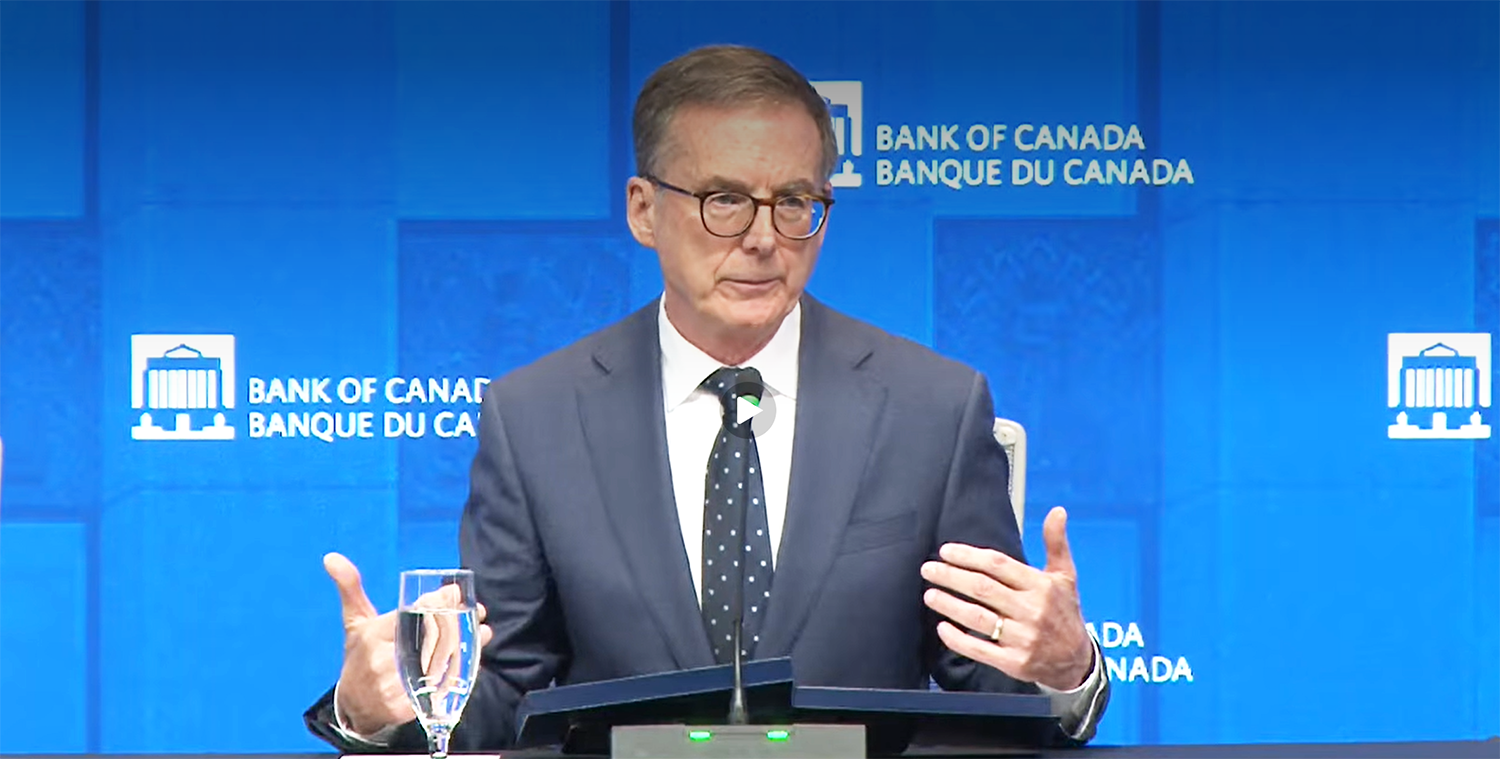
‘The financial system is not just bigger. It’s faster, more complex and increasingly dominated by new players that are less regulated, less transparent and less tested under stress. Risks haven’t disappeared — they’ve moved,’ says Bank of Canada Governor Tiff Macklem. / SCREENSHOT
The recent Memorandum of Understanding between the U.S. and Iran has reduced one of the key near-term risks to inflation, says Bank of Canada Governor Tiff Macklem, even as he warned that deeper problems in the global economy continue to build.
“The Iran-U.S. peace agreement is very welcome news,” Macklem said during a press conference following a speech in Paris on June 23.
He noted that oil prices have fallen since the agreement was reached, helping ease concerns that energy costs could push inflation higher.
“Markets are forward-looking. You've already seen some drop in the price of oil,” he said.
Macklem's comments came after Statistics Canada reported annual inflation of 3.2%. He said the increase was largely driven by energy prices linked to the conflict involving Iran.
“The reason for the rise is very concentrated in oil prices,” he said. “So far, there's no evidence of generalized inflation.”
Macklem added that the Bank of Canada's preferred measures of underlying inflation showed little change.
“If you look at our measures of core inflation, both trim and median, they didn't move,” he said, acknowledging ongoing concerns about food prices, which continue to rise faster than overall inflation.
Macklem used his speech to the France-Canada Chamber of Commerce to warn about broader risks facing the world economy.
He argued that growing trade imbalances and financial pressures are creating vulnerabilities that could eventually threaten economic stability.
According to Macklem, trade deficits and surpluses are not necessarily a problem on their own, but can become dangerous when they persist for years without adjustment.
Imbalances can ‘spill over’
“When imbalances are too big and too one-sided for too long, they become excessive,” he said. “When needed adjustment is not happening, imbalances can spill over — and then we all feel it.”
Macklem pointed specifically to China's large trade surplus, saying the country's effort to export excess manufacturing capacity has heightened tensions with trading partners.
“China’s effort to shift its excess capacity to the rest of the world through exports has sparked accusations of unfair practices and spurred demand for trade restrictions and tariffs,” he said. “None of this is good for sustained growth in China and the world, or for international relations.”
He also expressed concern about the growing role of financial firms operating outside the traditional banking system.
“The financial system is not just bigger. It’s faster, more complex and increasingly dominated by new players that are less regulated, less transparent and less tested under stress,” Macklem said.
“Risks haven’t disappeared — they’ve moved.”
Policymakers need better information about where risks are building in global markets, he said.
“The system works better when risks and spillovers are visible,” he said. “There are blind spots in how trade is measured, in international investment positions and, ultimately, in who holds what.”
Asked about ongoing trade negotiations between Canada and the U.S., Macklem suggested uncertainty is likely to continue.
“What is clear is that both sides, both Canada and the United States, have signaled that there probably isn't going to be an agreement by July 1,” he said.
Still, he said many businesses are beginning to adapt to a more uncertain environment.
“We are starting to see companies are getting more used to the unusual, higher than normal level of uncertainty,” Macklem said. “Waiting is not going to be a winning strategy. We've got to get on to do business.”
Macklem noted governments and policymakers should not assume today's economic pressures will resolve themselves.
“If there is one lesson to take from history, it’s that adjustment delayed eventually becomes adjustment imposed—in far more disruptive ways,” he said.
“Resilience is a choice. It doesn’t happen automatically, and it doesn’t come from good intentions. It comes from reinforcing systems so they don’t break in times of stress.”