Five Canadian cities vie to host first-of-its-kind defence bank

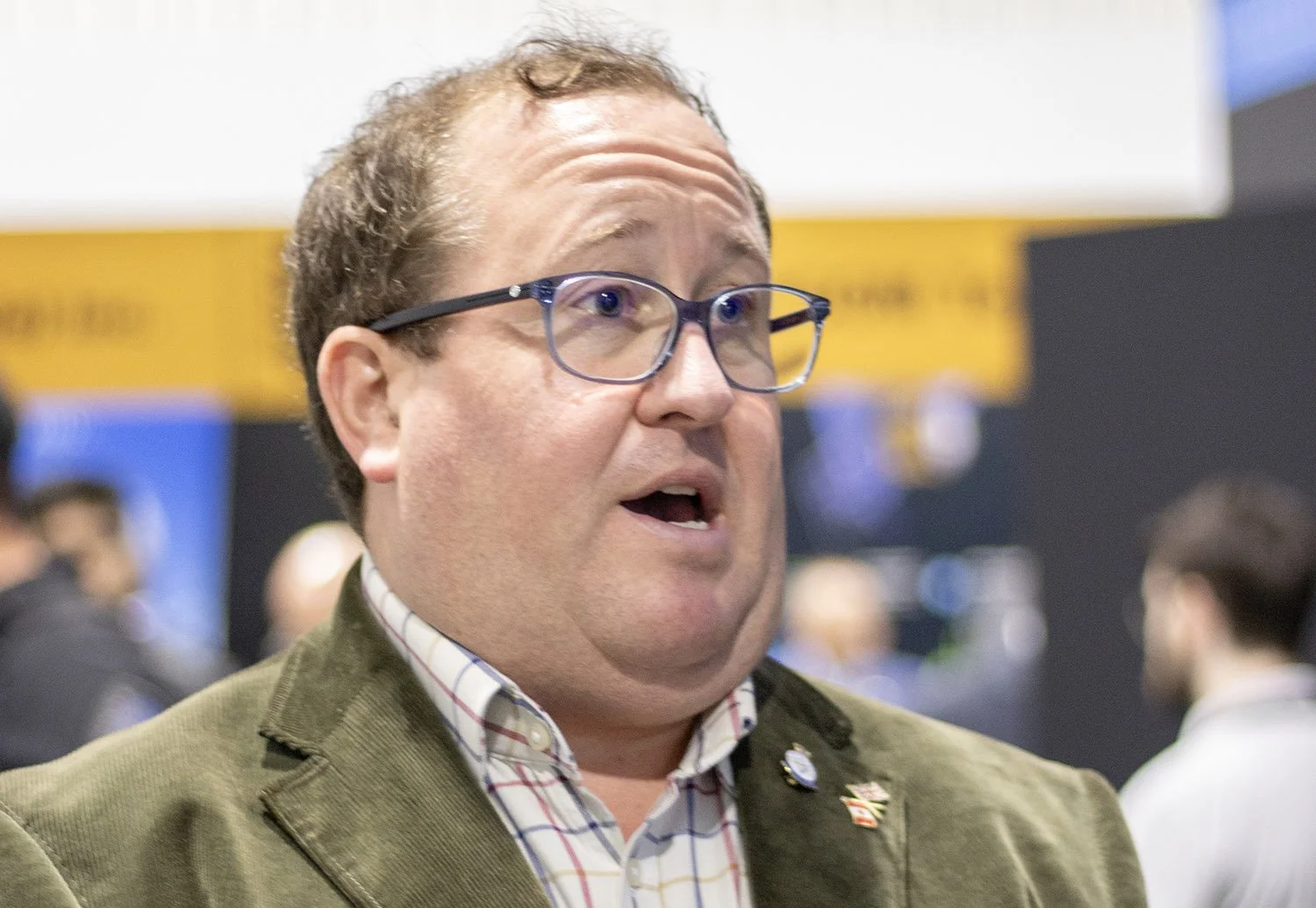
‘The DSRB should and could play a critical factor in moving forward the defence and technology sector,’ says Jason Barton, Public Sector Leader, Defence and Public Safety, Red Hat Canada. / MEANS & WAYS PHOTO
The Defence, Security and Resilience Bank, a multilateral financial institution designed to mobilize long-term capital for defence procurement and industrial expansion, is coming to Canada — and a fierce competition among five cities to host it is revealing just how much is at stake.
“The DSRB should and could play a critical factor in moving forward the defence and technology sector,” said Jason Barton, Public Sector Leader, Defence and Public Safety, Red Hat Canada. “I look at economic security, I look at industrial resiliency, and then I look at the defence capabilities themselves. Those things, our economy, our industries, and our actual defence capabilities, they're really intertwined now. They are all kind of benefiting from one another. So, the DSRB is going to be able to, quite frankly, contribute that financing direction for building off of actual industry capabilities.”
The bank’s biggest potential is with catalyzing the entire defence and tech supply chain, says Samuel Witherspoon, CEO of Ottawa-based Anvil. While Anvil, a data platform that delivers intelligence to support decision-making, may not directly benefit from the bank’s financing, its value is in market access.
“Having the DSRB based in Ottawa would be a huge asset. It's going to bring foreign governments, it's going to bring military procurement opportunities into Ottawa, and so from a market access perspective, there's huge value in having it here from a pure access to capital perspective,” he said.
Barton agreed. “Imagine all the places that the DSRB can touch throughout an entire supply chain,” he said. “If we look at the DIA [Defence Investment Agency] build, partner and buy framework of procurement, the two match together very well to make both things pop at the same time. The defence sector and the technology sector is more tied together than ever.”
The DSRB is a multilateral institution designed to pool private capital from allied partners and deploy it as long-term, affordable financing for defence and security priorities. It aims to fill gaps in commercial lending across defence supply chains, with benefits intended to reach member governments and companies of all sizes. Canada hosted the negotiations on the bank's charter, with Isabelle Hudon, President and Chief Executive Officer of the Business Development Bank of Canada (BDC), as Canada’s lead negotiator.
The decision of where within Canada to locate it — among Halifax, Montreal, Ottawa, Toronto and Vancouver — now sits with the federal government.
The institution is expected to generate 3,500 new jobs in the finance sector and will focus on dual-use industrial capacity, defence procurement and infrastructure resilience at a moment when allied nations are rebuilding military and industrial capacity at speed. Its advocates argue it is not merely a bank, but a structural pillar of Canada's economic and national security.
Purpose-built for emerging ‘security economy’
Described by its proponents as the first institution of its kind, it is purpose-built for what Quebec Minister of International Relations and La Francophonie Christopher Skeete called “the security economy that is now emerging.”
Rod Phillips, Chair of Toronto Global and a former Ontario Finance Minister, argued the bank's ultimate credibility will be measured in hard financial terms. “The DSRB's success will be measured not in ribbon-cuttings, but in the rates at which it borrows on international markets, the confidence of investors and the quality of the businesses it lends to,” he said.
He compared it to other multilateral institutions whose locations were chosen on financial rather than symbolic grounds: “When allied governments created the European Bank for Reconstruction and Development in 1991, they chose London, England, because London had the financial depth a new institution would need from its first day of operation.”
Phillips argued the decision should rest on financial infrastructure and said Toronto is Canada’s financial capital. “Market participants will look closely at the regulatory and capital-markets infrastructure around any new issuer, and a headquarters in a city whose institutions they already trust is a quantifiable advantage from Day 1,” he wrote in the National Post.
He pointed to Toronto's concentration of Canada's Big Five banks, major pension funds, and financial regulators as assets no other Canadian city can match at scale. He also called on the federal government to formalize the competition: “Publish the criteria. Set the timeline. Run the process. When that happens, the answer will be Toronto,” he said.
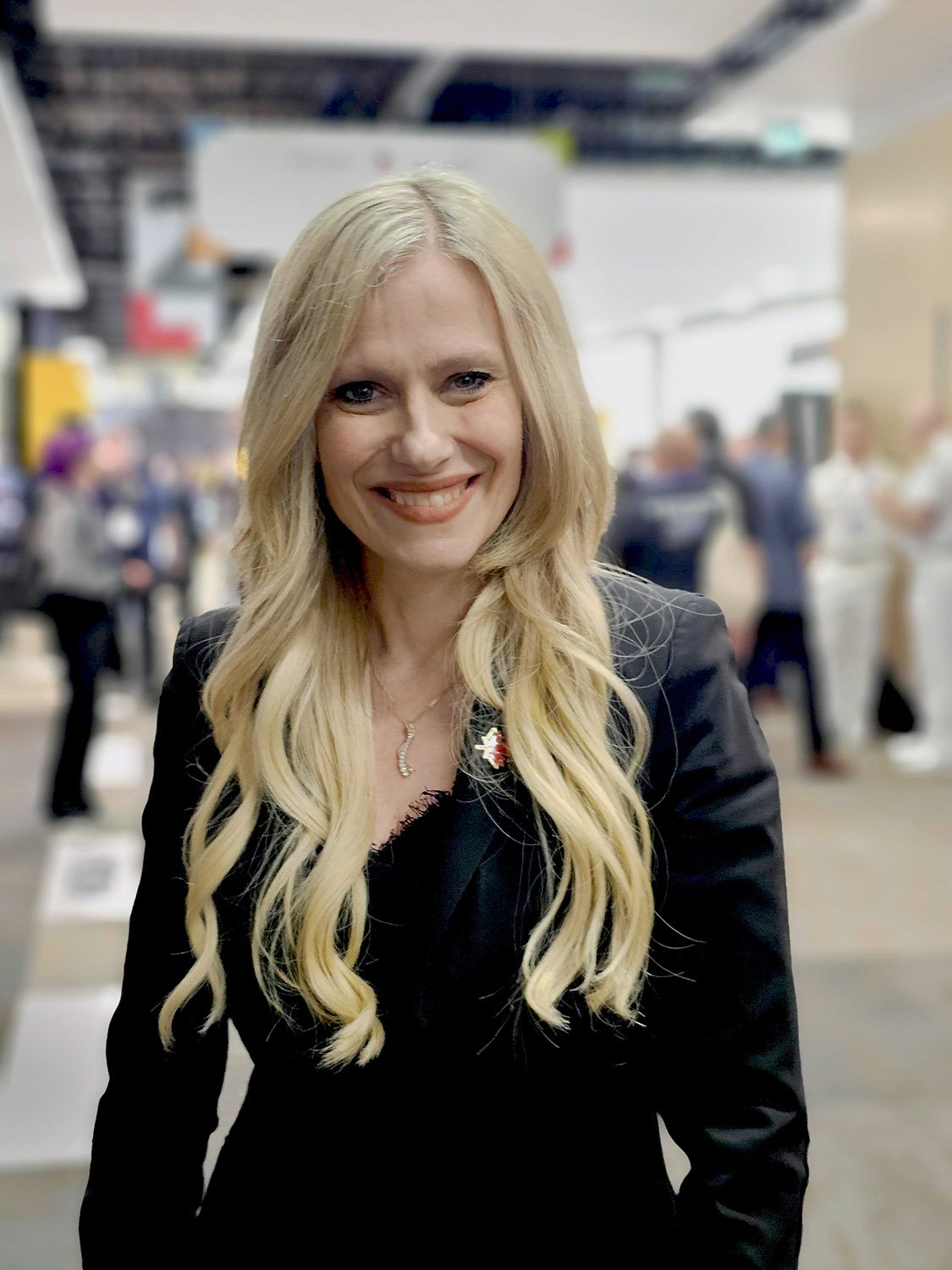
Sonya Shorey, President and CEO of Invest Ottawa. / MEANS & WAYS PHOTO
Sonya Shorey, President and CEO of Invest Ottawa, told Means & Ways the capital region has an unmatched concentration of sovereign financial institutions and defence decision-makers in a single geography and should be the DSRB’s home.
“All of the sovereign financial institutions serving our government is anchored here. Bank of Canada, Fintrac, the Treasury Board, Finance Canada. They're all within a two-block radius of decision makers, not only for finance, but for defence, and all of our security agencies,” she said. She also cited 330 defence-related companies and six NATO DIANA test centres.
“We bring the whole ecosystem together, and we are operationally impactful on day one that that bank lands. There are opportunities to leverage our talent, our policymakers, our companies, our technology, expertise, and the sovereign Canadian financial institutions. Show me another city in this country that has that. You can't because it doesn't exist.”
Nova Scotia Premier Tim Houston made a competing case rooted in defence credentials and strategic infrastructure. “Nova Scotia is first when it comes to defence. We have the highest defence spending per capita and are home to the country's largest naval base,” he wrote in an op-ed in the National Post.
He pointed to Halifax's transatlantic connectivity — the EXA Express subsea cable “provides the fastest transmissions between New York and London with a delay of less than 60 milliseconds, which is essential for financial and NATO-aligned secure communications” — as well as NATO's selection of Halifax to host its Defence Innovation Accelerator for the North Atlantic. “The Defence, Security and Resilience Bank will require more than office space. It must operate in a jurisdiction that is secure, globally connected and deeply integrated with allied defence, financial and technological systems,” he wrote.
Meanwhile, Skeete argued the DSRB must be tested against three criteria: bridging European and North American defence communities, operating within a dual-use industrial ecosystem and functioning within a multilateral diplomatic environment. Montreal uniquely satisfies all three, he said.
“It is the only North American metropolis where French is the official language and where English remains unavoidable in business, science and diplomacy,” he wrote, noting that Montreal hosts more than 70 international organizations. “A bank whose mandate combines defence, security and resilience cannot credibly operate from a city that does not produce the technologies it is meant to finance.”
Vancouver is also bidding for the DSRB. Greater Vancouver Board of Trade President and CEO Bridgitte Anderson described the city as a “Tri-Continental Bridge” connecting the Indo-Pacific, Europe and the Arctic.
The board of trade argues Vancouver’s position as a link between the Indo-Pacific, Europe and the Arctic gives the DSRB rare geographic reach across three major economic regions. They also point to the city's existing base of professional services, technology, finance and cybersecurity firms as evidence that Vancouver is already equipped to support defence-focused investment and capital mobilization.
“Our city offers a secure, world-class environment that naturally attracts global talent,” Anderson said in a press release. “Vancouver is ready to support the Bank on day one with a fully prepared home for the DSRB and secure, scalable infrastructure backed by all levels of government. These conditions will allow the Bank to focus on delivering outcomes, rather than building capacity, while benefiting from a stable, rules-based environment trusted by global partners.”