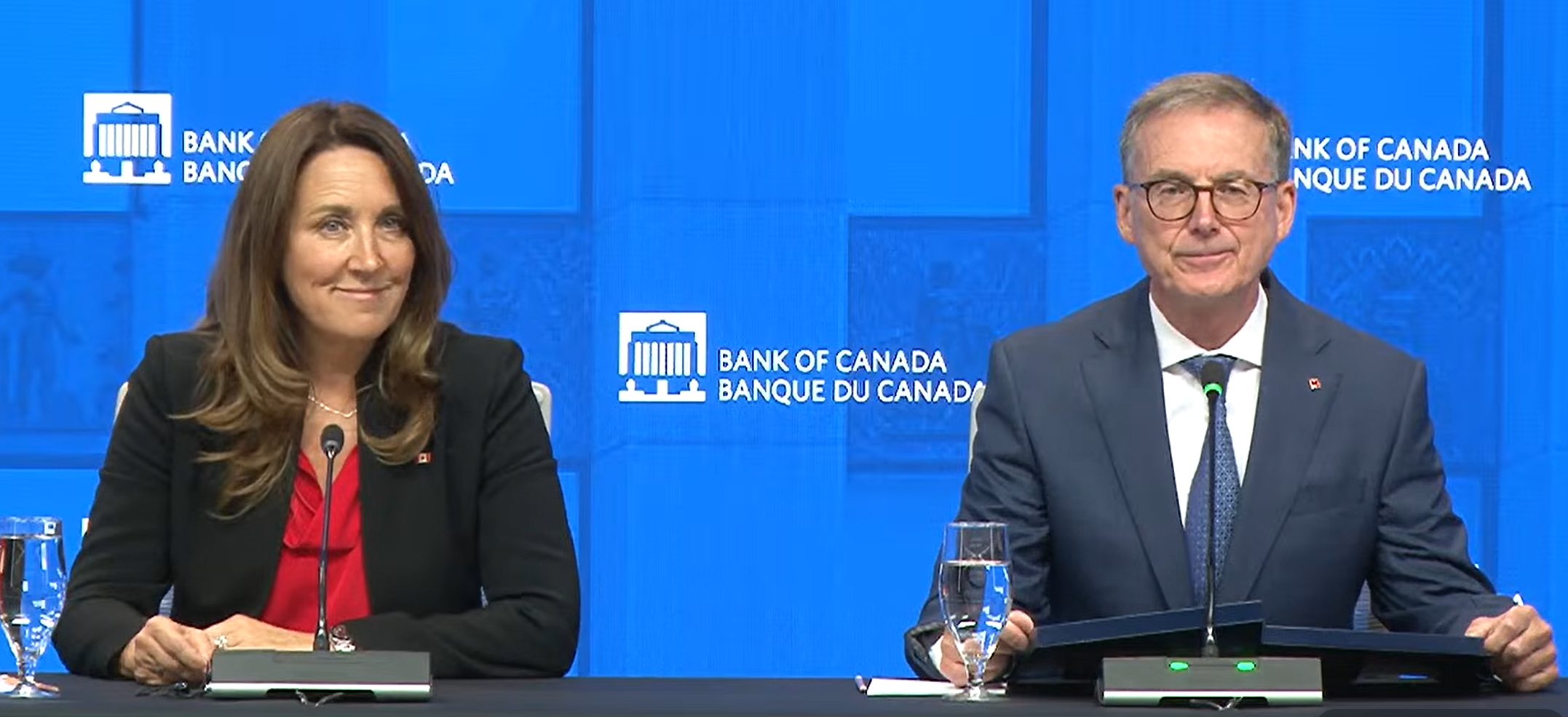
Housing’s catch-22, according to the BoC
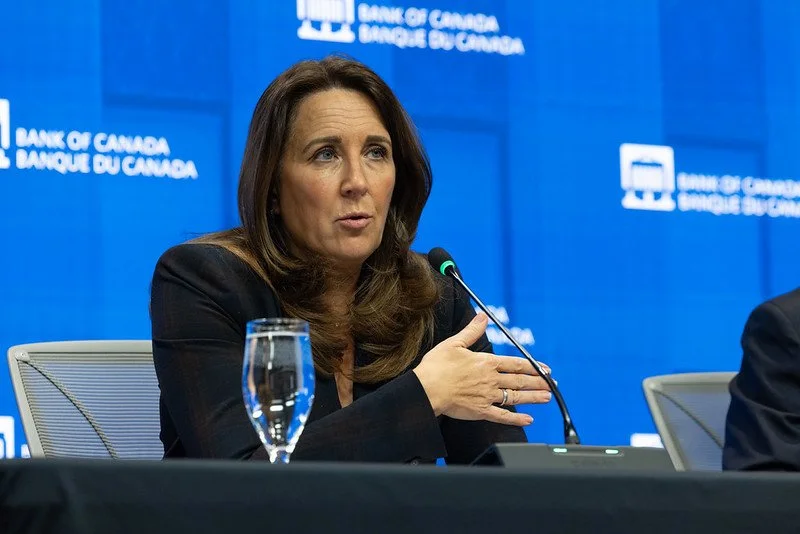
Bank of Canada Senior Deputy Governor Carolyn Rogers pictured at a press conference related to the Policy Rate Announcement in March 2026. ‘Housing sits at the heart of our productivity challenge,’ she said in a keynote speech. / BANK OF CANADA PHOTO
Housing affordability in Canada has become exceptionally difficult to solve because home prices are now deeply connected to household wealth, financial stability and economic growth, says Bank of Canada Senior Deputy Governor Carolyn Rogers.
“Housing affordability is hard to solve, not because no one has tried, and not because the problem is poorly understood,” Rogers said in a keynote speech to the Greater Victoria Chamber of Commerce and CFA Society Victoria.
There are no simple policy fixes to the problem, she said.
“Rising prices made housing less affordable, but they also supported household wealth and economic growth. Falling prices may improve affordability, but they also reduce household wealth, slow economic activity and can put stress on borrowers and lenders. Regulation can make markets fairer, strengthen borrowers and banks and help the financial system absorb shocks. But it can’t restore affordability. That will require a broader, sustained effort: more supply, better planning and infrastructure, regulation that protects resilience, and incentives that don’t add demand to a market already short on supply. We’re on the right track on many of these things, but we have a way to go and it will take time."
Rogers said the problem extends well beyond the ability of Canadians to buy or rent a home: when households devote more income to rent or mortgage payments, they have less to spend and save and less capacity to absorb unexpected expenses, she said.
“It feels a bit like a trap,” Rogers said. “Higher prices make housing less affordable and leave many households with less room for everything else. Lower prices weigh on consumer confidence, wealth and economic growth. This is the heart of the housing affordability dilemma and why it’s so hard to fix.”
The Bank of Canada is examining the relationship between housing and monetary policy, including whether interest rates should play a greater role in restraining rising home prices and whether Canada’s inflation measures accurately reflect the housing costs Canadians face.
Rogers said monetary policy can affect housing demand, but interest rates are too broad an instrument to directly solve affordability.
Interest rates can’t build homes or speed up permits
“Monetary policy can influence demand across the economy — including demand for housing. But it is a blunt tool,” she said. “We set one interest rate for the whole economy … And interest rates cannot directly address supply constraints. They can’t build homes, rezone land or speed up permits.”
Higher interest rates can reduce housing demand and take pressure off prices, but they also make it harder for buyers to qualify for mortgages, raise payments for existing borrowers, and slow spending and investment elsewhere in the economy, Rogers said.
Lower rates cut the other way: they reduce borrowing costs and make credit more accessible, but in a supply-constrained market, that added demand can push home prices higher, she said.
Rogers acknowledged that years of low interest rates contributed to rising home prices, but said monetary policy was only one factor among many, including immigration, limited housing supply, zoning and infrastructure constraints, and speculative investment.
“So the story is more complicated than low interest rates,” Rogers said. “But that doesn’t let monetary policy off the hook.”
The Bank also examined whether shelter costs in the consumer price index capture Canadians’ experience of housing affordability. For homeowners, the CPI includes expenses such as property taxes, insurance, maintenance and mortgage interest, while the purchase price is treated differently, since a home is also an asset.
“That distinction has a logic to it. But it’s a bit at odds with how people experience housing affordability,” Rogers said. “High house prices affect whether Canadians can buy a home, how much debt they carry and how much wealth they build. So house prices may not be consumer prices, but they still shape how Canadians experience affordability.”
Housing’s growing importance to the Canadian economy also complicates the challenge.
Rogers said about half of Canadian bank lending is tied to residential real estate, while home equity accounts for a significant portion of household net worth and access to credit.
She also pointed to a shift in investment over the past 25 years. In 2000, residential investment accounted for 4.3% of GDP, compared with 8.3% for business investment in machinery, equipment and innovation. Rogers said that relationship has since reversed, with Canada now investing more in residential housing.
“In other words, housing sits at the heart of our productivity challenge too,” she said.