Madahbee Leach on how unleashing the Indigenous economy could add billions to GDP
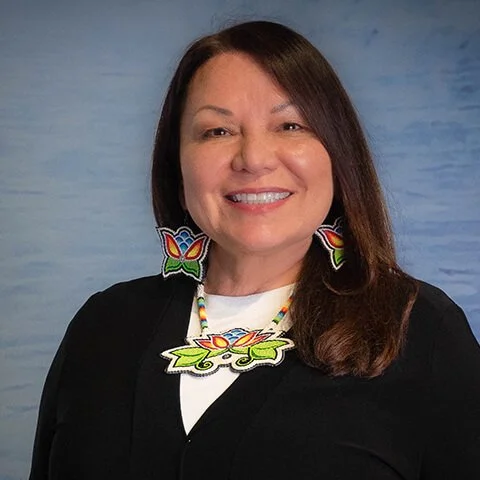
‘Every project should have an Indigenous component to it if we really want to build Canada in a meaningful way,’ says Dawn Madahbee Leach, chair of the National Indigenous Economic Development Board.
Indigenous businesses and communities contribute an estimated $56 billion a year to national GDP, but billions more in growth are being left on the table because of persistent gaps in employment, income and infrastructure, says Dawn Madahbee Leach, chair of the National Indigenous Economic Development Board (NIEDB).
“It's very important for people to understand that investing in Indigenous communities is good for business, it's good for the economy,” she told Means & Ways. “We know that if we remove the gaps in income, employment, business ownership and access to infrastructure, we could provide another $27.7 billion every year to Canada’s GDP.”
Madahbee Leach knows firsthand how investments generate more economic benefits than simple returns. As the general manager of Waubetek Business Development Corporation, an Indigenous financial institution that invests in First Nations entrepreneurs and communities in northeast Ontario, she has overseen investments of more than $140 million in 4,000 Indigenous businesses.
“Regional economies benefit when Indigenous economies are doing well. We know that when we're starting more businesses and becoming involved in projects, we're hiring a lot of people who are spending their money. It just creates a larger economic impact,” she said. “When we issue cheques to our businesses, when we're providing loans to them, a lot of those cheques are going to the larger businesses in the regions, when we’re buying equipment and materials, supplies, vehicles, we're usually spending that money in the larger region, so everyone benefits, and that leads, of course, to job creation.”
Key economic actors
The NIEDB, a federally-appointed board with a mandate to provide strategic policy advice to the government on Indigenous economic development, wrote in its annual report last year, “Economic and political developments on the national and global stage illustrate the importance of building strong, inclusive partnerships that recognize Indigenous Peoples as key economic actors.”
However, systemic issues facing Indigenous women, gaps in infrastructure such as housing and clean water, access to broadband and education are holding Indigenous communities back. Madahbee Leach said it is difficult to think about entrepreneurship if people have to think about basic necessities. While there has been progress, it’s been at a “very slow pace,” she said.
Ahead of the 30th anniversary of National Indigenous Peoples Day (June 21), Madahbee Leach spoke to M&W about ‘One Canadian Economy,’ procurement, opportunities for economic growth and more. This Q&A was edited for length and clarity.
M&W: The federal government has made building Canada and ‘One Canadian Economy’ a public policy priority. Given the geopolitical and trade uncertainty the country faces, where do you see indigenous peoples and businesses playing a role in this new landscape?
DML: Ninety five percent of our businesses that export have been exporting to the U.S., so there needs to be some support there for Indigenous entrepreneurs to diversify their trade as well. We always traded with the U.S., even before Canada and the U.S. existed. Our families are on both sides of the border, so it was a natural place for us to trade, but in today's economy with the tariffs, we need to look at trade through other places. That will help to build Canada.
All infrastructure should look at how to connect Indigenous communities. We still have issues with roads and bridges to connect our communities to Canada's larger economy, and to connect our businesses through broadband technology. We need to make sure we have clean drinking water. I was really pleased with the recent announcement of funding for that, but I'll have to see how that goes, because it's just a recent announcement with no details yet. These are urgent needs right now, and so in order to build Canada, every project should have an Indigenous component to it if we really want to build Canada in a meaningful way.
M&W: In the NIEDB annual report last year, you wrote “Indigenous procurement continues to be an important focus of the board's work.” Could you expand on that?
DML: The federal government has made a commitment that 5% of their contracts would go to Indigenous communities, and that was based on us being 5% of the Canadian population. That represents billions of dollars. The federal government has had an Indigenous procurement program for decades, but it hasn't really produced the results that could be attained. There have been some groups that have taken advantage of these partnerships, which actually weren't benefiting Indigenous communities. Or people saying that they're Indigenous in order to access the set asides for Indigenous people. The government didn't verify. We've been working with the federal government quite actively — I'm talking about a weekly basis since 2020 — to say ‘let us build a business directory of certified Indigenous businesses and let us look at what your processes are so that we can look at maybe ways that we can help improve those procurement processes.’ We have been proposing the establishment of Indigenous procurement organizations. Right now we're looking at a First Nations procurement authority, and I believe the Inuit are looking at something similar.
We've offered solutions, we've done research for them. It would probably save the government a lot of money in the long run. We’d have confidence that the money was invested in true Indigenous businesses that are benefiting Indigenous communities. This is a huge effort that many national Indigenous organizations have worked together on, so we're really happy that we've had that chance to collaborate. We're waiting for the support for the recommendations that we've put forward, and that, of course, includes some financial support to recognize that an Indigenous business directory should be managed by Indigenous people.
M&W: What is the biggest opportunity that you see for indigenous businesses and economic development?
DML: There are opportunities in every sector. Our people are working in every sector that you can think of. They're starting businesses in all of those sectors. They work in the mining, energy, tourism, fisheries sectors. There are opportunities in every sector, and there are opportunities for expanding trade and exports. I'm so proud that the people I work with are so creative in developing businesses. It's pretty exciting.
M&W: It's the 30th anniversary of National Indigenous Peoples Day on June 21. How do you think Canada collectively is doing on reconciliation?
DML: There have been some supports by government, by industry, by institutions, educational, justice and health institutions to make a difference. I look at the BC Indigenous Health Authority and I can't believe that we have something like that now in place, and it's really wonderful to see. It's something that we really need in every province.
The fact that Canada now has a UN Declaration on the Rights of Indigenous Peoples Act in place, we're taking steps. I worked with a collaboration of national Indigenous organizations to develop a National Indigenous Economic Strategy for Canada, and through that we gave people a framework for their own strategies on how to support economic reconciliation. When I look through the 107 calls to economic prosperity, we see a lot of action being taken where it never happened before.
I also see private companies on the Toronto Stock Exchange now with Indigenous people sitting on their boards of directors. A lot of good things are happening.