From shock to acceptance: Five questions for 2026 with Scotiabank's Rebekah Young
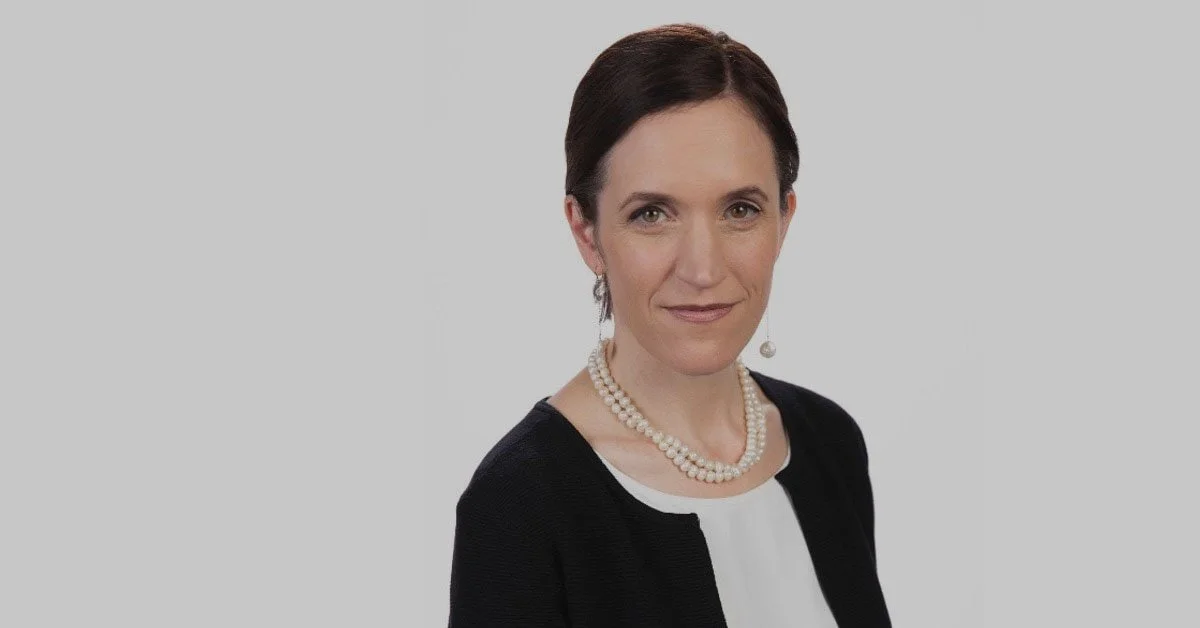
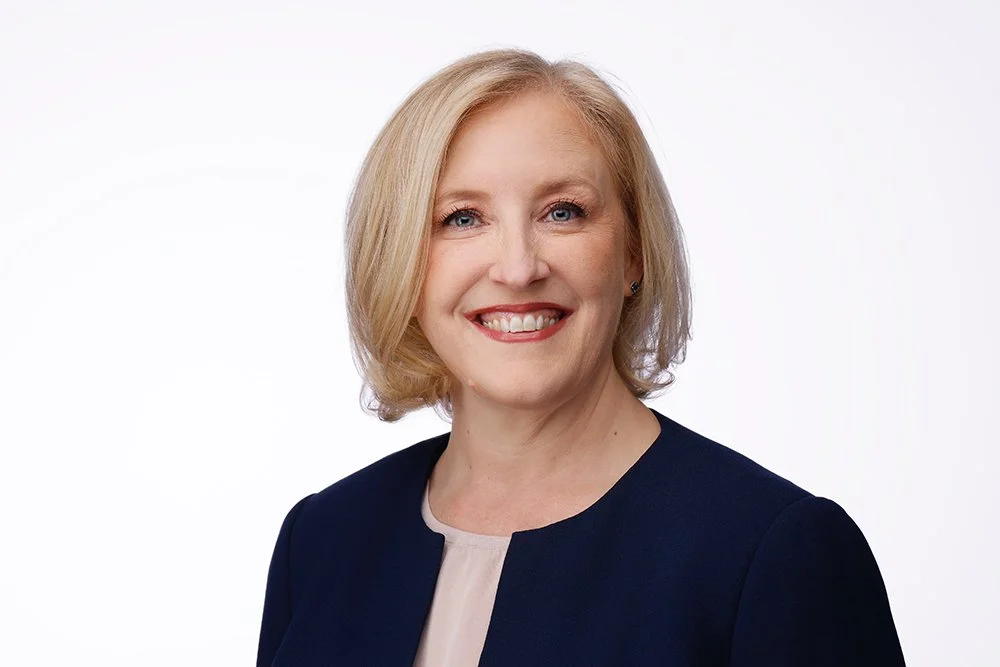
‘It's not going to be an easy year,’ says Scotiabank’s Rebekah Young. ‘There's going to be a lot of policy uncertainty, a lot of geopolitical tension.’ / SCOTIABANK PHOTO
As businesses and policymakers look ahead to 2026, Scotiabank economist Rebekah Young offered a cautious outlook, saying optimism must be tempered by significant uncertainty around trade, growth and geopolitics.
“I want to be hopeful but I think it would be sugar coating to say 2026 is easy,” said Young, Vice President, Head of Inclusion and Resilience Economics, when asked for her overall read on the economy. “We still have a lot of fog to get through.”
A major source of that uncertainty, she said, will be the renegotiation of the Canada–U.S.–Mexico Agreement (CUSMA), which she described as likely to be “a very volatile environment.” Based on recent experience, Young warned that “the negotiating tactics are very unpredictable and can be quite challenging,” adding that the talks will remain “a persistent cloud hanging over” the Canadian economy.
At the same time, she pointed to several positive forces still working their way through the system. “We do have a lot of government support still in the pipeline,” Young said, citing previous interest rate cuts, government spending and public investment that “should still be channeling through the economy.”
Those tailwinds, however, are offset by broader global concerns. Young noted the U.S. economy is slowing and is likely to continue slowing into the first half of year, creating additional pressure on Canada. She also highlighted uncertainty around whether growth on both sides of the border is being driven by one engine or two, with governments playing a large role while the private sector weighs risks tied to artificial intelligence.
A bubble or not a bubble
“There’s this AI play, that's somewhat unrelated to the geopolitical environment, but where everybody's questioning is it or isn't it a bubble?”
Taken together, Young said the outlook argues against either extreme pessimism or blind optimism. “I wouldn't want to be doomsday, but I wouldn't want to be pollyannaish also,” she said.
Young said there is still a scenario in which growth surprises to the upside, particularly in the U.S. With midterm elections scheduled for November 2026, she said Washington has already front-loaded spending, including measures that “are pulling forward business investment in the U.S.”
Stronger U.S. growth, she said, “could spill over onto the Canadian side.”
Ultimately, 2026 will demand decisiveness from businesses and governments alike. “It's not going to be an easy year,” she said. “There's going to be a lot of policy uncertainty, a lot of geopolitical tension.”
Still, she argued that uncertainty should not lead to inaction. “We have to figure out how to still move forward, how to still make decisions, and … avoid decision paralysis because of uncertainty,” she said, pointing to potential opportunities in areas such as infrastructure, defence and housing for firms able to act despite the challenging environment.
The following was edited for length and clarity.
M&W: What was the biggest economic story of 2025?
RY: Uncertainty. This is a word we all had hoped to retire. … Basically 2025 was like, it's going to be a wild ride. It's just been this rollercoaster of unpredictability, but at the same time, we've almost become numb to it. So if you think of the crazy things that have happened over the course of this year alone, it feels like we've lived two decades in 11 months. The surprise factor even when you look at a bunch of market metrics that measure uncertainty, it's gone up because of AI recently, but it was super high when we had Liberation Day, Liberation Week or Liberation Month.
But then it went down to pretty relatively low levels, considering we were still in this world where you could wake up and headlines could be super surprising.
So yeah, that's a story of just not knowing from one day to the next what the headline will be and eventually stop reacting or stop knee-jerk reacting because by the next day, the whole landscape may have changed once again.
M&W: What is the biggest challenge facing Canada as we head into 2026?
RY: Moving forward. We've kind of been moving sideways if you look at labour markets, for example. Business is not hiring, but not exactly firing because we don't know [what will happen tomorrow]. Business investment intentions are flatlining to mildly negative.
So the biggest challenge or opportunity is to move out of that phase and actually come to accept that the world has changed, that it is going to be highly uncertain, highly volatile but that the Canadian economy needs to kind of jolt itself into a stronger gear and that we're not going back.
Everybody's now seen the Bank of Canada chart and speech where [Governor Tiff Macklem] says prior to 2024, 2025, we were on this growth trajectory; we've just shifted a gear lower. The biggest challenge is to go up to that gear, close to where we were, ideally higher, but at a minimum back to where we were. I think that is going to be the biggest challenge.
M&W: What is the one public policy or regulatory change that could make Canada more productive or competitive in 2026?
RY: The business investment agenda. We've just had a weakening of the tools or the capital stock and I think just investing in that capital stock will make a big contribution directly. And then indirectly, we know that, as we give people tools, that magic combination of the people and the tools, we get this multifactor productivity or kind of that residual additional productivity, just from how we combine them.
That still is the number one. I would say in the mix of all that we can't forget human capital. I'm not going to criticize and say that they have to choose one or the other or that they've really got to focus on capital because we've had years of growing the population, growing the head count, but we need to also think about, at the same time as we are investing in capital, thinking about the people that are going to be using this capital. Especially because that's also a risk where, you know, this business investment agenda or this Build Canada, the build agenda is focused on a narrow set of skill sets in the Canadian labour force.
M&W: What is the one thing Canadians should be watching for in 2026 in terms of the economy or public policy?
RY: This is going to be a political challenge, which is, a ‘build agenda’ doesn't give the immediate gratification that you get from household transfers. That is going to be an adjustment and a real challenge, because we know in economic terms, we need to build the so-called productive capacity or the supply-side of the economy so that we can produce more and pay higher wages and allow households to improve their own welfare, but at the same time, that takes time, a couple years minimum. And then those effects, if they're successful, are broad-based. So there's not like a one-time cheque that shows up in Canadian households’ bank accounts that they can say, ‘Ah ha, it's working.’ That is the political economy challenge. How do you make sure you bring Canadians along so that they see themselves in this bigger-picture story.
So I would first be looking for signs that business investment is taking off. Then, I would be looking for signs that GDP per capita is trending in the right direction, and then third I would be looking for signs that the labour share of income is growing with the broader GDP so it's not all going to capital owners.
M&W: What is keeping you up at night?
RY: Trying to figure out what's actually going on in the economy or economies. There are just so many undercurrents right now that we do our best to produce a baseline forecast. The probability or the bandwidth around those baselines is very wide, but then within that bandwidth, there are many different narratives.
I've already mentioned the AI vs. the rest of the economy, but also the story of equity owners vs. non-equity owners, industries that are affected by trade versus not affected by trade. There are so many moving pieces that I think what keeps me up at night is thinking about all those different threads and which ones dominate, which ones have the potential to derail.
Also being sensitive when talking about ‘the economy,’ and how it’s going to be interpreted by those parts of the economy that are not feeling like they are part of that baseline. That would come to households as well when talking about ‘resilience.’ I'm very careful about using that word, because I spoke about it in 2023 and early 2024 when there was a lot of resilience. But now resilience is almost like — because we didn't crash and burn, whereas before it was more of a positive connotation.
All that to say, it keeps me up at night trying to figure out what is going on without being overly simplistic, but still capturing the essence of what's going on. That, and my children.