The Year’s Big Theme: Artificial Trade Intelligence

‘The two big forces for the economy and markets in the past year — the trade war and the AI spending boom — will still be apparent in 2026,’ writes BMO chief economist Douglas Porter. / SCREENSHOT
Around the middle of 2025, it likely began to dawn on many analysts that they may have been looking the wrong way on what was truly driving the global economy. After spending much of the first half of the year focused on (obsessed with?) the trade war, it became increasingly apparent that the ongoing and accelerating boom in AI spending was blowing past trade uncertainty and, in fact, was keeping the U.S. and global economy on a solid footing. It was also right around mid-year that the S&P 500 recouped its deep tariff-related losses, and then began climbing to new highs, culminating in a solid full-year return for equities. In turn, this resiliency set off worldwide debates on the need for further monetary easing heading into 2026.
The two big forces for the economy and markets in the past year—the trade war and the AI spending boom—will still be apparent in 2026. The debate is whether the balance will tip the same way as it did in 2025. We suspect that while trade uncertainty will linger, and even flare at times, it won’t be nearly as intense as in 2025. On the flip side, while the AI investment boom may even intensify, the rate of increase may wane and its power over the equity market may relent—as hinted at in recent days. Despite concerns about a sudden reversal in tech and about the tariff impact on global trade, we expect the global economy to post another year of GDP growth of just above 3% in 2026, not far off 2025. While a bit below the long-run average, this is still quite resilient in the face of deep policy uncertainties.
The coming year will still bring plenty of trade drama, even if it will rank a bit lower on the wildness scale. The U.S. Supreme Court is expected to rule on the legality of the IEEPA tariffs early in the year. While the Administration has avowed that it can replace those revenues with other trade avenues, a ruling against them will limit the flexibility and scale of future tariffs. The ruling could also indirectly affect the highly anticipated USMCA review slated for mid-2026: Canadian (35%) and Mexican (25%) goods that aren’t USMCA-compliant face hefty IEEPA tariffs. It’s widely expected that the U.S. will use the threat of walking away from the agreement during negotiations. As well, the U.S. has yet to reach a lasting deal with China, although the two seem to have settled on a medium-term truce, however uneasy that may be. And note that some of the earlier ‘deals’ with others are fraying at the edges—Indonesia is the latest example.
Acting again as an important counterweight, the AI investment boom will also still be a major driving economic force. With even bigger capital spending plans in place for 2026 among the mammoth tech companies, it’s almost a given that outlays (on chips, servers, data centres, etc.) will significantly support U.S. growth. The consensus view has been slowly and steadily grinding higher; after bottoming out in the low-1% range in May, the average forecaster now expects GDP to rise by roughly 2% this year and next—and we just nudged up our 2026 call to 2% this week. The AI boom acts through two channels: the direct capital spending strength, which accounted for almost half of first-half growth; and, the wealth effect from soaring equities.
While the U.S. has been the primary beneficiary of the first force, the equity rally spanned much of the globe. Markets from Mexico to Japan to Germany jumped 20% or more, lifting sentiment. Accordingly, GDP growth in each of Japan, the Euro Area and Britain managed to pick up this year, albeit to just a little above 1% each. But that was enough to convince the ECB to stop easing, and for the BoJ to hike modestly. With the Fed moving in the opposite direction in the past three meetings, the U.S. dollar spent much of the year reversing last year’s run-up. The trade-weighted dollar fell 7% from its January peak, and we expect it to soften another 2%-to-3% in 2026, as the Fed eases further—our call is for another 75 bps—while many others head the other way.
Even China’s yuan appreciated by about 3% versus the dollar in 2025, although it softened against most other majors. That will become more of a flashpoint in 2026, with its trade surplus punching above $1 trillion this year—despite a wall of U.S. tariffs. One might raise an eyebrow at our forecast of China’s real GDP growth slowing to 4.5% next year from about 5.0% in 2025. After all, authorities will strive to meet the “around 5.0%” target, expected again for the coming year. But, China still faces domestic and external headwinds. Although exports have defied gravity, there may be some payback from earlier frontloading. And, trade barriers are rising not just in the U.S. but elsewhere, highlighted by Mexico’s tariffs of up to 50%. Arguably more concerning is domestic activity given housing is still struggling and the job market remains weak. It’s unlikely consumer spending will suddenly catch fire, frustrating the rest of the world’s goal of rebalancing China to a more consumption-based economy.
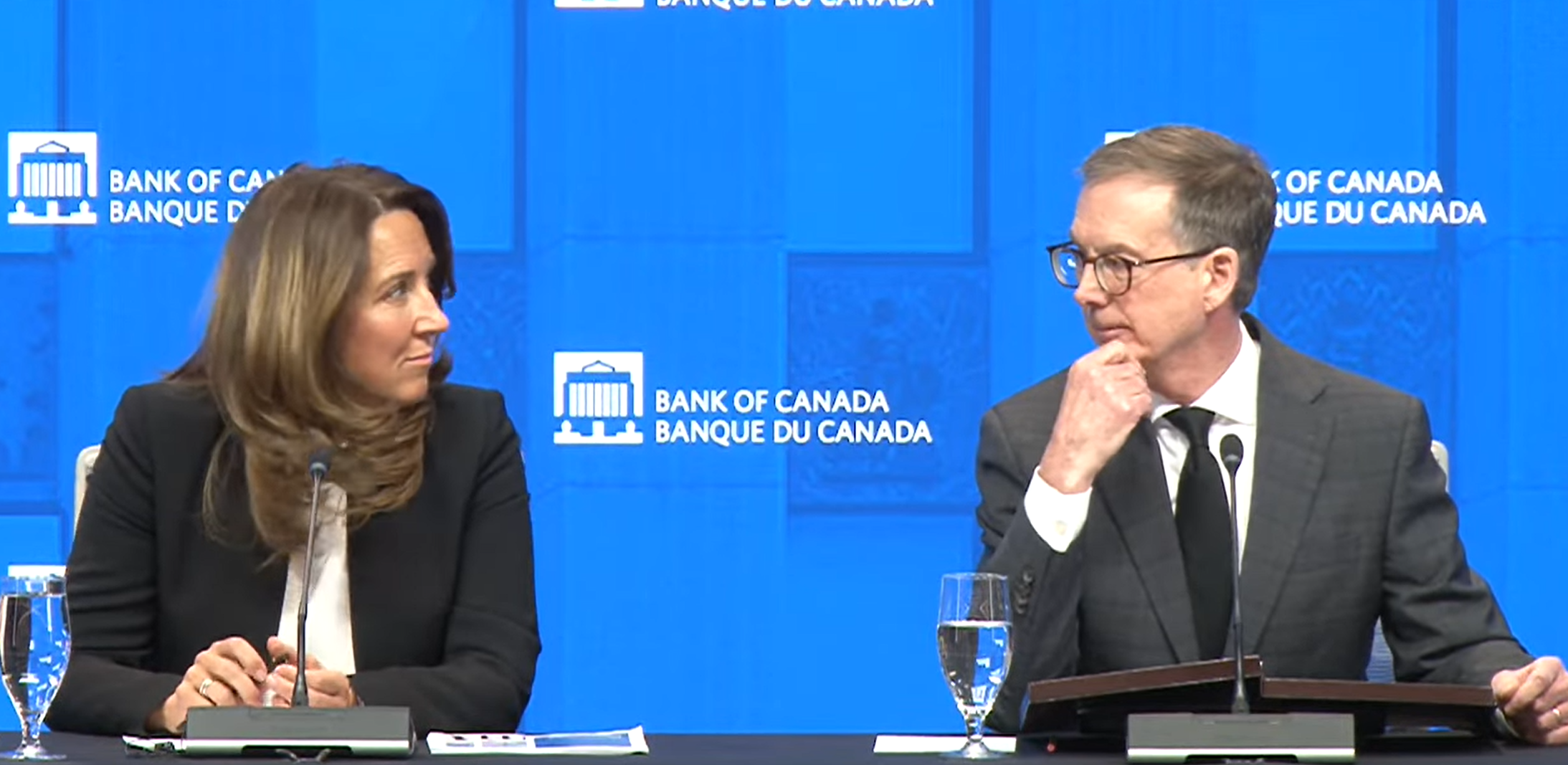
If it was a surprise that China’s economy held its own in the trade war, it comes as a shock that Canada has apparently done so as well. Arguably, the most surprising economic statistic of 2025 is that the number of unemployed Canadians has managed to decline in the past 12 months—recall, the trade uncertainty has been rolling for over 12 months, with the President first threatening Canada with tariffs in November 2024. Along with an upgrade to GDP growth to around 1.7% for this year, Bank of Canada Governor Macklem was inspired to suggest that the ‘R’ word was thus no longer recession, but resilience. (We will graciously forgive him for borrowing our line from 2023; imitation is, after all, the highest form of flattery.) Accordingly, the BoC signalled this week that it is on hold, and noted that the risks are now more symmetric. With trade/USMCA uncertainty lingering, we believe there is a greater chance of another rate cut than a hike in 2026, but the most likely outcome is no BoC move.
Canada’s sturdiness in the face of existential trade threats was driven by a variety of factors. First, revisions revealed better-than-expected momentum heading into 2025, with growth a bit above normal at 2% in the past two years. Second, actual U.S. tariffs on Canada were limited to specific (albeit significant) industries—metals, autos, lumber. Third, fiscal and monetary policy provided massive support. The BoC delivered another 100 bps of easing, following 175 bps in 2024. Meanwhile, Ottawa and the provinces boosted their combined budget deficits by over 2 ppts of GDP. Fourth, Canadians spent more at home, especially on travel and entertainment. Finally, the global equity rally felt right at home in the TSX, which outperformed the S&P 500 partly thanks to gold. The surge in financial asset values pushed net household wealth back above 10-times incomes, double the ratio of 35 years ago. While some of these forces will fade in 2026, we still look for Canada to avoid recession again and grind out modest growth of 1.4%. Given the past year, the risks lie on the high side of that call.
This piece originally appeared on BMO Economics’ website and is reprinted with permission.