Supply chains need same ‘special focus’ as major projects to guarantee reliability, says Raitt
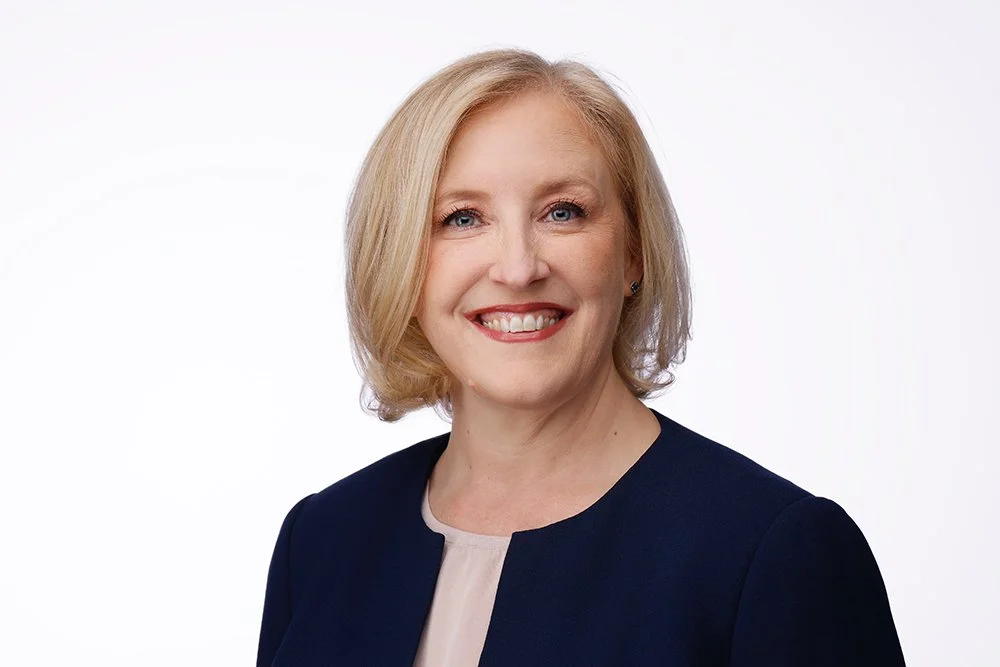
“There’s a lot to be said for treating the entire supply chain as one sector,” CIBC VP Lisa Raitt told Means & Ways.
Canada should rethink how it governs its supply chains — potentially treating them as a single, coordinated sector — if it wants to protect economic competitiveness, attract investment and adapt to rapidly shifting global trade patterns, says Lisa Raitt, Vice-Chair and Managing Director, Global Investment Banking at CIBC.
“There’s a lot to be said for treating the entire supply chain as one sector,” Raitt said in an interview with Means & Ways. “The various parts of the supply chain, including the labour movement, has to recognize the importance of pulling together in this and working with one another to try to get to a place where you may call it essential service, you may call it something else, but that people are going to get fairly paid, well paid, have good working conditions, but at the same time, we're not going to be playing whack-a-mole with respect to whether or not there's a lockout or a strike.”
She pointed to fractured labour relations across ports, rail, trucking and other links in the logistics network as a key vulnerability. “The most unpredictable part of the supply chain, quite frankly, is labour,” said Raitt, a former Transport and Labour minister. “It’s not whether they are capable of doing the job because they certainly are. It's whether or not there’s good labour relations in the various parts of the supply chain that keeps the supply chain reliable in terms of having it when you need it the most and using it as well to attract investment into the country.”
That reliability is critical for an export- and import-dependent economy competing for global capital, and Ottawa needs to elevate supply chains as a policy priority, similar to its focus on major projects, she said.
Give ministers a mandate to ensure supply-chain reliability
“Since we are putting so much effort into making sure that Canada is ready for a long-term economy, we should recognize the importance of supply chains, much like what the Prime Minister did with the Major Projects Office, recognizing that sometimes you need to bring a specific focus to the approvals process. You need to bring a special focus to the supply chain operations and you only do that if you give the mandate directly and purposely to the minister of labour and the minister of transport. And you give them a mandate to tell them that they have to work with all of the players in the supply chain to come up with a solution to ensure that the supply chain has good labour relations first and foremost, but secondly, it is going to be reliable.”
When asked why we’re not already doing this, Raitt linked the urgency of reform to fundamental shifts in Canada’s trade relationships. “We're not doing it because we've never really had to do it before. But now we have to,” she said, noting that Canada can no longer rely almost exclusively on north–south trade with the United States.
“Our trade routes are changing phenomenally,” she said. “Everything used to go pretty much north–south either on rail or on truck, and now we have to think about how to get goods to further away places and bring in from further away places.”
Those structural shifts, Raitt argued, put additional pressure on governments not only to rethink how supply chains are governed, but also to demonstrate that Canada can still deliver large, complex projects in a timely and predictable way — a test of both institutional capacity and political resolve.
Let’s get a move on
On the government’s ability to move faster on major projects, Raitt said it was about political will. “The Major Projects Office absolutely can do its job. No question about it.” The bottleneck, she argued, lies elsewhere: The government must decide to make the necessary changes and have the courage to do what's needed to “move these things forward quickly.”
Whether that happens will depend on politics. “It's going to be a case-by-case basis,” she said. “Because political considerations will always come into play.”
From her conversations with business leaders, Raitt said interest in Canada is rising, but investors remain cautious. “The number one question I get is, is it really going to be easier to get things built-in Canada?” she said. “I'm optimistic. But we'll have to wait and see. We don't have a test case yet.”
She pointed to progress in rolling back policies that previously discouraged capital. “We are not putting in place regulations that are seeking to reject investment, which is what we did for the past 10 years,” she said. “Until we start seeing concrete examples of the government moving in the right direction, there's still going to be a little bit of hesitancy.”
Looking ahead to the 2026 CUSMA review, Raitt believes there will be a deal, but with some changes.
“The dust is beginning to settle in terms of our surprise and disappointment in how the United States is positioning themselves with respect to tariffs and free trade with Canada. As a result, we're becoming more and more clear on, ‘Okay, there's going to be tariffs. We're going to have to pay them.’ The whole notion of ‘elbows up, we're not going to pay a damn cent,’ that's gone. It's taken a while for that to crystallize in the minds of a lot of folks in Ottawa, but it's there now. And it comes down to negotiating the best deal that you can get.”
Her main concern is with the section 232 sectoral tariffs on steel, aluminum, forestry and autos.
“There are two different things at play, though. I do believe we'll get a CUSMA deal. And it will be changed in a couple of ways, and depending upon what the temperature of the day of the administration is, I don't know what the changes are going to be, but you can look at the latest laundry list of stuff to see.”
“That has to be sorted out,” she said. “And that one I have a lot more concern about, because those are anchor industries in this country that severely impact how we move forward as a nation.”
Five questions with Lisa Raitt
MW: How would you describe 2025 in one word?
LR: Divergence. Divergence, on a couple of things. Divergence in how Canadians see the world. There's a very different viewpoint if you're under 40 than if you're over 50. And that's playing out quite frankly, in how people are voting.
The amount of dissatisfaction in people under 35 is startling, and they're vocal about it, and the amount of folks my age and older who are desperate to maintain things the way they are is just equally as vocal and pressing. So divergence for me, divergence from a trade agreement with the United States, our best friend. Divergence from what we were attempting to do on climate before. Everything is moving in different directions all at the same time, depending on where you are. There may be opportunities in there, but you’ve gotta be mindful of it. We need a cohesive Canada.
MW: What is the one thing Canadians should be looking for in 2026?
LR: It's going to be more of the same, a bit of uncertainty, a bit of waiting to see how political fortunes fall in the United States.
M&W: What is the best economic or public policy book of the year?
LR: The Big Fix: How Companies Capture Markets and Harm Canadians by Denise Hearn & Vass Bednar. I really enjoyed it. It's not a difficult read by any means. It gets you thinking and it accurately portrays, in my opinion, the public policy issues around the way in which corporate Canada operates.
M&W: Which underrated public policy should governments address to grow the economy in 2026?
LR: Honestly, they’ve got to address how to deal with these protests around anti-semitism. That’s very, very important to me personally, and I think it's important to cohesiveness in Canada. The second public policy, one which could be a sleeper, is AI. We have to decide in this country if we are going to throttle AI, or if we're going to allow it to grow and I would just say, let's be brave.
MW: When will the next election be?
LR: Well, you're going to have a number of by-elections in 2026. It's not going to be a general election, but I would treat those by-elections as a general election, because there's enough of them and there's one Conservative seat in the mix, and that's Matt Jeneroux in Edmonton, and that could be the majority seat there.