Carney shoves his whole stack into the middle
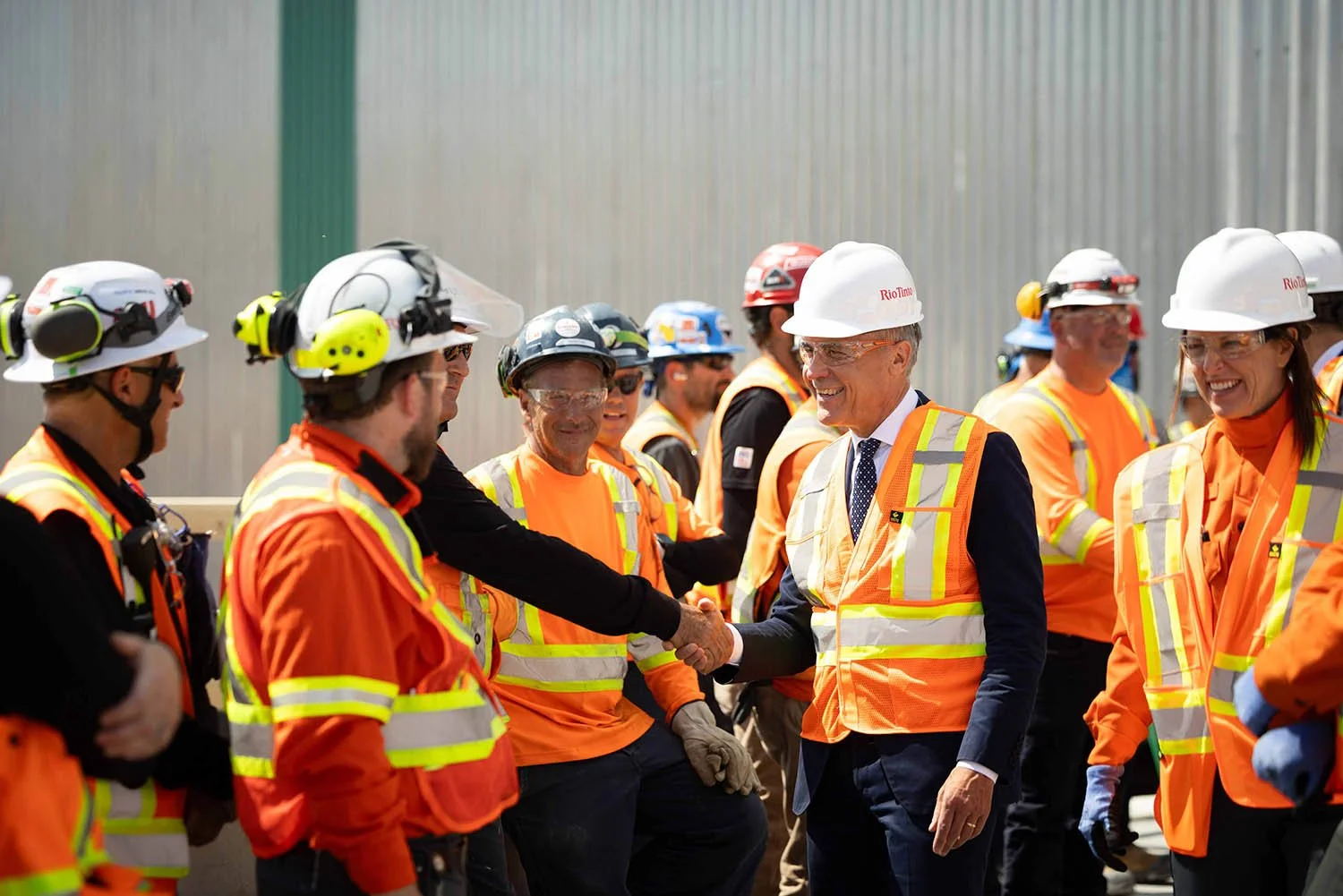
The Liberals ‘are adopting a classic majority tactic of moving hard and fast early in their mandate on potentially controversial legislation. The potential traps and pitfalls are many,’ writes Ken Polk. / PMO PHOTO
Confronting the Canadian fiscal crisis of the 1990s, Prime Minister Jean Chrétien had a firm if ironic insight: Everyone wants to go to heaven, but no one wants to die. In other words, he often heard people say that it would be a good thing to balance the budget, but no one wanted to sacrifice anything to get there.
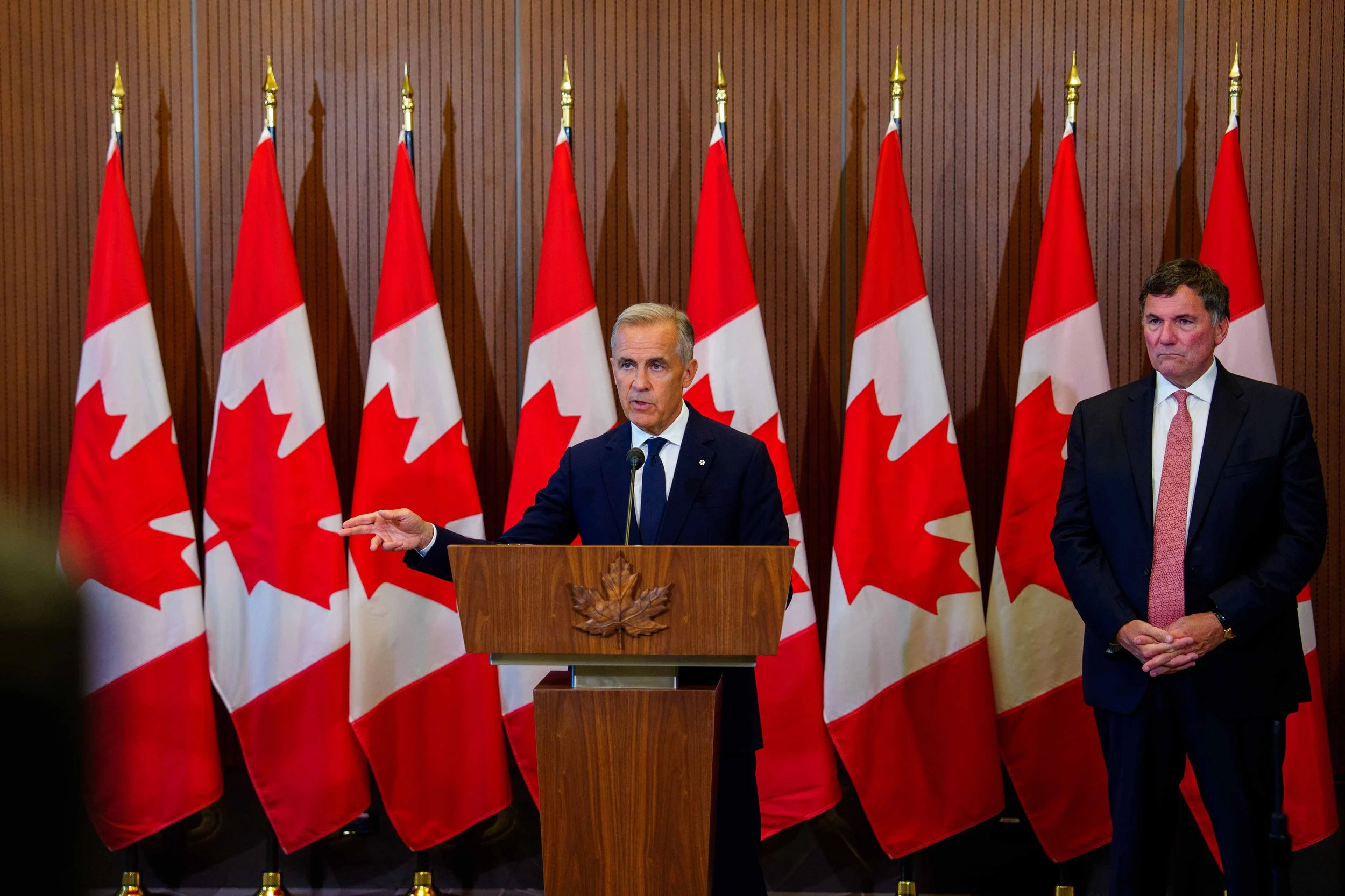
That came to mind this week when Prime Minister Mark Carney shoved his whole legislative stack into the middle with the introduction of Bill C-39 the Building Canada Strong Act. Its parliamentary fate will tell him - and the rest of us - whether all the lofty, galvanizing patriotic “Canada Strong” rhetoric that swept him into office in April 2025 will translate into the prose of getting s&%t done.
History on repeat
For this long-on-the-tooth observer, there are also some interesting parallels between Prime Minister Mark Carney’s Building Canada Strong Act — C-39 - and the now historic 1995 federal budget forged in partnership between Chrétien and then Finance Minister Paul Martin.
First, they reflect significant efforts to address long-standing government dysfunction. In the case of the 1995 Budget, the quarter-century run of federal budget deficits had left Canada on the verge of insolvency.
In the case of Bill C-39, it is the decades-long failure of the federal government to approve projects with major economic benefits, from oil pipelines to new mines, from infrastructure to strengthen critical supply chains. This was the outcome of a steadily hardening thicket of regulations and reviews that had become time-consuming, fragmented, and confusing, sending a clear message to many prospective investors: stay away.
Second, external threats played a key role in triggering long-overdue government action. In 1995, the bond markets expressed doubt that Canada's deficit situation was sustainable, with interest on the federal debt alone accounting for 34 cents of every federal dollar spent and bond yields upward of 10%. This shocked Chrétien's Liberal caucus out of its accustomed fiscal complacency.
In 2025, the beggar-thy-neighbour tariff policies of President Donald Trump made it clear that Canada could no longer rely on privileged access to the U.S. market through a free trade agreement for economic reasons and as a lure to foreign investment. This shocked the Carney Liberals out of their accustomed regulatory lethargy.
Imitation is the sincerest form of political larceny
Another, more ironic parallel is that the Liberals have a history of successfully implementing Conservative priorities.
The two-term government of Progressive Conservative Prime Minister Brian Mulroney in the 1980s had made balancing the budget a priority in each of its almost 10 years in office, producing in each Budget what I mordantly referred to, in an earlier version of my professional self, as “10 five-year plans to balance the budget.”
In the end, the federal deficit was higher in Mulroney’s last full year in office — $41 billion — than it had been in his first — $38 billion. From this Conservative fiscal failure federal politicians had taken the lesson that cutting deficits was political poison and the post of Finance Minister was a political death sentence. No one wanted to die.
Yet the 1995 Chrétien-Martin budget-cutting program slashed spending in ways that seemed unimaginable for Liberals, forget being politically survivable. Over three years it cut spending by $25 billion and laid off 45,000 civil servants. By 1997 the federal budget was in surplus for the first time since the end of the 1960s. Yet it was broadly popular and made Paul Martin a political rock star and heir apparent to Chrétien. The fiscal crisis passed.
Indeed, the 1995 Budget laid the fiscal cornerstone, not only for three consecutive Chrétien majorities, but also for the fact that today Canada has the lowest debt-to-GDP ratio in the G-7, despite another decade of deficits turned in by former Liberal Prime Minister Justin Trudeau.
Fast forward to the 2025 election. Pierre Poilievre had spent the two years since being elected as Conservative Leader promoting a program of regulatory streamlining with the tag line: “one project, one review” aimed at lifting the sheer dead weight of federal regulations off of economic growth, investment, productivity growth and job creation.
Of course, Poilievre lost that election to a Liberal leader who stole “one project, one review,” only to up the rhetorical ante with Bill C-39 to “one project, one review, in one year.” Poilievre’s later upping of the ante still further, calling for a six-month time limit on federal project reviews, disappeared into the twilight zone of political irrelevance, where he continues to struggle to find both his bearings and an issue.
Shifting the burden of proof
The 1995 Budget is now settled history. But we are just at the beginning of Bill C-39's legislative journey.
Environmentalists have raised the alarm that it will bulldoze environmental protections they have fought for decades to put in place.
Unions have raised concerns that changes to Section 107 of the Canada Labour Code proposed by Bill C-39 would allow the Minister of Labour to intervene in a strike or lockout when it “adversely affects or may adversely affect the national interest.”
And the Assembly of First Nations has voiced concern that the Bill’s streamlined processes and compressed timelines may transgress indigenous constitutional rights. The Bloc Québécois, NDP, and the Green Party have been the strongest parliamentary voices for some or all of these concerns.
The Conservatives have little alternative but to broadly support the legislation, since opposing it would require that they swallow themselves whole, a skill at which the Liberals alone excel when needed. But given the hard work that Poilievre has done courting union support, he will be watching the Section 107 controversy closely. In any rate, he can always resort to forensic examination of projects that go wrong, a skill at which he and the Conservatives also excel like no others.
As for the Liberals, they are adopting a classic majority tactic of moving hard and fast early in their mandate on potentially controversial legislation. The potential traps and pitfalls are many, as indicated above. Then there is the nagging concern that burgeoning backlashes against rural AI data centres and the Alto High Speed Rail Project will achieve a critical mass as the implications of C-39 are dribbled out in parliamentary debate.
On the plus side, Carney can count on the virtually unanimous support of Canadian business. An unfamiliar and perhaps uncomfortable position for a caucus that is still populated by many Trudeau progressives. Trump’s errant bluster will also likely be a reliable ally.
More importantly, Carney has shifted the strategic debate. Where recently the burden of proof for proceeding with a major economic project had been on proponents, Bill C-39, if adopted, will place it on opponents. That is more congenial political territory to fight on.
Riding high in the polls, Carney has political capital to gamble — and he has gone all in with C-39. The success of his premiership will depend on winning this very big bet.
If the Chrétien precedent is any guide, Carney will take final comfort from the knowledge that when faced with no practical alternative, Canadians will always opt to get s&%t done.
That is the Canadian way.