Canada needs a Plan B: Leblond on deepening relations with the EU and building economic resilience
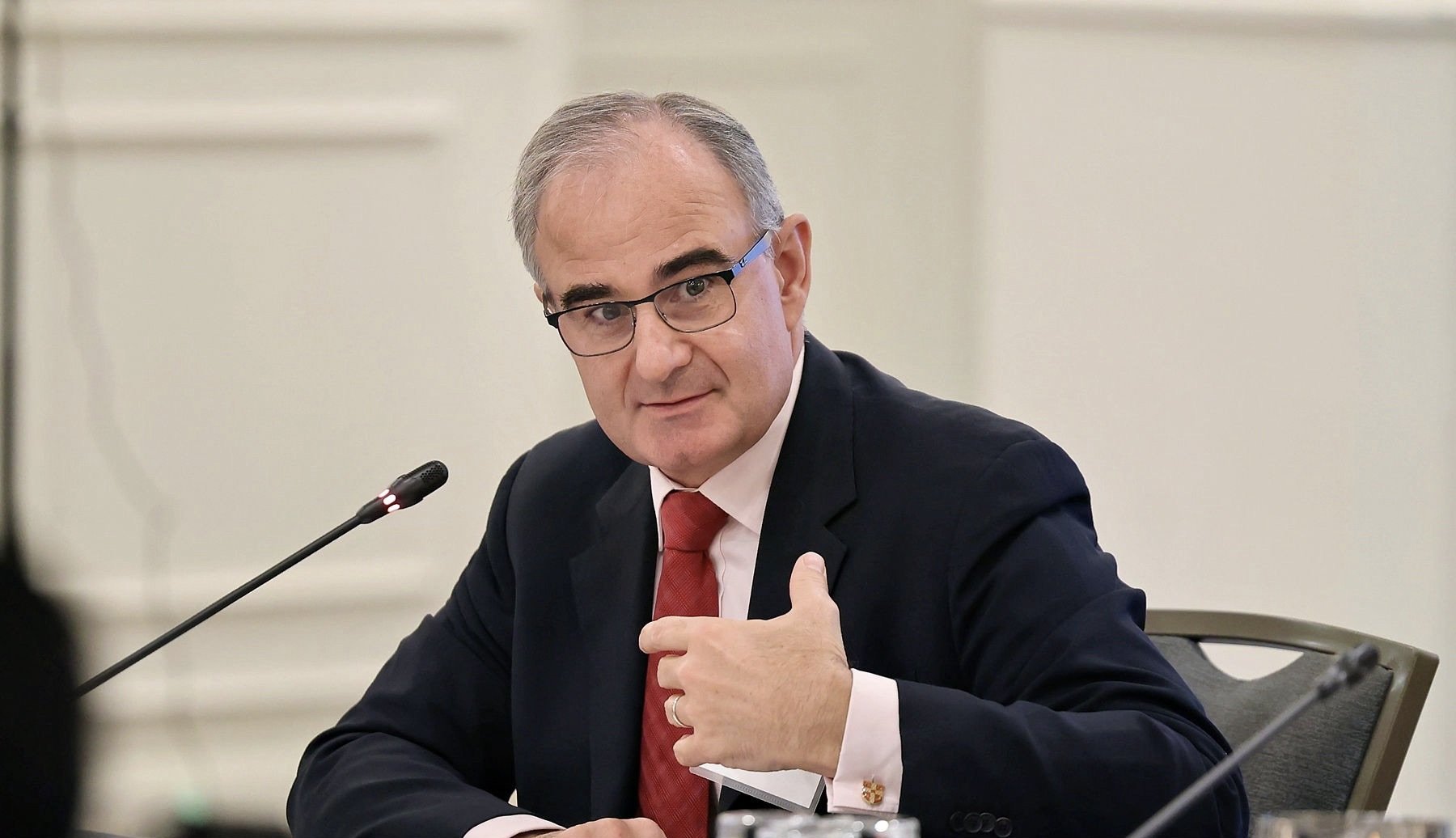
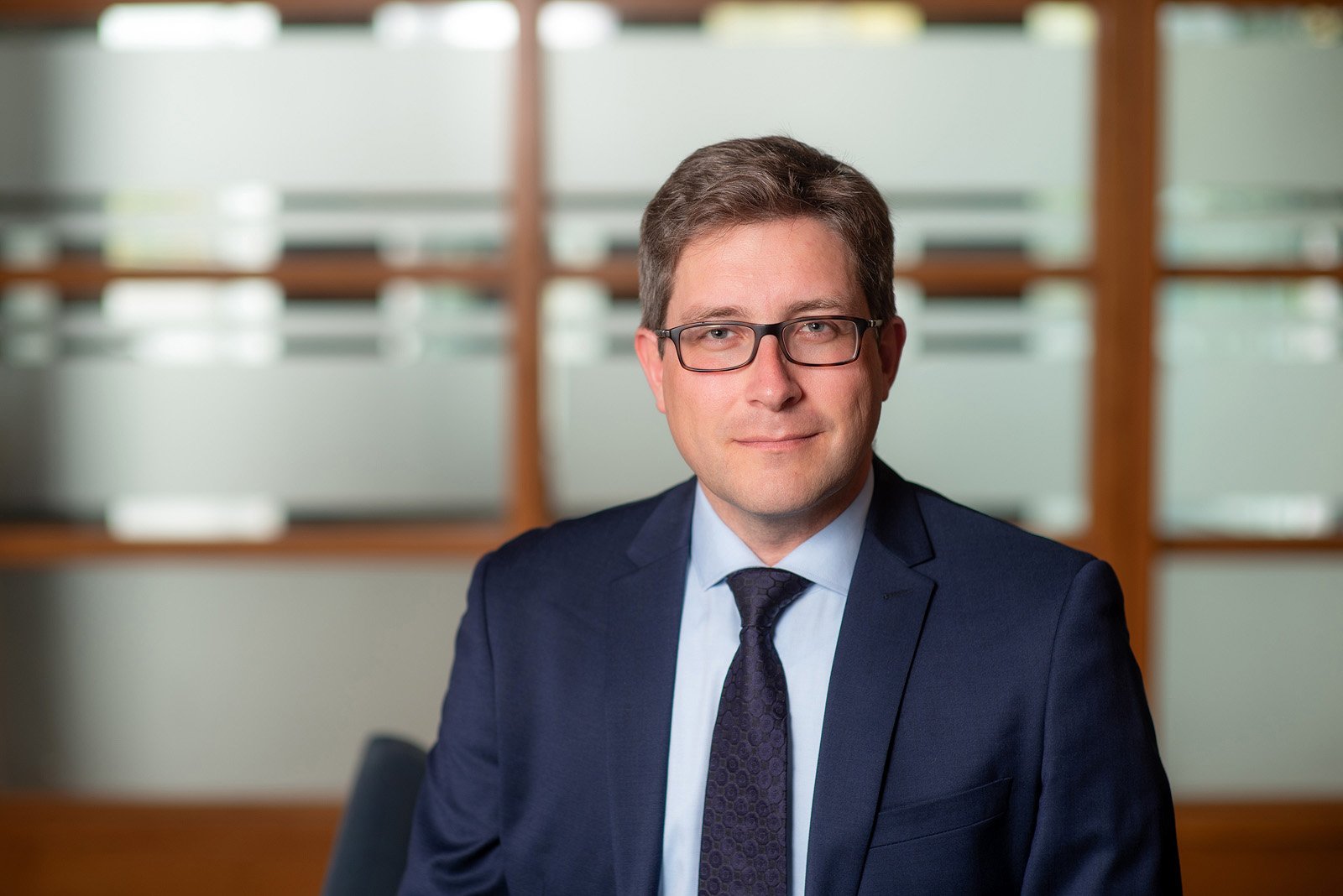
‘We've already positioned ourselves as being the Europeans' best ally, both economically, but also in terms of security,’ says University of Ottawa associate professor Patrick Leblond. / SUBMITTED PHOTO
Canada is at a crossroads, and both options will significantly alter the country's economic and security future, says University of Ottawa associate professor Patrick Leblond.
“Either we follow the path that Prime Minister Carney has set us on … where we increase our sovereignty, we increase our independence and ultimately our security and I think prosperity; or we put all our eggs in the U.S. basket and then it's the 51st state defacto or even maybe, in the end, then we might as well join the U.S. and get the benefits that come of being inside the United States,” Leblond told Means & Ways. “That's our choice. Do we want to be the 51st state or not?”
The Canada-EU Summit in Montreal Oct. 29-30 comes on the heels of European Commission president Ursula von der Leyen welcoming Canada as an “associate member” of the European Union in her State of the Union speech last month. Deepening the relationship while diversifying trade away from the U.S. is essential to strengthening Canada’s economic and security future, said Leblond, a chartered accountant with expertise in global economic governance and international economic integration.
“That's part of our resilience, and reducing the leverage that the United States or others can have. And obviously it's very hard to do, but perhaps by building our companies fast and giving them markets not only in Canada, but in the EU and other places, and working with the EU companies, we can help build that capacity that would give us at least a Plan B if someone turns off the switch,” he said. “At minimum that's what we want.”
With a free trade agreement already in place, this can be as simple as increasing the frequency of meetings between Canada and the EU and accelerating the removal of trade barriers.
Other potential solutions Leblond cited include:
Developing additional subsea fibre-optic cables connecting Canada and Europe to reduce reliance on American networks.
Implementing interoperable electronic trade documentation so businesses submit information once.
Establishing a joint Canada-EU economic security council to coordinate projects and policy initiatives.
Developing Arctic data centres to provide backup infrastructure for essential European services.
Expanding Canadian participation in Erasmus+, the European student exchange program.
“We know the things we want to work on. But how are we going to do this in a way that is sustained?” he said, emphasizing the need for concrete action to come out of the Summit and not just statements that the two jurisdictions would continue to work together.
“It doesn't mean that we're all of a sudden going to do 50% of our business with the EU. That's not going to be the case, but if we're around close to 10% now, could we go to 15 and eventually, maybe in 10 years, 20%?”
The following Q&A was edited for length.
M&W: What do you expect to come out of the Canada-EU Summit next week? What would success be to you?
PL: Success would be to announce concrete things, so I think this digital trade agreement will be something very concrete. I look forward to seeing what's in it. I hope that it's ambitious beyond just saying we're going to cooperate more on issues.
For example, a seamless sort of logistics chain for trade, where you enter your data or if you need digital identification, making sure the process … in Canada is compatible with the system in the EU. In that sense, making at least the back end of trade easier. …
Maybe creating a specific task force jointly between Canada and the EU to coordinate these things would be a way to give maybe a bit more meat on the bone to move things forward. At this end, we want to do more mining and more projects, but we need capital to do this. For capital to be there, they need to know that it's going to happen and they need to know that there are going to be people at the other end buying this stuff before they put their money into a Canadian project, right?
These would be concrete elements that would send a signal that Canada and the EU are moving forward together. ‘We believe in human rights. We have common values and we need to work together.’ Yes, okay, we know that. What are we going to do now together?
M&W: You've talked about a Canada–EU Economic Security Council. Can you tell me about how that would work and why it's necessary?
PL: Critical minerals is a good example but there are others when we talk about Canada. I did this report with a colleague of the faculty of law on Canada-EU economic security cooperation, and one of the things that we found is there already is a lot going on between Canada and the EU, but it's very kind of a bit all over the place. You're wondering who's putting it all together? Who's coordinating these things to say, okay, if we're going to do supply chain monitoring. That sounds great. But who's doing it? Is there a different supply chain monitoring for critical minerals, energy or something else? Should they all be more integrated because a lot of the issues might be similar?
It's hard to believe that one person, someone like John Hannaford, who's the Canada-EU representative, has the team and the structure to make this happen. It does require a lot of coordination and information sharing, and I just don't think it's there. That's a capacity issue. And we have to have that capacity.
M&W: You told Canadian Press “Whether it’s Google, Amazon, Microsoft, we’re very dependent on these platforms. And as we know, it could be weaponized against our economy, against our governments.” First, do you think all trust is lost with the U.S.? And second, how worried are you that it can be weaponized against our economy? How urgent is it to deepen the EU relationship?
PL: It's hard to tell, but the fact that the Trump administration has sanctioned judges on the International Criminal Court for going after Israel and what's been happening in Gaza, to me that's problematic. … But at the same time to now actually cut off these people's access, including a Canadian judge who lost basically all access to emails, including personal and work, bank accounts where the only way that you can do banking is by showing up in person, and saying ‘I'd like to withdraw money from my account’ and getting cash, that's it — that's insane to me. But then it also begs the question, how far can it go? Could it happen to a company? They've gone after Bombardier, for instance. …
We need to be aware that it can happen, and it has happened at an individual level, but it could be scaled up. That's certainly easy. And it could be used as leverage. We know that the whole 51st state economic force has not gone away. …
At a minimum, we will see tariffs being imposed by even a Democratic Congress or administration in the future, because that's where the U.S. stands. Democrats can say that the way that the Trump administration has treated Canada is terrible, but they're not really advocating for free trade in North America. … We have to do what we can to reduce our dependence on U.S. platforms, from U.S. clouds, all these things.
M&W: What is the biggest challenge and opportunity for Canada in deepening this EU relationship?
PL: We've already positioned ourselves as being the Europeans' best ally, both economically, but also in terms of security. … At the same time, we have an opportunity to be a bit of a bridge between Europe and Asia, because, you know, if we consider all those choke points between Europe and Asia, going through the Middle East, going through China, going through Russia, if those things are not available to Europeans or Asians, … we could be a bridge. …
I mean, already, you can ship goods from Japan through Prince Rupert, put it on trains and ship it out of Montreal or Halifax afterwards and still, it's faster than going through the Panama Canal. It's more expensive, which is why it doesn't happen very often.
M&W: Is it too little too late, though?
PL: It's never too little too late. … Yes, we are late in the game — this change in terms of the economy being securitized in a way, and the geopolitics changing, it started 20 years ago and we failed to see that. We wanted to believe in the Fukuyaman world of, you know, the end of history, neoliberalism and globalization and multilateralism. We wanted to believe that really hard. But that's not, as Mr. Carney says, the world we're living in, and it's not the world we're going to go back to. So let's do what needs to be done. Yes, it's going to be costly, but ultimately, for me, it's a question of survival.
M&W: Is anything keeping you up at night?
PL: I mean, the kill switch is keeping me up at night. That's the answer. If they have that kind of power on an individual, would they use it on an entire country to really force us to give in? That keeps me up at night.