Thank a college graduate: A conversation with Pari Johnston
From housing and healthcare to energy, defence, and local economic growth, Canada’s biggest priorities depend on skilled people. Yet the workers caring, repairing, innovating, and building Canada’s major projects rarely receive public recognition.
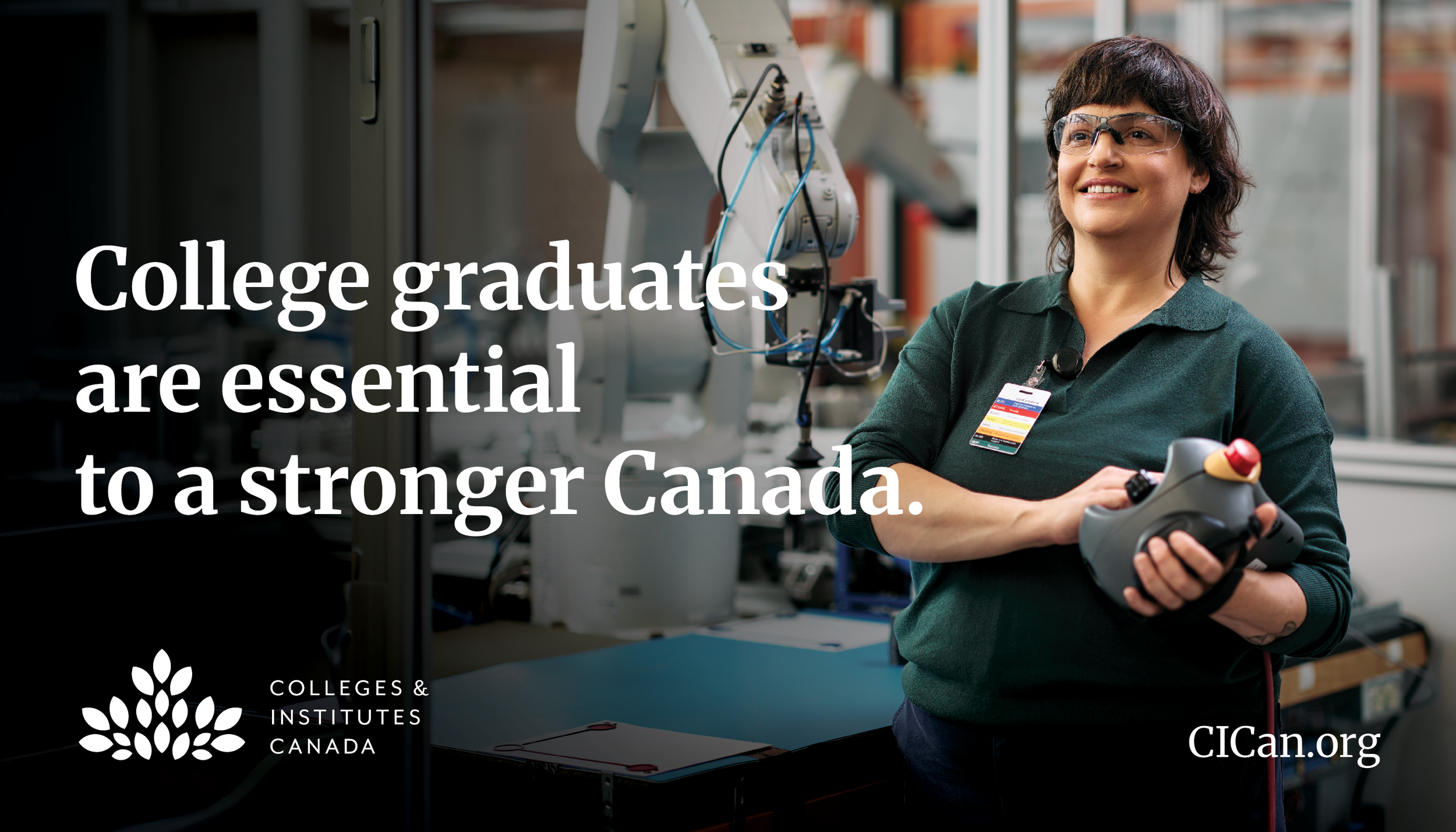
A new national campaign from Colleges and Institutes Canada (CICan) aims to change that. MERCI / THANK YOU celebrates graduates of Canada’s public colleges, institutes, CEGEPs, polytechnics, and Indigenous Institutes, and highlights the essential work they do across the country.
We spoke to Pari Johnston, CICan’s President and CEO, about the organization’s first-ever national public campaign and why gratitude matters.

If Canada wants to build big, we need to think differently about the institutions that make nation-building possible. Talent development is not separate from economic development — it is economic development, says Colleges and Institutes Canada president and CEO Pari Johnston.
M&W: This national campaign is a first for CICan and for the sector. Why now?
PJ: Because Canada is ready to build, operate, innovate and prosper — but plans do not deliver themselves.
We hear this directly from employers. In housing, BuildForce Canada projects that 135,000 residential construction workers will retire by 2035. That means replacing decades of experience while expanding the talent pipeline needed to meet demand.
This is not only a housing issue. One major shipbuilding employer recently told us it needs hundreds of skilled tradespeople, particularly welders, in a very short timeframe. The contracts are signed and the jobs exist today. What is missing is enough qualified people, prepared and deployed at the speed major projects now require.
That is why this campaign matters now. It connects Canada’s ambitions to the people with the skills to deliver them: apprentices, tradespeople, technicians, technologists, healthcare professionals and innovators.
M&W: Why thank college and institute graduates now, and how can Canadians do it?
PJ: Roughly 300,000 graduates enter communities nationwide each year. They care for patients, build and maintain critical infrastructure, support local businesses and help communities respond to changing needs. Their contribution is immediate and far-reaching.
Much of that work happens in plain sight but goes unrecognized. We celebrate major projects, new infrastructure and ambitious national goals, but not always the people whose skills make those achievements possible.
Saying thank you can be as simple as recognizing the people whose work touches our lives every day. Recognition tells the next generation that these careers matter, these skills matter and their contributions to our communities matter too.
M&W: Canada is making major investments in housing, healthcare, energy, defence and economic growth. What role do colleges and institutes play?
PJ: Colleges and institutes are much more than educational institutions. They train skilled graduates, give local businesses access to applied research and anchor community services. With 95% of Canadians living within 50 kilometres of one, the college network is one of the most geographically accessible public systems in the country.
That reach connects national priorities to local delivery. Colleges work with employers, communities and governments to prepare people for the jobs needed now and the opportunities emerging next.
Underinvestment has real costs: vacancies last longer, projects are delayed, services are stretched. A shortage of 1.4 million skilled workers could put billions of dollars in planned activity at risk.
If Canada wants to build big, we need to think differently about the institutions that make nation-building possible. Talent development is not separate from economic development — it is economic development.
M&W: What is the biggest workforce challenge Canada needs to solve to achieve its ambitions?
PJ: The pace and scale of talent development. Canada does not need more skilled people someday. We need the capacity to prepare them now, fast enough to build homes, strengthen healthcare, deliver major projects, and grow new industries.
That means aligning major economic priorities with workforce planning and skills training, and ensuring public colleges can respond quickly to emerging needs.
M&W: What is your message to governments about the investments Canada needs to make now?
PJ: Canada needs predictable, flexible investments that let institutions respond to changing local needs, along with targeted federal support for the training capacity and infrastructure to deliver national ambitions at scale.
The question is not whether Canada has the ambition to build, but whether we have the training capacity, applied research infrastructure and delivery network to make it real. Colleges and institutes are already embedded where skills are needed most. With the right support, they can help Canada move faster.
At its heart, the MERCI / THANK YOU campaign is about recognizing the people who make those ambitions possible. Behind every home built, every patient cared for, every business expanded and every major project delivered are skilled people turning plans into progress.
Canada’s greatest competitive advantage is not a project, a technology, or a natural resource. It is people. Our ability to deliver on every national mission depends on whether we can develop the talent to turn ambition into achievement.