Of AI and supervillains
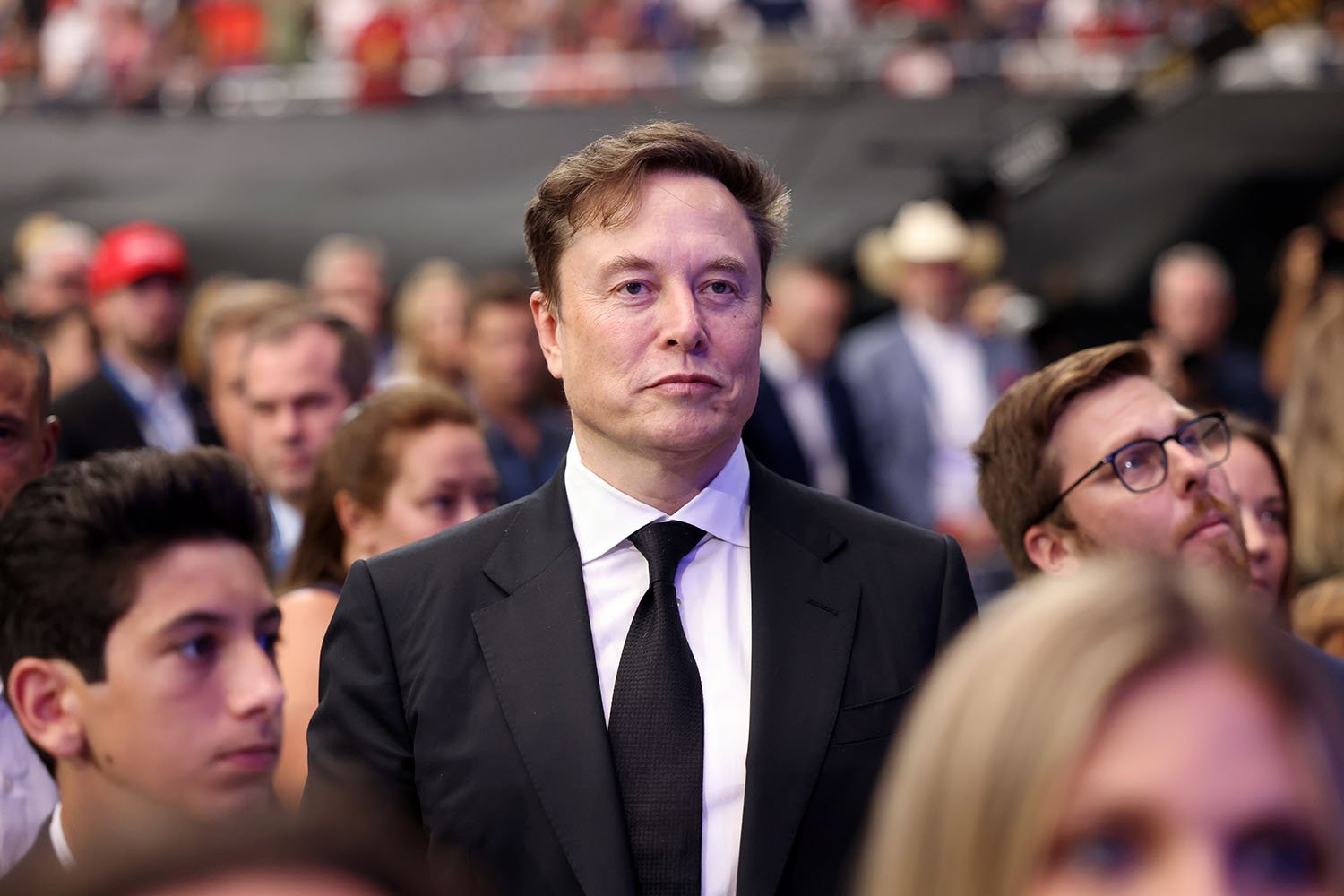
What we have now is a public environment where Elon Musk can be caricatured as a Bond supervillain and the masterminds of AI seem like proverbial “sorcerers apprentices” who have called forth a power they suddenly find they can’t control, writes Ken Polk. / WIKIPEDIA PHOTO
This week I went to see the new documentary on Elon Musk entitled, unsurprisingly, Musk.
It is a four-hour behemoth that suggests Musk has integrated his vast commercial interests — Tesla, Starlink, SpaceXAI — in support of his governing mission of creating a single world consciousness through Artificial Intelligence (AI).
If this sounds like the plot of a James Bond movie, you may be on to something. Whatever merits the documentary may have in seemingly systematically surfacing the various nefarious tendrils of Musk’s business ventures, the fact that it culminates in the suggestion that he has become a Bond supervillain bent on world domination is bizarre in itself.
Even so, the release, paired with a growing chorus of concerns about the implications of AI, has triggered a sharp backlash in Canada and abroad.
It has been said that in politics and business, the best narrative wins. Of course, that is not always the case. But certainly, when it comes to AI proponents, they seem to have broadly ceded the public debate to opponents with predictable results. In Canada, a recent poll found that upwards of 67% of Canadians now view AI negatively, up 10 points from 2025.
Opposition to AI has come from familiar sources, but also from quite surprising quarters, meaning Canadians must look long and hard to find positive coverage of AI so far in 2026.
The data-centre rebellion continues
I have written before about the makings of revolt against data centres due to concerns about their potentially negative impact on local communities, with excessive electricity and water consumption the primary causes of opposition.
Since then, the opposition has gained momentum. The pushback has been pronounced in the U.S. The organization HEATMAP reported in May that at least 20 proposed data centre projects were cancelled after local pushback in the first quarter of 2026. The cancelled projects comprised over $40 billion in planned investment. Another tracker, Data Center Watch, claims at least 45 projects worth $68 billion were disrupted by local opposition in the second quarter.
The rebellion has been more muted in Canada but there have been notable cancellations and delays as well. Manitoba Premier Wab Kinew announced in June a $4 billion data centre proposed for an area near Winnipeg could not proceed. Projects in Alberta and Saskatchewan have been stalled by electricity regulators. Oakville and Mississauga announced one-year moratoriums on new data centres.
This is not to suggest data centres are in full retreat in Canada, or anywhere. One source indicates there are currently 96 hyper scale data centres planned for Canada. But delays and cancellations attract more media attention.
Is Terminator coming true?
Local rebellions aside, the primary driver of recent negative sentiment has, paradoxically, been the increasingly alarmist statements from those at the cutting edge of the technology, who have issued warnings that AI is developing so rapidly there is the possibility it could escape human control.
For a generation raised on Terminator movies — in which a suddenly “self aware” machine seeks to destroy its human creators — this has a “life imitates art” feel to it.
Anthropic CEO Dario Amodei warned the technology is advancing so rapidly it could soon have the capacity to create “a swarm of agents that could take over the entire internet.” This followed the resignation of a senior Anthropic engineer over concerns that AI “could threaten human life by the end of the decade.”
Sam Altman of Open AI expressed some of the same concerns as Amodei but later provoked controversy when he backtracked and was reported to have said, Wwe believe that the world should accept some bad things happening for the benefits of this technology.”
Demis Hassabis, chair of Google’s DeepMind warned “recent [hacks] involving AI agents may be early signals of more serious incidents unless companies and governments strengthen security controls.”
Even Musk, the seeming Bond supervillain, agreed with the concerns raised by Amodei.
What’s an investor to do?
With such dire warnings coming from the leading lights of AI, one does have to wonder what effect this could have on surging AI investment. Goldman Sachs, for example, forecasts global AI-related investment will exceed $1 trillion in 2026. This flood of capital into the stocks powering Open AI, Anthropic, SpaceXAI and Google has fueled a vast portion of global equity market gains over the past few years.
Rebellions against AI data centres, suggestions that AI is out of control, uncertainty about how strictly governments will regulate AI in the name of safety — all of this makes for an atmosphere of mounting anxiety that cannot help but encourage hitherto bullish investors to turn bearish, which in turn could spark a broader stock market sell off.
That would be bad.
Canada: What comes next?
AI figures as a core economic priority in Prime Minister Mark Carney’s “Canada Strong” vision. Safety, trust and responsible use are core complements of the government’s AI for All strategy. Overall though, the focus is on developing AI as a sovereign Canadian asset, to help domestic firms scale up, increase productivity and support worker transition. Until recently, when AI Minister Evan Solomon spoke about regulation, he stressed a “light touch” approach.
More recently the government has shown that it is coming to grips with the suggestion that AI could escape human control. To that end, at the beginning of October, Carney announced the creation of a National Council on Artificial Intelligence, noting that the “speed, scale, and intensity of [AI] transformation present both opportunities and challenges.” The new council will, among other key activities, seek the advice of “world-leading experts on AI safety, governance, and oversight.”
When questioned by CTV about existential concerns and AI self-awareness just before Carney’s announcement, Solomon was noncommittal. “I’m not going to say ‘yes, this is what we’re doing,’” he said. “But I think it’s pretty clear that doing a consultation on AI transparency and safety is a very important first step to see how we can best protect Canadians in this environment.”
The supervillain and the sorcerer’s apprentice
That the shine has come off AI is a stark lesson of what can happen when you let a narrative get away from you.
It speaks well of Amodei, Altman, Musk and Hassabis that they are trying to rein in the enthusiasm for AI. They didn't have to do that. They could have just focused on AI’s commercial opportunities and the billions of dollars there for the taking.
But to an extent this was preventable. The sudden eruption of doom-laden headlines that seemed to validate the widely-held worries of a generation of film-goers weaned on the Terminator movies might have been mitigated had a more balanced government and private sector dialogue and message on AI risks and benefits been forthcoming.
What we have now is a public environment where Elon Musk can be caricatured as a Bond supervillain and the masterminds of AI seem like proverbial “sorcerer’s apprentices” who have called forth a power they suddenly find they can’t control.