Canada ‘holds most of the cards’ in U.S. trade talks
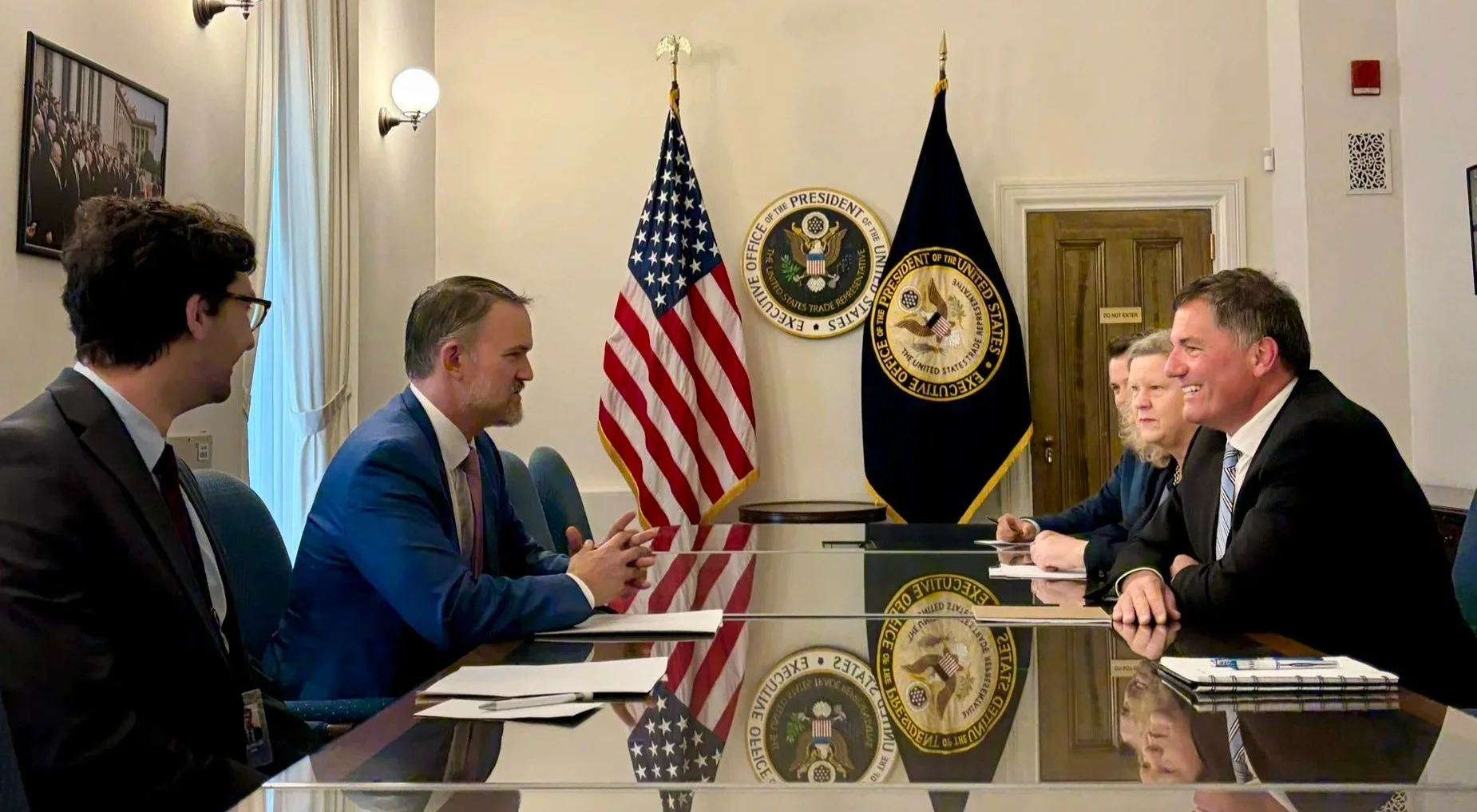
Canada-U.S. Trade Minister Dominic LeBlanc, right, met with U.S. Trade Representative Jamieson Greer this week several times. / TWITTER PHOTO
Canada and the U.S. remain at an impasse as an Aug. 19 trade deadline nears, with negotiators saying discussions are “ongoing” and “constructive,” however Scotiabank economist Derek Holt believes Canada has the advantage.
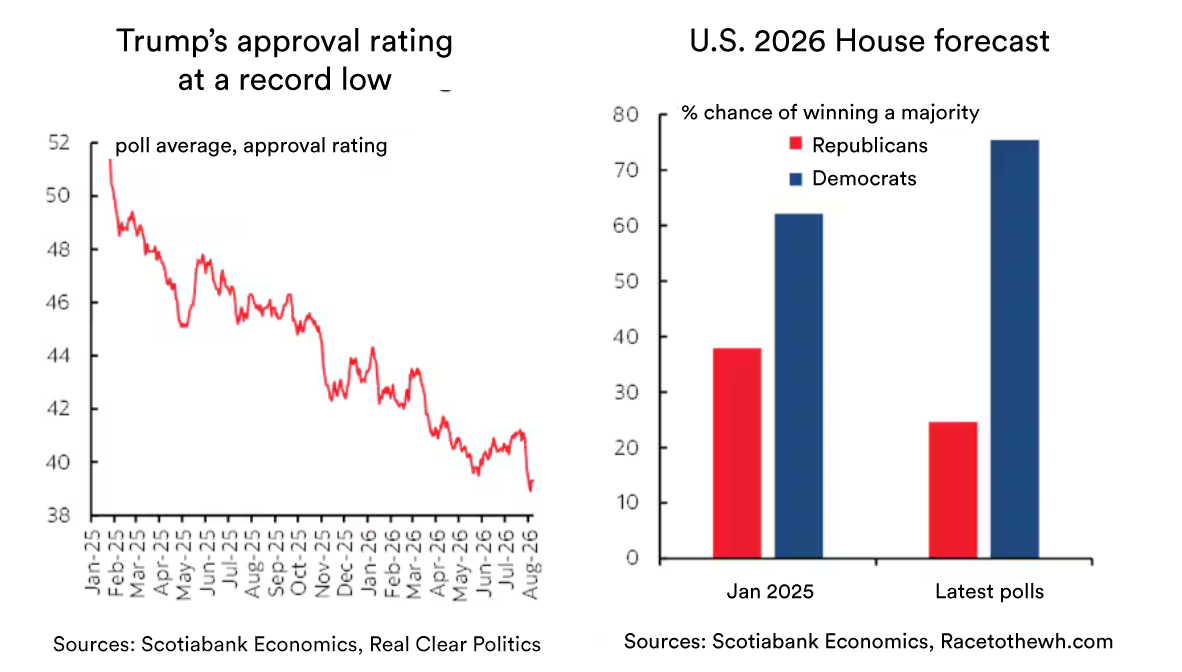
“Canada holds most of the cards,” says Holt, Vice President and Head of Capital Markets Economics. “The U.S. faces midterms that have Trump and the GOP on the run whereas PM Carney holds a majority until no later than October 2029. Canada’s economy and labour market are roaring ahead as punctuated by the latest jobs report. The U.S. labour market is stumbling.”
Canada’s economy is holding up well despite trade tensions, while higher commodity prices linked to the war with Iran are helping support growth, Holt wrote. Government spending, major infrastructure and defence projects, and rising foreign investment could provide a boost to the economy for years, while Canadian exports are becoming less dependent on the United States. Canada’s financial markets are also performing well, with lower borrowing costs, strong credit markets and stocks that have outperformed the U.S. since the 2024 election.
Against this backdrop, Holt said, “Canada should resist short-term deals.”
“Waving a shiny new trade deal before the electorate and signalling improved cooperation with allies may resonate well on Nov. 7. Continued divisions on all fronts may not. A deal before the new Congress convenes in January would raise the possibility of DJT’s signature going on it rather than having to then negotiate with the Democrats should they take one or both chambers. Just be careful about the durability of that signature in terms of keeping that ace in the hole,” he said.
Canada‑U.S. Trade Minister Dominic LeBlanc and chief negotiator Janice Charette were in Washington Friday for another round of talks as officials work to finalize a joint proposal ahead of sweeping 50% American tariffs set to take effect next Wednesday. U.S trade representative Jamieson Greer said both U.S. President Donald Trump and Prime Minister Mark Carney will now be given “options” following the latest round of talks. CBC news reported that Greer described Thursday’s meetings as “good” and “cordial,” and said officials on both sides will brief their leaders on the proposals under discussion.
LeBlanc and Charette have held multiple meetings this week with Greer, marking their fourth face‑to‑face session in as many weeks. LeBlanc’s office said discussions remain “ongoing,” with both sides attempting to craft a package that could be presented early next week.
Industry sources told CTV News last week that proposals being exchanged include eliminating counter‑tariffs on autos, ending provincial alcohol bans and modifying the management of dairy quotas.
CBC News reported that Canadian officials are not satisfied with the latest U.S. offer, which would lower some sectoral tariffs but not to the degree Canada is seeking.
The new levies stem from U.S. grievances over provincial alcohol boycotts, Canada’s supply‑managed dairy system and quotas on certain U.S. vehicles. Unlike earlier rounds, the Aug. 19 tariffs would not exempt goods compliant with the Canada‑U.S.-Mexico Agreement and would apply to roughly five per cent of Canadian exports. Trump has already imposed tariffs ranging from 10 to 50 per cent on steel, aluminum, copper, autos, trucks and softwood lumber.
Greer said the U.S. administration won’t accept any form of retaliation from Canada if President Trump follows through on his most recent tariff threat. “For us, this is not a trade war. We have domestic supply chains we’re trying to protect,” he told reporters in Des Moines, Iowa, on Friday. He said, however, he's having “constructive negotiations with the Canadians.”
“At the end of the day, President Trump, the United States, we are going to do what is best for America,” he said.
Canada is prepared to take a tougher line
Sources told Global News that Canada is prepared to take a tougher line, and allow the tariffs to proceed, if there is no meaningful reduction in existing sectoral tariffs on steel, aluminum, autos and softwood lumber.
CTV News reported that Charette told U.S. officials it would be difficult to continue talks if new tariffs are imposed.
Meanwhile, political pressure at home continues. Ontario Premier Doug Ford said Thursday he wants a “fair deal” that protects autos, steel, aluminum, forestry, manufacturing and agriculture, adding provinces would consider restocking U.S. alcohol only as part of a broader agreement. Quebec Premier Christine Fréchette said some industries may be in “survival mode” if the tariffs proceed, with plans to convene emergency meetings this week.
In a letter to Carney, Conservative Leader Pierre Poilievre and Canada‑U.S. relations critic Shuvaloy Majumdar accused the prime minister of “caving” to U.S. President Donald Trump over the past year. They cited ending the digital services tax, removing counter‑tariffs and agreeing to share net toll revenue from the Gordie Howe International Bridge.
“Canadians deserve a government that has the backbone to fight for our workers, our families, and every inch of our sovereignty,” the letter said. Poilievre and Majumdar argued that job losses in manufacturing‑heavy regions show that “no deal is better than a bad deal” is no longer a viable position.
The Conservatives outlined several items they want included in a renegotiated pact, including an end to U.S. tariffs on lumber, steel and aluminum, a Canadian exemption from Buy America rules and an auto pact modelled on the 1965 agreement that allowed duty‑free sales tied to domestic production. They also reiterated their call for a strategic reserve of critical minerals.
Separately, a letter signed by 50 cultural sector organizations urged Prime Minister Mark Carney to maintain financial contribution requirements for large online streaming platforms, arguing that replacing the 15 per cent levy with discretionary annual funding — which can be changed through the federal budget — creates uncertainty for Canadian content production.