BoC ‘pinned to the sidelines’ by trade war, oil prices
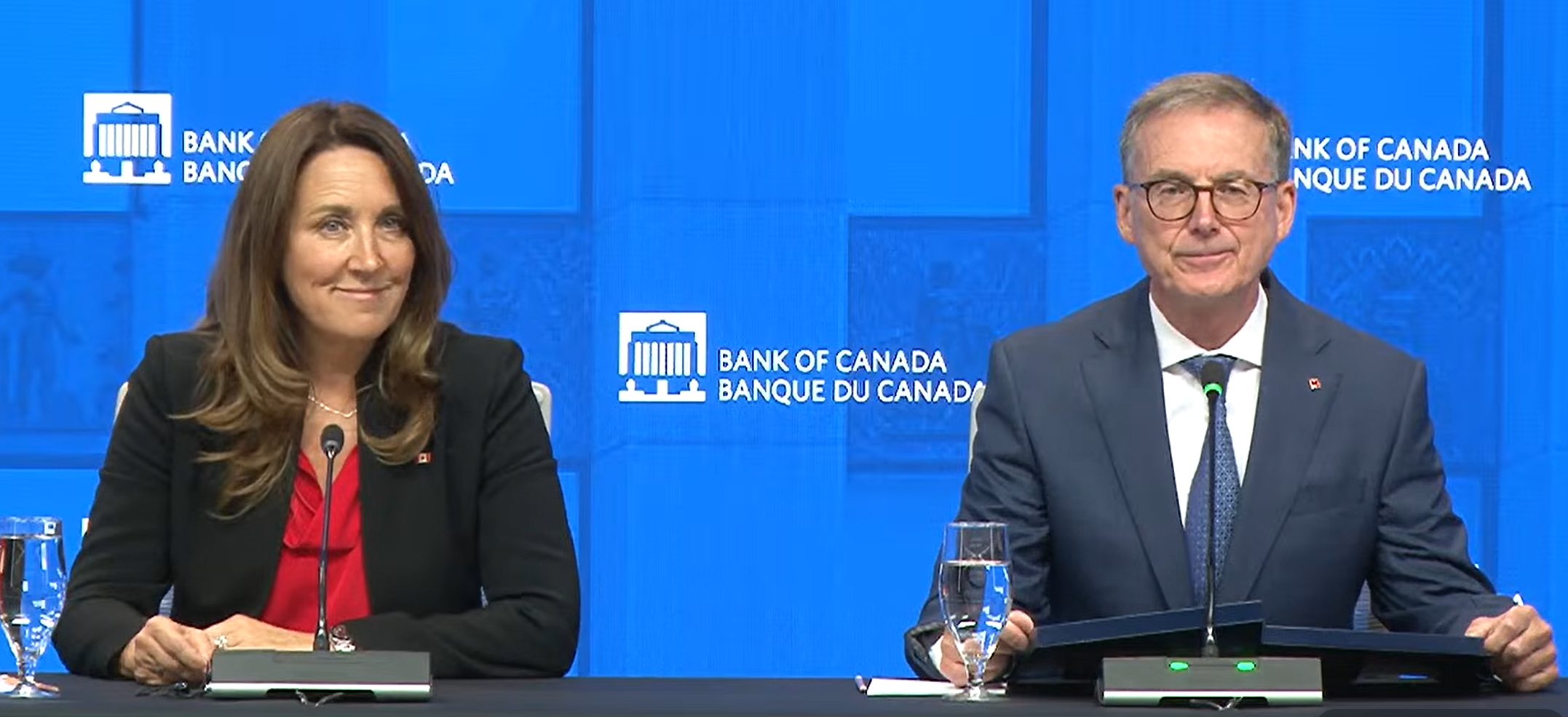
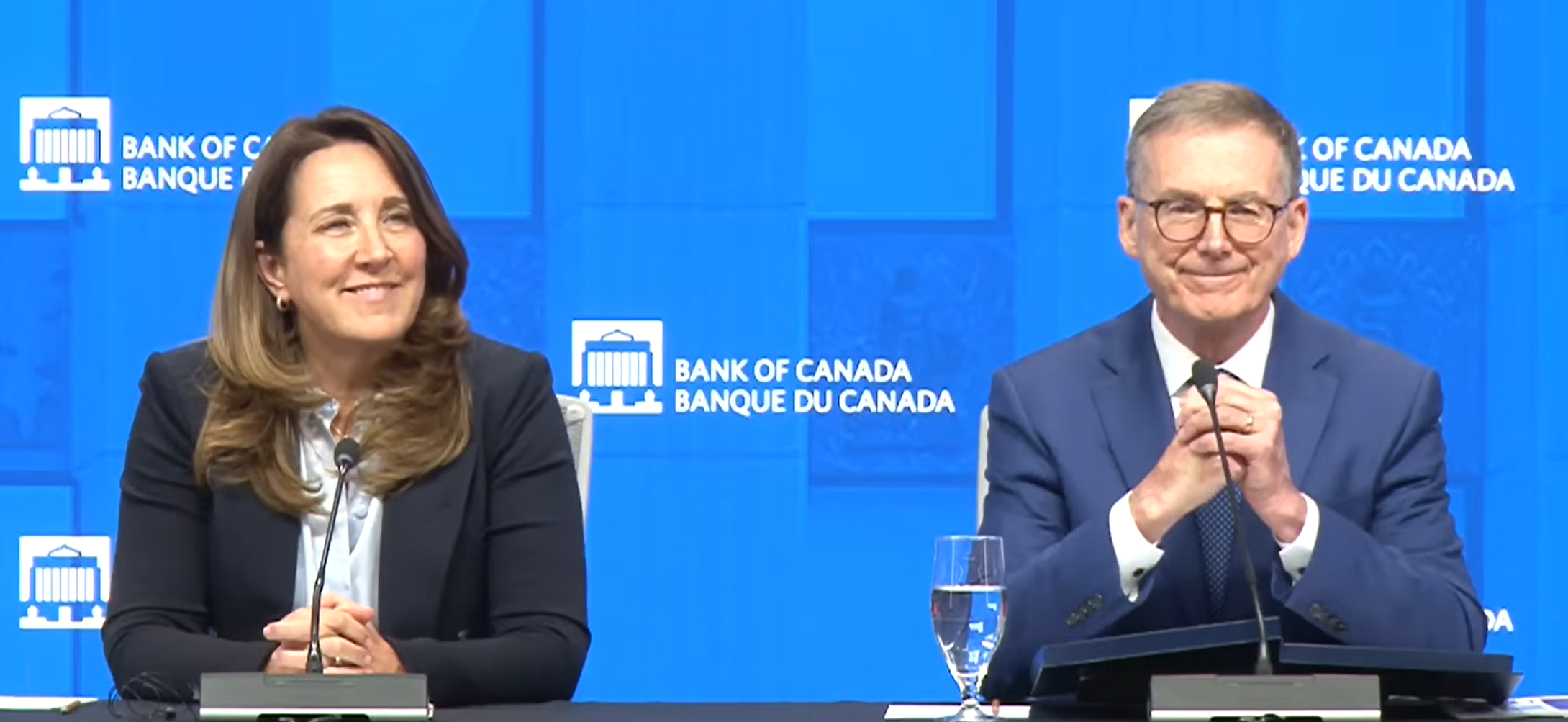
Bank of Canada deputy governor Carolyn Rogers and governor Tiff Macklem, pictured at a press conference Sept. 2 announcing the bank would hold its overnight rate at 2.25%. / SCREENSHOT
Oil prices are keeping inflation concerns elevated, while the trade war with the U.S. is creating uncertainty about Canada's economic growth, leaving the country’s central bank in a ‘wait-and-see’ posture, say CIBC economists Avery Shenfeld and Andrew Grantham.
If the economy weakens substantially, the Bank of Canada could eventually have room to cut, however Shenfeld and Grantham don't expect a rate change in either direction for the rest of the year. Policy makers kept their benchmark interest rate unchanged at 2.25% at a meeting this week.
“To no surprise, amidst the fog of a trade war, the Bank of Canada opted to leave its overnight rate unchanged,” citing a lengthening list of uncertainties tied to oil and tariffs, the economists wrote in a note to clients. While Governor Tiff Macklem “appeared to place more emphasis on upside inflation risks than on the downside risks to growth, with limited prospect for immediate clarity regarding either of these risks, look for policymakers to remain in this wait-and-see stance for the remainder of the year.”
Given the tone of the statement and press conference, the market is putting more weight on the inflation concerns than on the lack of confidence over growth prospects, Shenfeld and Grantham said. “However, we see little prospect for a policy change in either direction over the rest of the year given that both the oil and trade war stories could still shift in the months ahead.”
They said if downside risks to growth materialize, the increase in slack will further protect the economy from the knock-on effects of higher oil prices on inflation.
Macklem highlights broad recovery as business adapt to tariffs
In his opening remarks at Wednesday’s press conference, Macklem said the Canadian economy has strengthened but faces growing uncertainty from U.S. tariffs and higher energy prices.
Economic growth rebounded in the second quarter, with GDP increasing 3.3% after a weak first quarter. The recovery has been broad-based, supported by stronger consumer spending, housing activity, exports and business investment. The labour market has also improved, with the unemployment rate falling to 6.4% in July.
"The increases in exports, investment and hiring are broadly consistent with what businesses have told us — they are adapting to tariffs, new technology and increased uncertainty. Overall, the data reaffirm our view of a broadening recovery," Macklem said.
However, he warned that new U.S. tariffs could undermine the sustainability of the recovery by discouraging business investment and hiring, particularly in affected sectors.
Excluding gasoline, inflation was 2.2% in July, while core inflation measures remained close to the Bank’s 2% target. Macklem said prolonged high energy prices and tariffs could increase inflationary pressures. "Monetary policy cannot offset the effects of tariffs or influence global energy prices. What we can do is ensure global developments don’t jeopardize price stability in Canada.”
Benjamin Reitzes, BMO Managing Director, said in a note that Macklem's tone was "slightly hawkish."
"The statement sums things up nicely, as ‘upside risks to inflation have increased, while new tariffs make growth prospects more uncertain,’ leaving the BoC pinned to the sidelines. Policymakers will be patient as they assess how those risks evolve. We continue to expect the BoC to remain on hold into 2027," Reitzes said.