RBC: Latest U.S. trade escalation is ‘relatively minor’
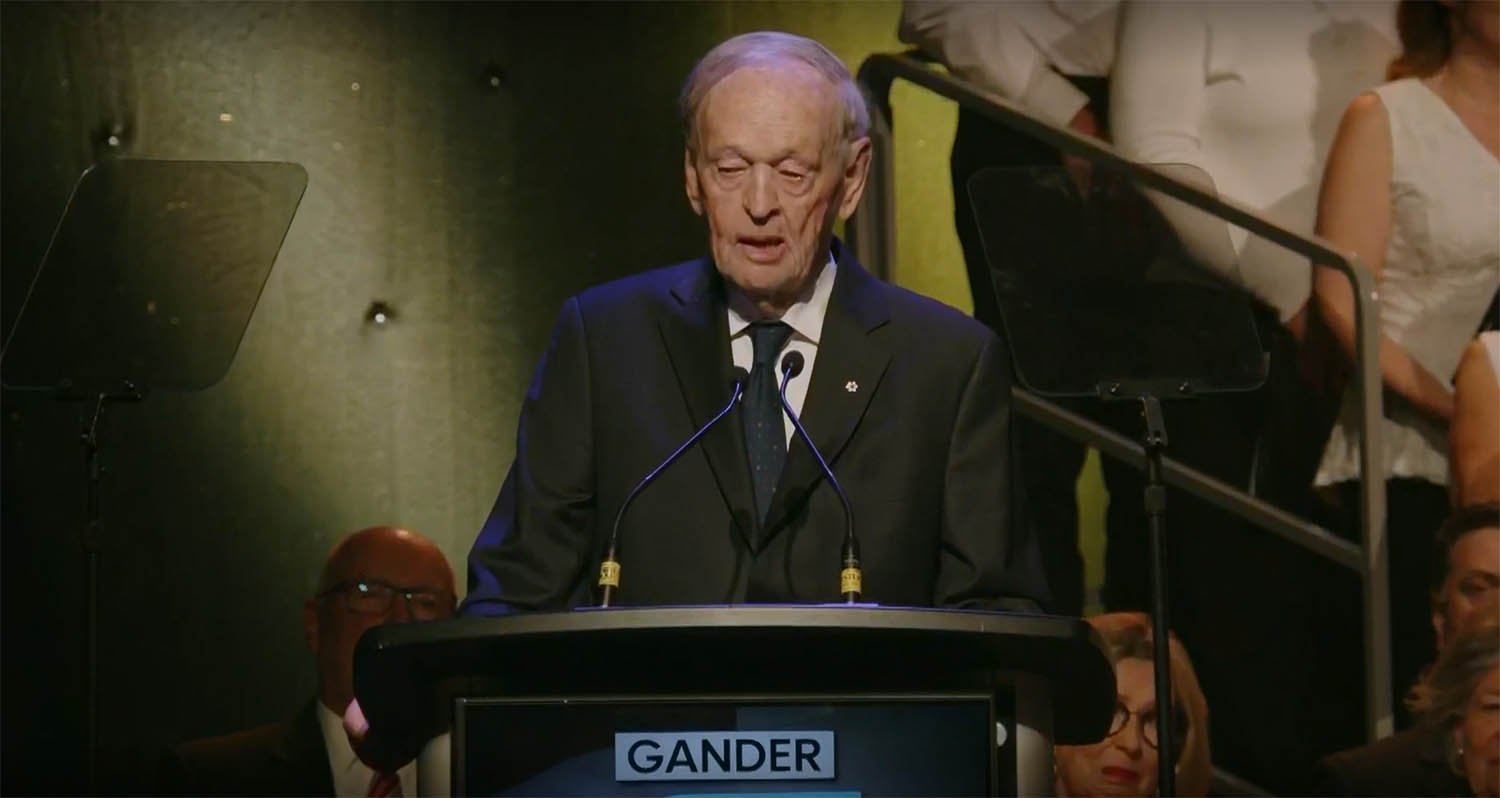
‘We bow to no one,’ former prime minister Jean Chrétien told an audience in Gander, Nfld., commemorating the 25th anniversary of the 9/11 attacks. ‘And the more we are insulted or threatened and abused, the more we will stand up for ourselves and stand united.’ / CBC SCREENSHOT
The U.S. escalated its trade measures against Canada, adding products to a 50% tariff list, banning some imports and threatening to restrict Canadian access to U.S. government procurement, but the impact on the economy will be limited, says RBC Assistant Chief Economist Nathan Janzen.
“The U.S. administration’s latest response to Canada’s retaliatory tariffs following the breakdown of bilateral trade negotiations may sound alarming, but they represent a relatively minor escalation in the trade war,” Janzen wrote in an analysis.
Starting Sept. 15, about 110 additional Canadian product codes will face 50% tariffs, while roughly 10 products will be removed from the list. Janzen said the overall value of trade affected should change little.
U.S. imports of the products being removed were worth about US$1.73 billion in 2025, compared with about US$1.85 billion for the products being added.
“Section 338 tariffs continue to affect a small share of trade (5% of U.S. imports from Canada), causing significant disruption in targeted sectors, but with limited broader impact on the economy,” Janzen said.
Beginning Sept. 29, the U.S. will also ban imports of 68 products already subject to the 50% tariffs, including certain alcoholic beverages, dairy products and motorcycles.
Already too expensive
“This marks an escalation, but with a 50% tariff on these products, many were already likely too expensive for U.S. importers to buy,” Janzen said.
President Donald Trump has also promised to remove Canadian products from the U.S. General Services Administration’s Multiple Award Schedule, a federal procurement marketplace. The scope of the move remains unclear.
Janzen said the bigger concern is what happens next.
“The real risk remains further escalation into a tit-for-tat trade war covering a much larger share of trade — something that hasn’t occurred with this latest development yet,” he said.
Meanwhile, the delayed implementation of the U.S. measures shouldn't be taken as a signal that trade talks will resume any time soon, Prime Minister Mark Carney said.
“I wouldn't overinterpret a delay, if you will, or a lag. That's kind of the nature of these measures,” he said this week from Banff, Alta., where cabinet is holding a retreat.
Carney said the federal government is assessing the latest U.S. trade measures but noted they are “relatively modest” in the context of broader actions taken by the Trump administration. He said some sectors and companies could still face significant impacts, but stopped short of announcing any new Canadian response.
The latest round of escalation began Tuesday when Ottawa implemented approximately $27.8 billion in retaliatory tariffs on U.S. goods. The measures, which Carney announced following the collapse of trade negotiations late last month, target a range of American products with tariff rates ranging from 15 to 50%.
Canada's counter tariffs will apply to products covering $27.6 billion in imports from the U.S. and will focus on sectors such as steel, dairy, appliances, agricultural equipment, pulp and paper and electronics, that are most impacted by U.S. tariffs.
Difficult but necessary transition
The federal government says the package mirrors recent U.S. tariffs on Canadian exports and is designed to respond "dollar-for-dollar" to American trade actions.
Hours after the tariffs took effect, Carney released a 15-minute video message aimed at preparing Canadians for what he described as a difficult but necessary economic transition away from dependence on the U.S. market.
In the address, Carney accused American negotiators of seeking concessions that would have restricted Canada's ability to pursue independent trade relationships and protect domestic policy priorities, including French-language protections.
“That pivot will come at a cost,” Carney said. “There's always a cost to action. But it doesn't come close to the cost of standing still.”
According to Carney, U.S. negotiators sought restrictions on Canada’s ability to protect the French language and culture, demanded a veto over future Canadian trade deals, and pushed terms that would “undermine” the automotive, steel, and forest product sectors.
“In short, they were asking far too much and offering far too little,” Carney said. “America is trying to break us, so they can own us. That will never, ever happen.”
He added: “Canada Strong isn’t about just withstanding this crisis, it’s about coming out of it stronger, more resilient, more independent than when we started. It’s about ensuring that no country can hold us hostage. And that we can live how we want to live.”
While there are no official negotiations underway, officials from both sides are still talking, Canada-U.S. Trade Minister Dominic LeBlanc said Friday. LeBlanc said he's spoken several times with U.S. Trade Representative Jamieson Greer and sometimes speaks with U.S. Commerce Secretary Howard Lutnick.
Poilievre goes to New York
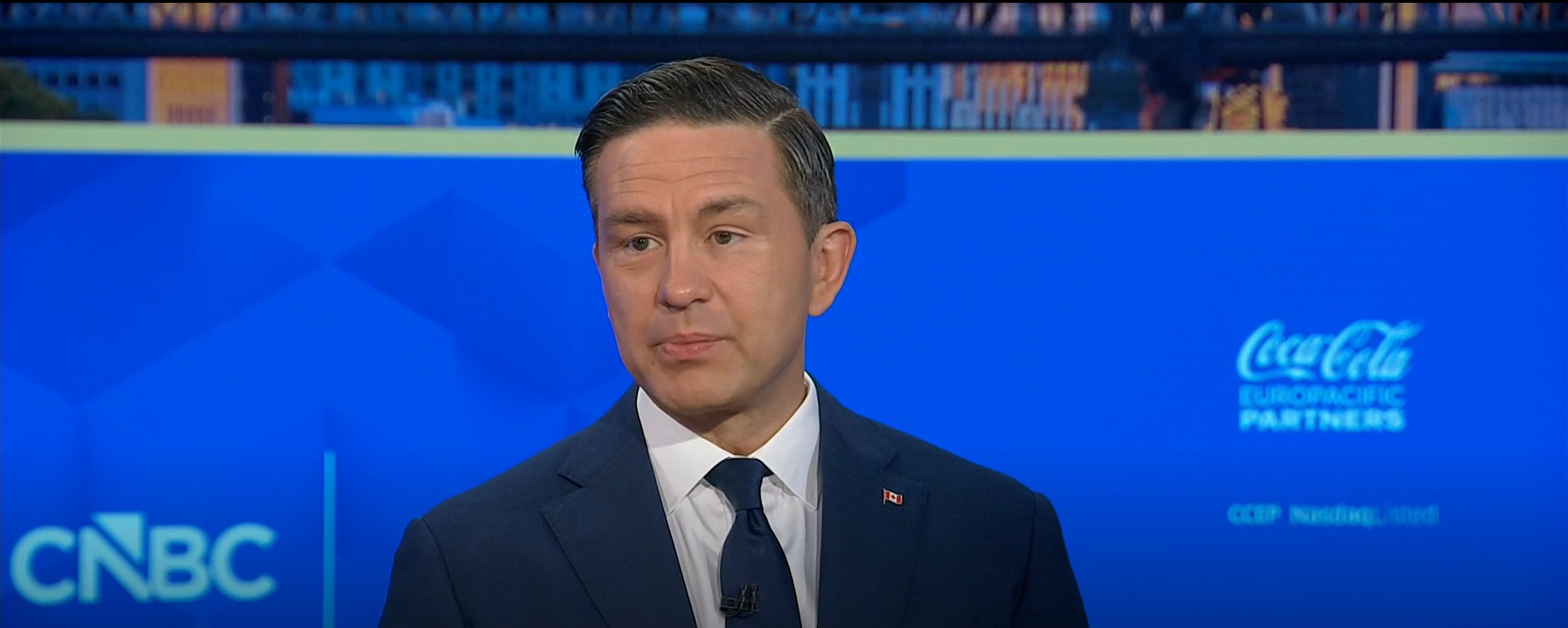
Conservative Party Leader Pierre Poilievre spoke to media in the U.S. this week. / SCREENSHOT
Domestically, opposition Conservatives have supported efforts to defend Canadian interests but continue to press the government for greater transparency regarding the details of the deal Ottawa rejected and the anticipated economic costs of a prolonged trade confrontation.
Conservative Leader Pierre Poilievre called for a stronger North American alliance and urged U.S. policymakers to remove trade barriers on his trip this week to New York.
“Let's knock down these trade barriers, end the tariffs in both directions, and make a stronger North America to confront overseas risks,” he said in an interview with CNBC.
Poilievre, who is also set to attend ceremonies marking the 25th anniversary of the 9/11 attacks on Friday, said “tariff-free trade in both directions” is essential.
Asked whether Carney had negotiated with the United States in good faith, Poilievre declined to criticize the prime minister while in the U.S. “I'm not going to attack my prime minister on foreign soil,” he said. “My mission here is to fight for my country, not to score political points domestically…politics ends at the border.”
He said Canada and the U.S. both have longstanding trade grievances, pointing to American “Buy America” procurement policies and U.S. duties on Canadian softwood lumber. Describing the reaction north of the border following U.S. tariff escalations, Poilievre notes that Canadians feel “a little bit wounded” and “kind of confused as to how it is suddenly that Canada ended up in the crosshairs.”
Addressing Canada's lagging per-capita GDP growth, Poilievre points to Canada's top global reserves in oil, natural gas, uranium, potash, and farmland. He insists Canada “can and will be the richest country anywhere on earth” if domestic policy shifts to “unleash free enterprise by cutting taxes on work, investment, home building” and streamlining permit timelines.
He dismissed suggestions Canada should seek closer ties with China in response to tensions with Washington. “No, it's not, and that's not what we're proposing,” he said when asked about strengthening relations with China.
In a separate interview with Bloomberg, Poilievre said some of U.S. President Trump’s trade actions do not make sense. For example when it comes to aluminum, “America cannot produce enough” and Canada has a surplus. “We can send you the aluminum that you put into your Ford F-150s,” he said, adding that Canada and the U.S. have a shared interest in not relying on China.
“America, I think, over about a half century saw a lot of its strategic interests undermined by seeing jobs outsourced over to China and there’s been a natural backlash against that,” he said. “I think that backlash, though, is misdirected in targeting Canada, because we are actually the solution and not the problem.”