Canada faces new risks as Trump shakes up the world’s natural resource politics
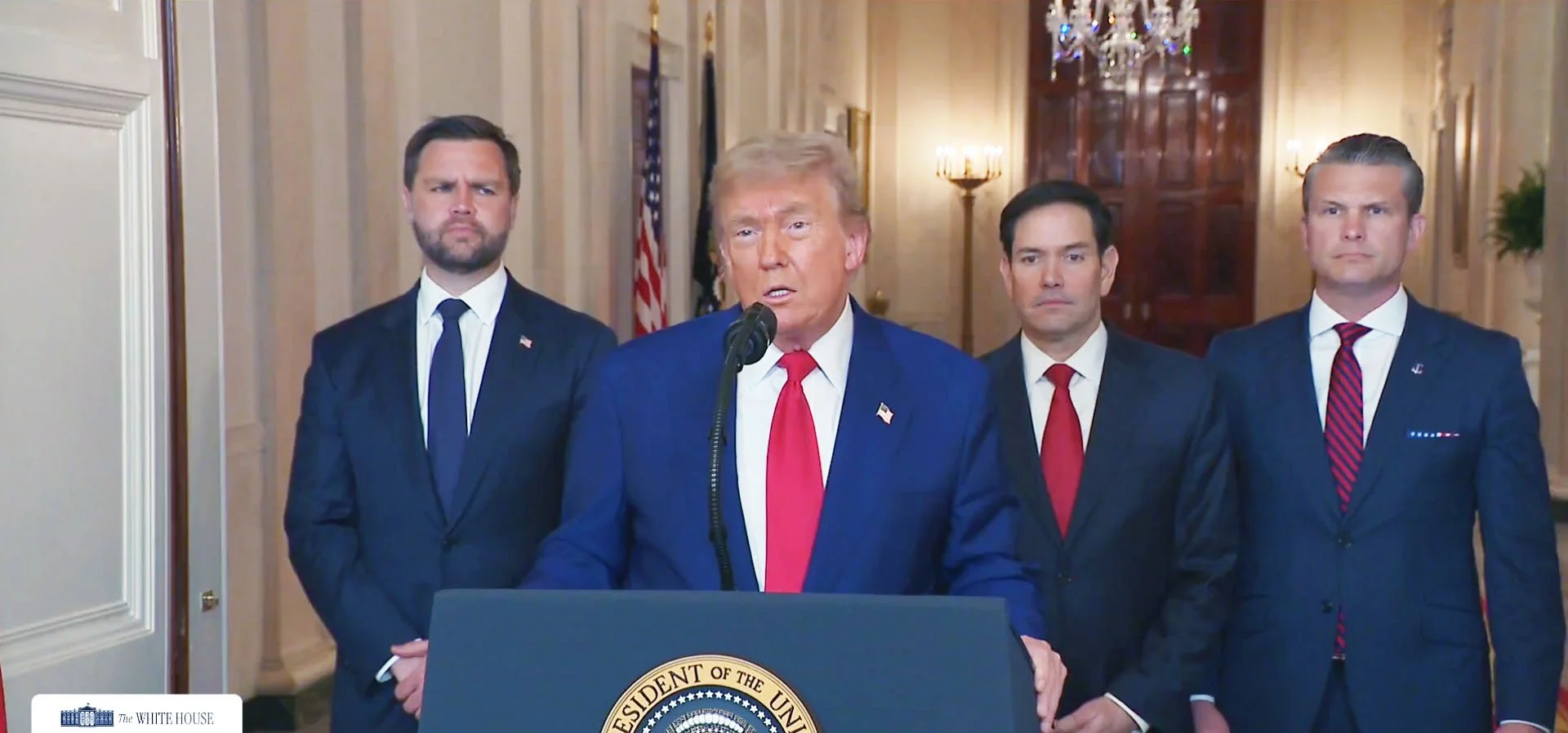
U.S. President Donald Trump pictured at the White House in 2025. / TWITTER PHOTO
Of all U.S. trade partners, Canada could undergo the most significant shakeup from President Donald Trump’s far-reaching effort to establish American independence on oil, potash and other resources.
Trump’s strategy took on stunning proportions last weekend with the U.S.’s armed incursion into Caracas to capture the nation’s President Nicolás Maduro and take control of Venezuela’s world-leading oil reserves.
Trump, who says his administration will run the South American country indefinitely, hopes to revitalize its oil industry after decades of reduced production as a result of government neglect and U.S. sanctions. The sudden upheaval in projections for world oil supply and prices as a result of the U.S. action in Venezuela shocked investors in Canada, which could directly face the impact of Trump’s plan to increase U.S. energy independence by channeling Venezuela’s crude to the American market.
This reaction was probably excessive, at least for the short term. The overall picture is fluid and nuanced. It will take a decade and an estimated $100 billion to bring Venezuelan oil up to previous output levels.
Nonetheless, any advances in production there could present problems for Canada, which ships a similar type of heavy oil to refineries in the U.S. midwest and Gulf Coast. At the same time, Trump’s exclusion of China from Venezuelan oil sales could send Chinese buyers to Canada.
“It’s been our view, and we’re working toward this, that Canadian oil will be competitive because it is low-risk,” Prime Minister Mark Carney said.
Double-barrelled risks
But the longer-term risks for Canada are double-barreled. Besides leading to reduced sales of Alberta crude, increases in Venezuelan oil on the world market could drive down prices, raising questions about investment and production goals by oil giants in this country and elsewhere.
If nothing else, the U.S. claim on Venezuela’s oil will lend ammunition to Canadians seeking to diversify Alberta’s crude sales away from the U.S. market, particularly to Asia, by expanding capacity in the existing TMX pipeline or building a new conduit from Alberta to a port on the northern B.C. coast.
Trump, who has made it clear he’s thinking in world-changing dimensions when it comes to resources, also appears to be determined to reduce American farmers’ reliance on Canadian potash. He threatened in December to put tariffs on Canadian fertilizer imports to the U.S. to prompt an increase in domestic fertilizer output.
“A lot of it does come in from Canada. And so we’ll end up putting very severe tariffs on that if we have to, because that’s the way you want to bolster here,” Trump said of Canadian potash. “You put very severe tariffs on,” he said. “You’ll be making your own fertilizer very soon.”
The comment raised alarms in Saskatchewan, a chief supplier of the product to the American market. And a few days later, Trump removed sanctions on potash from Belarus, one of the world’s major producers, in exchange for the release of political prisoners by Belarusian leader Alexander Lukashenko. However, the impact in the short term is unclear, as exports of the fertilizer from Belarus still face many transport obstacles.
Then there’s Greenland. Emboldened by his successful military gambit in South America, Trump has put the western world in turmoil by menacing Greenlanders and asserting anew his claim to dominance in this hemisphere.
Competitions for critical minerals
The president has long coveted the massive glacial island strategically located in the North Atlantic Ocean. Besides its perceived importance for U.S. security relative to Russia and China, Greenland is also believed to have several critical mineral reserves of the kind at the centre of the global competition for modern technological supremacy.
Although some say the practical hurdles for mining in Greenland make such proposals nothing but a cover for a U.S. takeover, the prospect of U.S. access to these resources may be felt sooner or later by Canadians, as it could theoretically reduce the U.S.’s current need for Canadian critical minerals.
However that evolves, the president’s recent actions and threatened moves when it comes to oil and other resources have cast a disturbing new light on this year’s review of the Canada-U.S.-Mexico (CUSMA) free-trade agreement whose maintenance is so important to Canada’s economy and standard of living.
It is clear that Trump seems determined to eliminate whatever leverage Canada might have in the upcoming negotiations when it comes to crucial natural resources.