Canada and U.S. face volatile trade talks ahead of new deadline
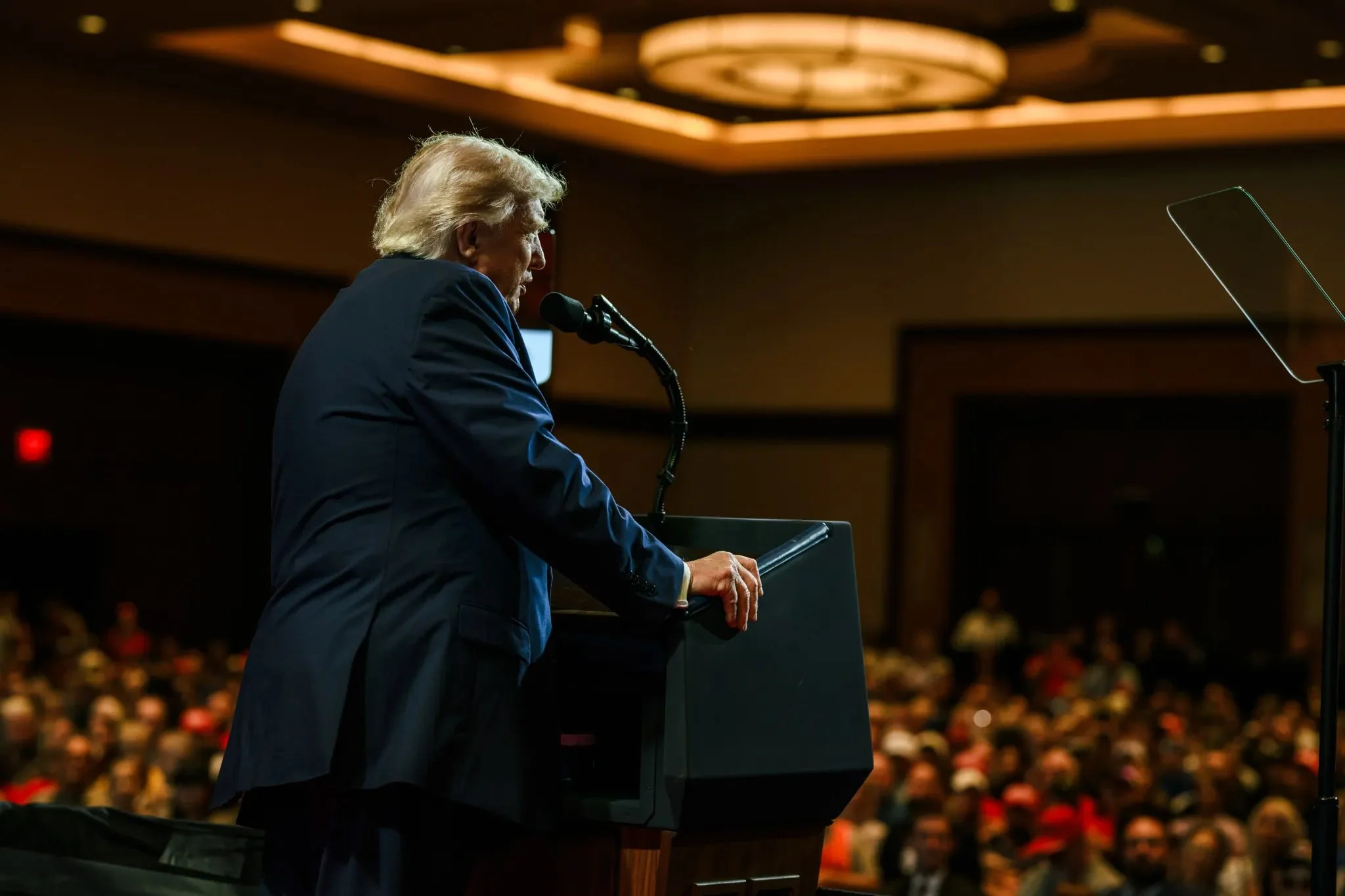
President Donald Trump, pictured at the Red Rock Resort in Las Vegas, where he called Canada ‘nasty.’ / WHITE HOUSE PHOTO
With a looming new trade deadline and President Donald Trump calling Canada “nasty,” Canada-U.S. trade negotiations look set to remain difficult.
“Tariffs and uncertainty continue to be elevated and dynamic,” Scotiabank economist Mitch Villeneuve wrote this week. “An agreement to extend CUSMA past 2036 was not achieved by the July 1 deadline, but the status quo continues until a deal is reached.”
Villeneuve said his baseline remains that Canada will emerge from the CUSMA negotiations with a competitive effective tariff rate and tariff-free access to the U.S. economy for the vast majority of our exports — “but also that the path to this outcome will be volatile and marred by sensational negotiating tactics.”
Those tactics intensified last month when Trump announced the U.S. would implement a 50% tariff under Section 338 of the Smoot-Hawley Tariff Act of 1930, affecting US$20 billion of Canadian goods — including alcohol, dairy and electronics — effective Aug. 19.
Additionally, a 10% tariff was announced on Canada and other countries related to what the U.S. is calling a failure to enforce bans on imports of goods made with forced labour.
In a speech this week, Trump called Canada “nasty” because the country “screwed” the U.S. with tariffs. “Canada’s nasty. They are. They’re nasty,” he added. “I love the people but they’re nasty. Nasty leadership.”
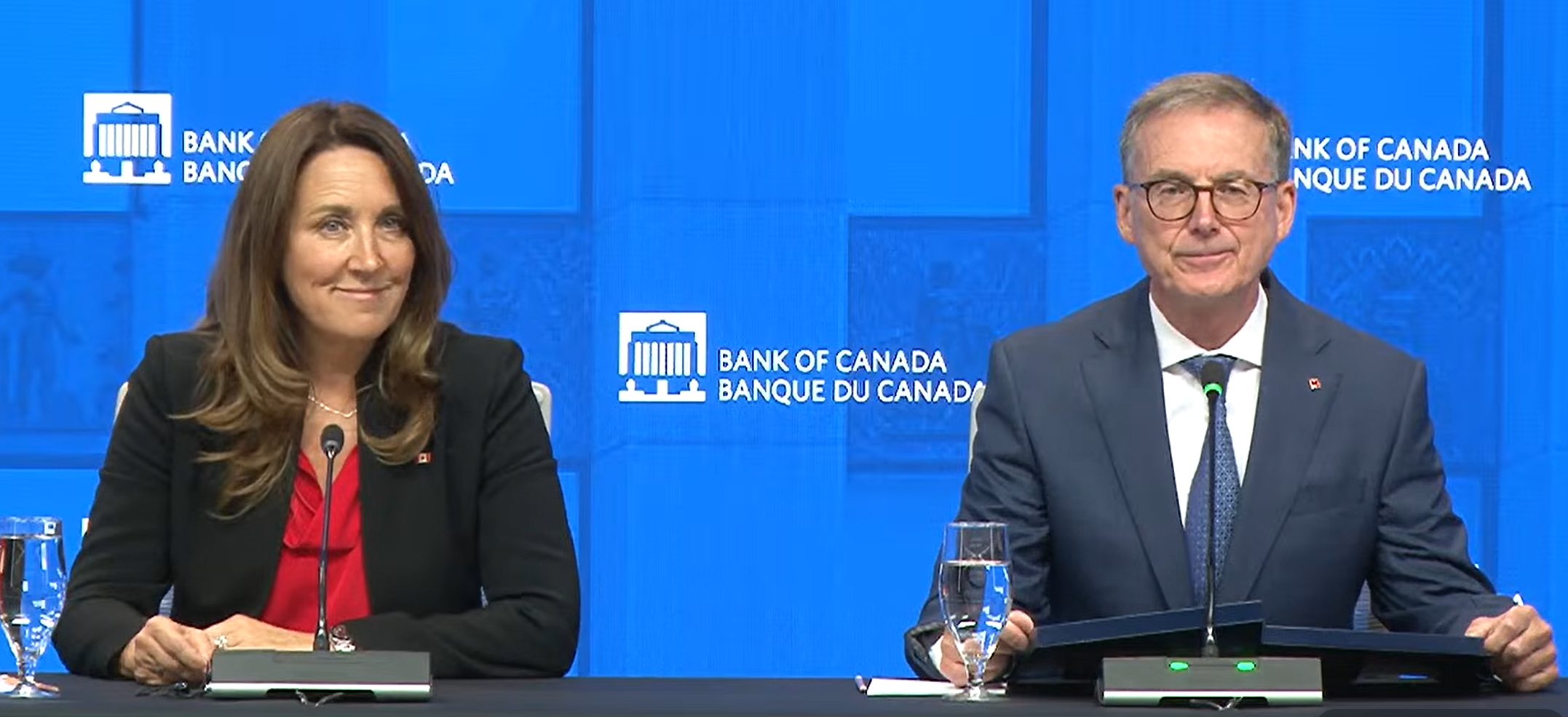
In response, Prime Minister Mark Carney said the tone of the negotiations have been tough, however, Canada-U.S. Trade Minister Dominic LeBlanc and chief trade negotiator Janice Charette are in Washington continuing to ensure Canada’s interests are protected.
“You can say nasty, but whatever adjective is used, yes, we're standing up for Canadian workers, for Canadian businesses, as we always have from the start. And from the start, our focus has been on what we can control, and that's investing in protecting our jobs, investing in the future,” Carney told media in Toronto.
The time to get tougher
Trade negotiations have been stalled for months, but Carney said the goal is to reach a deal by the Aug. 19 deadline, which includes removing CUSMA section 232 tariffs on autos, aluminum, steel and forest products. He added that Canada’s tactics could get tougher.
“We are going to do everything that would be necessary if there isn’t a deal on Aug. 19,” he said, adding, “The time to get tougher will be if there is a moment where there isn’t a deal with the Americans.”
“For me, the treatment of cars (and to a lesser extent steel and aluminum) will be the key metric on whether the negotiations can be seen as a success for Canada.”
He also noted Canada has “options,” but didn’t elaborate. Instead, he said Canada is “making a lot of progress,” which can be seen in terms of economic output.
Villeneuve noted in his report that Canada's trade performance improved in June, with exports reaching a record high for the fifth consecutive month. Exports increased 0.4% from May, mainly because gold shipments jumped 28%, more than making up for lower energy exports as oil prices fell. Overall, the latest data suggest international trade will provide a strong boost to Canada's economic growth in the second quarter, he wrote.
Despite the positive results, some sectors continue to struggle. Exports of products affected by U.S. tariffs remain below late-2024 levels, with steel exports down 43%, forestry products down 15% and aluminum down 5%. The auto sector has recovered from last year's decline and has returned to roughly 2024 levels.
Recent media reports have suggested that Canada is considering making some concessions in trade negotiations with the U.S. that could see some sectoral tariffs being lowered.
The Globe and Mail wrote that in-depth proposals are being discussed but negotiators have not reached an agreement. The proposals include Canada conceding “on a range of trade issues that the U.S. considers the biggest bilateral trade irritants, including the removal of retaliatory tariffs on U.S. products such as autos; the return of American alcohol to shelves; removing provincial procurement restrictions; and agreeing to Washington’s interpretation of how dairy quotas should be allocated.”
This would be in exchange for lower Section 232 tariffs on steel and aluminum. Additionally, the Globe reported “Ottawa also pushing for relief on autos and forest products.”
Sources told the Globe that Canada should not expect the U.S. to remove the section 232 tariffs all together and that one of the sticking points is the level of the tariffs that would remain. “One of the sources said steel could face a 10-to-15-per-cent tariff inside the quota, while aluminum would face a single-digit tariff inside the quota, with higher tariff rates above the quota,” the Globe reported, also noting that this phase would only be considered an “interim deal.”
Canada-U.S. Trade Minister Dominic LeBlanc said on social media that the trade talks have been “constructive.”
Villeneuve told Means & Ways in an email that if the new tariffs do come into effect, they would “exacerbate the inequality in tariff burdens that already exist between industries and regions” but the overall rate will still be low compared to other countries. “It’s helpful that the economy has shown a pick-up in recent months, which will help manage the economic impact of the new tariffs,” he said. “We have always expected the U.S. to attempt to maximize its leverage for the tariff negotiations. … That said, we don’t expect the biggest possible threats to actually materialize, given the significant economic disruption and costs that withdrawing from CUSMA would create for the United States.”
Nicolas Lamp, associate professor and director of Queen’s University’s Institute on Trade Policy, agreed that Canada will emerge from the negotiations with tariff-free access for most of our exports, but determining which goods will still be subject to them is important for the country’s economic future.
Long-term threat to Canadian car industry
“The clearest case is cars: unless we can restore tariff-free access for Canadian-made cars exports (which would mean that the U.S. would have to rescind the Section 232 tariffs on Canadian cars), it’s hard to imagine that Canada will be able to sustain its car industry in the long term,” he told Means & Ways in an email. “For me, the treatment of cars (and to a lesser extent steel and aluminum) will be the key metric on whether the negotiations can be seen as a success for Canada.”
In a column for Forbes, lawyer Robert Goulder wrote that Canada’s response to the U.S. is Trump’s own doing. “Fundamentally, the Trump administration is upset that Canada, over the past year, has stood its ground and retaliated when provoked. That’s no more than we should expect of any sovereign nation,” Goulder wrote. “In trade wars, submitting to one’s rival is rarely a winning strategy. The idea is to negotiate (or renegotiate) from a position of relative strength. The next reasonable step for Canada would be to implement even higher tariffs on U.S. goods, going well beyond its current treatment of cars, beer, and cheese.”
He added: “Escalation of the U.S.-Canada trade spat will not benefit either side’s economic outlook, and it will be interesting to see which side blinks first. Domestic political considerations often influence how these matters work themselves out, and it’s in Canada’s favour that Trump is fixated on the approaching congressional midterms.”
As the biggest market closest to Canada, it’s natural that Canadian businesses do significant trade with the U.S., Lamp said, noting, however, that Canada’s ability to achieve “economic security” and be less reliant on the U.S. is “greatly limited by geography, infrastructure, and economic logic.”
“Any degree of ‘decoupling’ from the U.S. will be painful and do long-term damage to the Canadian economy. However, Canada can try to reduce and in some cases even eliminate key levers of influence that the United States has, e.g., by diversifying imports or increasing domestic production of products where we currently rely heavily on the United States,” he said.
Trade data show the share of Canadian exports going to the U.S. has fallen from 76% in 2024 to 70% in June 2026, as exports to other countries, particularly in Europe, continue to grow. However, much of that increase is due to higher gold exports.
Poilievre wonders where’s the win from Carney
Conservative Leader Pierre Poilievre criticized the government for not delivering promised results. “He promised he would have a deal by July 21st, 2025. He promised he would have elbows up. He promised he'd negotiate a win. Still no win, still no deal, still no elbows,” he said during a press conference in Newfoundland. “A year and a half later, I don't understand the strategy of making concession after concession after concession before even getting to the negotiating table. To be clear, Mr. Carney is not holding out for a better deal. We have a bad deal.”
Poilievre said the government has squandered any leverage it had by backing down on the digital services tax, the streaming tax, military spending and removing counter tariffs.
“Many of these things were going to have to happen. But why not bring them to the bargaining table and get something in return for them, rather than making every concession and then showing up empty-handed and in a position of weakness when we bargain?” he said.
Senator Rodger Cuzner, a former Liberal MP and Counsel General to New England, said even if Canada gets a deal, he doesn’t have much faith the U.S. would stick to it, given Trump's erratic behaviour.
“How solid is that deal?” Cuzner told Means & Ways. “How can you still take any confidence in the fact that he's going to abide by the terms of the deal?”
He said the negotiations could “quite possibly” get worse before getting better, but the government is doing the best it can, being patient and showing strength and discipline.
Good people at the table

‘As our trade negotiations with the United States continue, Chief Trade Negotiator Charette and I had a constructive and in-depth meeting with Ambassador Greer today in Washington, D.C. Our objective remains the same: to conclude a comprehensive agreement that addresses sectoral tariffs and that is beneficial for Canadian workers, farmers, and businesses,’ Canada-U.S. Trade Minister Dominic LeBlanc wrote on social media. / TWITTER PHOTO
“Prime Minister Carney has gone heavy on the act, and less so on the react, and it's served him well so far, but we'll see what's ahead. He's got good people at the table,” he said of Charette and LeBlanc.
“Dominic can handle himself in whatever situation he's placed in. The prime minister couldn't have a better right hand man than him, especially on this file.”
Cuzner is hopeful the negotiations will end well for Canada because Americans understand the Canada-U.S. relationship is fundamental to economic prosperity.
“I saw firsthand how important Canada is as a trading partner to the United States,” he said. “Thirty-nine separate states have Canada as their biggest trading partner. The people that will end up making the final decision will look at the numbers and know that they benefit as much as we do from a freer trade between the two countries.”
Lamp and Villeneuve said the government is doing what it can in the uncertain political and economic landscape.
“Overall, the federal government has been doing pretty well in managing an extremely difficult situation. Obviously the proof will be in the pudding, but it’s clear that Canada has remained fairly well off relative to other countries, and we’ve avoided the most negative trade scenarios,” Villeneuve said.