A willing suspension of disbelief?

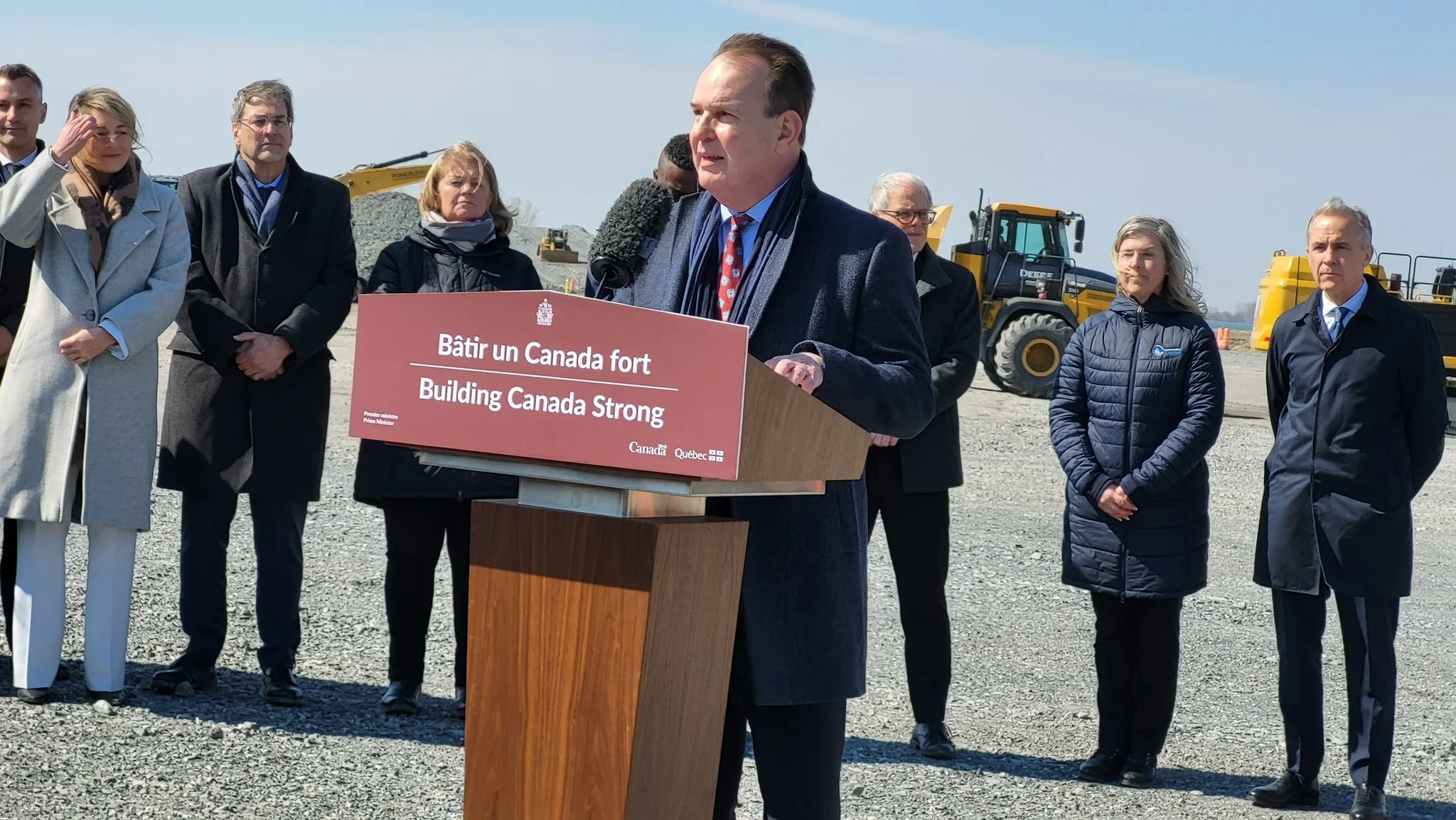
‘Premier Ford and I forged a new partnership to make housing more affordable — reducing taxes and fees for new homes in Ontario by up to $200,000,’ Prime Minister Mark Carney, pictured with Ontario Premier Doug Ford, wrote on social media. / TWITTER PHOTO
They don't write folk songs about the struggles of residential property developers.
Indeed, the widespread caricature of developers is that of being rapacious greedheads, conspiring with hapless, even corrupt, politicians to expel helpless low and middle-income residents from their homes to cater to the rich, or even more sinisterly, the “super rich.”
Canada’s current housing affordability crisis is the almost inevitable outcome of what happens when caricature becomes policy, when ideology is substituted for facts.
Politicians at all levels often mordantly observe that voters of all stripes are united on contradictory impulses: they want superb public services without high taxes; and, if you're going to tax anyone, make sure it is someone else.
When it comes to housing, the “someone else” has often meant residential property developers.
The dance of the development charge
A key driver of housing prices has been the charges, imposed primarily by municipalities, that governments have piled on to developers’ applications for new builds. These can include, but are not limited to:
Development Charges: to pay for infrastructure needed for growth (roads, water, sewers, parks, emergency services;
Education Development Charges: to fund new schools due to population growth;
Community Benefit Charges: helps fund things like community centres and libraries; and,
Servicing/Connection Fees: for hooking new builds up to water, sewer, hydro and gas services
Why have these charges exploded? Of course, the cost of everything rises every year, even more so with the post-COVID inflation surge. And Canada’s population has grown significantly in recent year, driven primarily by immigration, which we need to offset our aging population and associated skills shortages. This has driven up demand for housing of all kinds.
On top of this, the federal and provincial governments, seeking to avoid raising their own tax rates, have downloaded onto municipalities more of the costs for public transit, housing and homelessness, immigrant settlement, and elder care, to name a few.
Seeking, in turn, to avoid imposing heavy, and politically lethal, property tax increases onto their voters, municipalities have instead ratcheted up development charges on “greedy” developers, who, we all know, can afford to pay them.
By some calculations, these and other charges, including zoning and application fees, have more than doubled over the past decade, increasing faster than construction costs or sales and property taxes. These charges are hidden from buyers or renters, but they are passed on to them, in whole or in part.
Whatever one’s calculation of the price impact of development charges, they undeniably affect project viability. For builders, large upfront fees increase risk and reduce flexibility—especially in higher-interest-rate environments. They can make all the difference when it comes to whether a project is profitable or not, flashing more development red lights than green lights, and suppressing housing supply
And so you end up where we are today, with more and more Canadians being priced out of the housing market.
This brings us to the recent announcement by the Government of Canada and the Government of Ontario to, among other things, cut municipal development charges in the province.
A reason to suspend disbelief
Given the housing doom spiral that Canada has been trapped in, Canadians are justified in believing that it can never be reversed. For a generation, the incentives have all been in the other direction. As outlined above, jurisdictional fragmentation and buck-passing have been the rule rather than the exception.
But the Canada-Ontario announcement is a significant departure for the better.
First, it promises overdue alignment across governments. The plan brings all three levels—Government of Canada, Government of Ontario, and the City of Toronto—into a single framework with shared incentives. That alone increases the odds of real follow-through. Instead of passing responsibility around, each level is financially and politically invested in the same outcome: more affordable housing.
Second, it goes beyond simply mandating cuts to development charges. It replaces them with public funding. Eliminating the charges without a replacement source of revenue would create serious problems for municipalities. By explicitly funding “housing-enabling infrastructure,” governments are not just cutting costs—they are ensuring that growth can actually be supported. You can approve as many units as you want on paper, but without transit, water systems, and roads, they won’t get built.
In the past, cities have often faced a difficult trade-off: keep development charges high to fund infrastructure, or lower them to encourage building and risk budget shortfalls. This agreement helps resolve that tension. With external funding tied to charge reductions, municipalities have a more predictable path forward.
Third, it departs from the negative caricature of private residential developers that has driven Canadian housing policy for a generation. It implicitly acknowledges that private capital is essential to building supply and improving affordability and that residential developers are partners, not antagonists.
They are promised lower development charges, as well as enhanced consistency and transparency policies, which, in turn, reduce uncertainty for developers. And in real estate, certainty matters almost as much as cost. When builders can better predict lower fees and timelines, they are more likely to move ahead with projects.
Fourth, the scale of funding matters. Incremental or symbolic funding rarely moves the needle. The multi-billion-dollar commitment signals that governments are treating the issue with appropriate seriousness.
Of course, this is just one announcement in one province, with a communications focus on one housing market: Toronto, albeit the most expensive in Canada. As always, the devil is in the details. Will the promise of lower development charges actually be realized? Will any reduction translate into lower housing prices? And will Canada actually see more new homes? And how will progress be reported? Will the Ontario model be nationalized, and when?
All vital questions to be sure.
But for Canadians who have been unwilling to believe that governments could muster the collective sense of urgency and common purpose to take on the housing affordability crisis, the sweep of the Canada-Ontario announcement is refreshing.
Like the struggles of residential housing developers, they don’t write folk songs about complex intergovernmental housing announcements. But this one, if only momentarily, has given Canadians a reason to willingly suspend their disbelief.