Still waiting for ‘white smoke’ from the White House

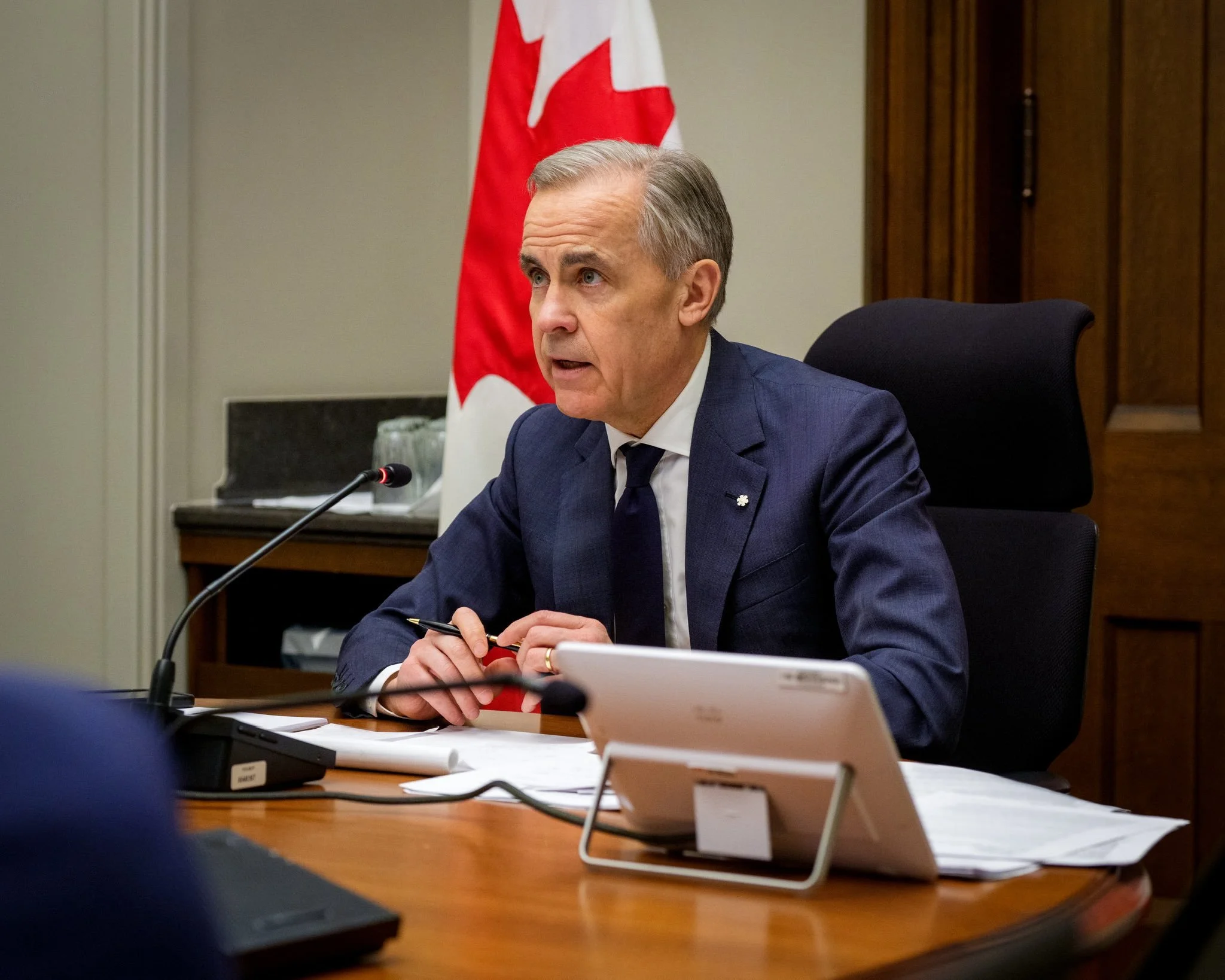
‘A year after Carney’s first visit to the White House, the idea of returning Canada-U.S. relations to the cooperative, neighbourly status of recent decades seems like a lost cause,’ writes Les Whittington. / GOVERNMENT OF CANADA PHOTO
It’s been a long year.
It was just over 12 months ago when newly chosen Prime Minister Mark Carney made his first official trip to the White House.
The May 6 visit was wreathed in high hopes and national curiosity about Carney’s ability to deal with the notoriously antagonistic, unpredictable and Canada-adverse President Donald Trump.
Canadians dissected the meeting—which included Carney taking questions from reporters in the Oval Office—looking for any hints of progress in Ottawa’s deteriorating trade relations with Trump’s Washington.
Carney, who appeared to take the whole event with a certain detached sense of irony, afterwards repeated his earlier quip that he hadn’t expected any “white smoke” marking a sudden breakthrough arising from the White House.
“I feel better about the relations in many respects,” Carney observed after the meeting, citing the “posture” that Trump adopted toward his northern neighbours in their chats.
“These are the discussions you have when you’re looking to find solutions,” he said. Trump said he found Canada’s new prime minister an improvement on Justin Trudeau. The high-level meetings will continue, the president said.
But Trump showed no inclination to back away from the tariffs that were damaging Canada. Asked about that, Carney said only, “We’ll see.”
A year later, the hopes Canadians invested in Carney in that much-watched visit seem almost quaint. As an experienced international banker and a former Wall Street hand, Carney had been elected on his potential to convince Trump to reverse his destructive, protectionist onslaught against Canadians.
After that first meeting in Washington, it was assumed the prime minister would continue to use his contacts with Trump and the U.S. administration to eliminate the Americans’ sectoral tariffs on Canadian steel, aluminum and cars.
We may never know exactly how Ontario Premier Doug Ford’s U.S. TV ads—which used former president Ronald Reagan’s words about tariffs to make Trump look foolish—affected the prickly U.S. leader. But it obviously made a huge difference. Bilateral trade talks broke down immediately, and it’s unclear six months later where things stand.
Whether or not it’s true that the Ford ads scuppered an impending deal with the Americans to reduce the sectoral tariffs, these damaging import fees are still in place today. The idea that the breakdown in bilateral relations was a temporary aberration is gradually fading.
For Canada, it’s a question of how bad things with the U.S. will become
It’s clear now that Trump is fully and personally committed to the tariff fixation he has been talking about for 40 years. Not even a U.S. Supreme Court decision that nullified his justification for $166 billion in collected import taxes has made an impact on the president.
For Canada, it has become mainly a question of how bad things with the U.S. will become. We have learned that Trump and his economic aides have an unwavering belief in the U.S.’s right to collect a tribute from other countries—allies or not—to access the American economy.
Probably because of the close ties between Canadian and U.S. business, this country’s exporters have so far escaped the worst of the Trump trade shakedown. As Carney often notes, Canada still sends about 80% of its exports to the U.S. duty-free under CUSMA.
But that may soon be over. The position expressed by Trump’s key cabinet secretaries heading into the upcoming CUSMA review varies from one week to the next. But the grievances toward Canada originally aired by the president shortly after his re-election in 2024 appear not to have evolved at all. The enduring notion is that Canada through its trade relations with the U.S. has been taking unfair advantage of the Americans for years. And like all bullies, Trump administration officials are appalled by Canadians’ unwillingness to take the U.S.’s misguided retribution lying down.
As the review of CUSMA proceeds this year, elements of the era-defining continental pact may be left in place. But the overall spirit of North American free trade is gone, and the U.S. is certain to demand significant concessions from Canada in the negotiations. Few expect Ottawa to come out of the recasting of CUSMA without continuing sectoral and perhaps other tariffs being applied by the Trump administration.
Things might eventually change, but a year after Carney’s first visit to the White House, the idea of returning Canada-U.S. relations to the cooperative, neighbourly status of recent decades seems like a lost cause.
Carney, of course, is determined to reorient how Canada does business in hopes of building a stronger, more resilient and less-U.S.-dependent economy. It’s an onerous, long-term transition but in the second year of Trump’s renewed presidency, there’s obviously no other choice.
Asked Thursday about the state of the now-stalled CUSMA review as far as Ottawa and Washington are concerned, Carney could only say “we’re ready to talk.”