Affordability continues to be political blind spot in Carney’s approach

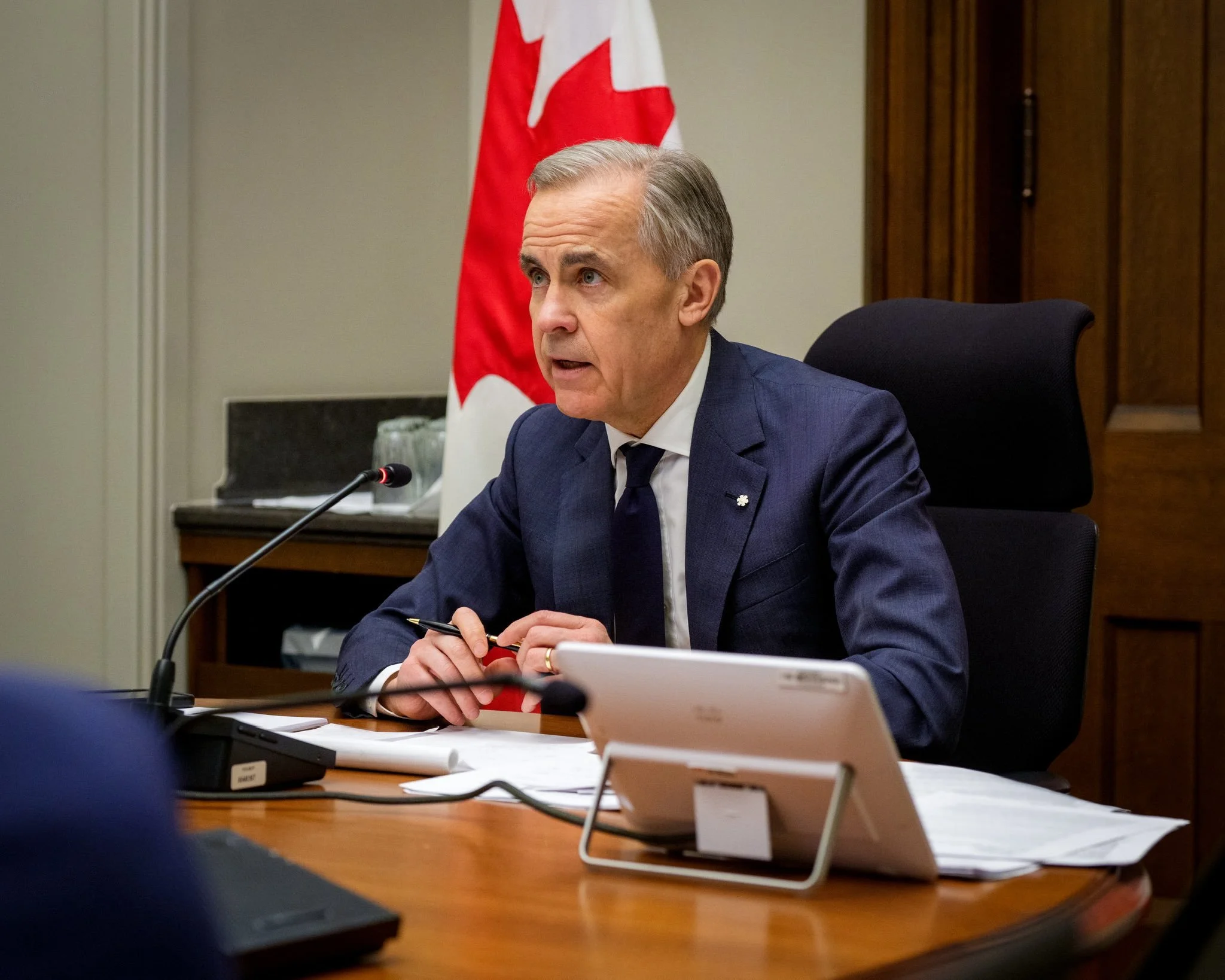
Prime Minister Mark Carney pictured with Finance Minister François-Philippe Champagne on Budget 2025 day. / TWITTER PHOTO
With the Conservative caucus disintegrating and Prime Minister Mark Carney on the verge of assembling a parliamentary majority, the Liberals have a lot to celebrate at their annual convention in Montreal this weekend.
But they shouldn’t let the self-congrationals go too far, because their government has a major problem with an issue that is drawing a lot more attention among average Canadians than the glad-handing in Montreal.
That’s affordability, and the Carney government is becoming more vulnerable in this area by the day as a result of the economic fall-out from the U.S.’s war in Iran.
Cost of living has been among the top issues, or the top issue, for Canadians since the inflationary spike after the COVID pandemic. Some 67% of Canadians told Abacus Data in a poll several months ago that the cost of living in their communities is the worst they can ever remember.
Housing costs have long put home-ownership beyond the reach of a large portion of the population and grocery prices are up 30% since 2019, according to TD Economics.
Last year, with food bank use at record highs, many food banks across the country were forced to cut back on the amount of provisions they could offer Canadians. Daily Bread Food Bank CEO Neil Hetherington says 10 million people — 25% of the population — are experiencing food insecurity.
Some relief from crippling inflation appeared likely as the consumer price index moderated early this year, but the war has created an energy crisis that will inevitably push up prices.
According to the Canadian Automobile Association, gas prices across the country as of early this week averaged more than $1.80 per litre, compared to about $1.32 a year ago and $1.51 on March 7.
The upsurge in costs for gasoline and diesel will cause prices for almost everything Canadians need to rise sharply. Economists are speculating that inflation could shoot up to 3% from the current 1.8%.
Indeed, because of the war, inflation in the U.S. accelerated to 3.3% last month, its highest rate in nearly two years, the Labor Department said Friday.
With Canadians expressing the worst confidence in their prospects in nearly a year, according to pollster Nik Nanos, a continuing oil price crunch could undercut demand, leaving the country possibly facing a period of damaging stagflation.
For now, it’s clear the affordability crisis is going to get worse for Canadians. The issue may be overshadowed to some extent by the economic threats from the U.S. and Carney’s widely appreciated dynamism and pragmatic thinking when it comes to trying to start building an economy that can better stand alone without the Americans.
And the federal Liberals have taken some measures to address the cost of living problem. These include a GST rebate for low-income people, support for food banks and $500 million in funding intended to assist food suppliers improve capacity and productivity.
But affordability will continue to look like a political blind spot in the Carney government’s approach unless it makes a more extensive effort to address the matter. And the Conservatives, once they get a new leader, may be able to continue to shift the political calculation by hammering away about the cost of living plight of average people in advance of the next election — whenever that is.
Facing the worst energy crisis ever, Carney says he has begun thinking about how the government might respond. Discussing the impact of the war on gas prices this week, he said, “The question becomes, and this is what the government’s focused on, is how long is this going to persist and what can we do to help cushion the blow for Canadians, and that’s something we’re looking at.”
Even if the war in Iran winds down quickly and Iran’s chokehold on world oil shipments in the Strait of Hormuz ends — both of which seem a bit of a long shot — the steeply rising prices at the pump in Canada are unlikely to recede to pre-war levels anytime soon. So it’s a pretty good bet that the federal government’s fiscal update this spring will have to contain some kind of break on gasoline costs for consumers.