Quebec voters to Ottawa: Don’t screw this up!
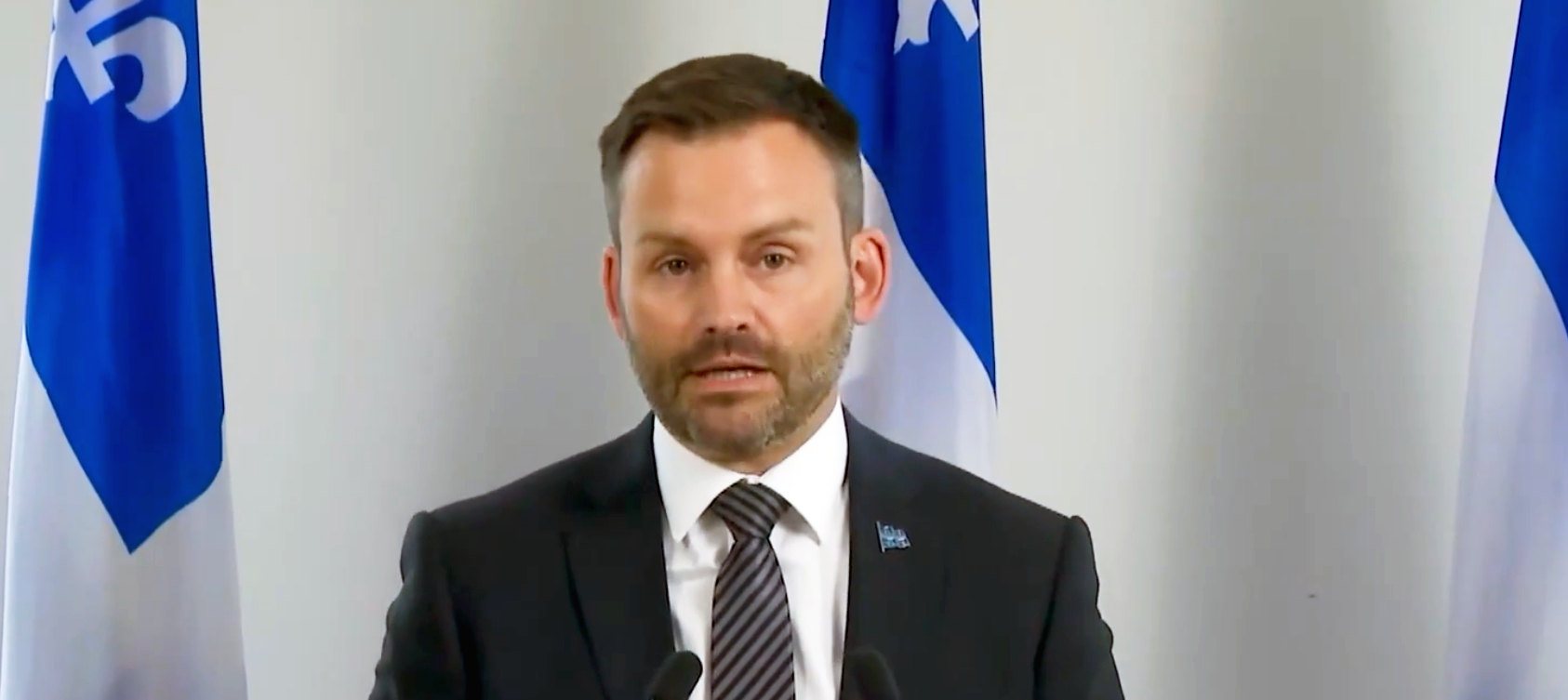
Parti Québécois Leader Paul St-Pierre Plamondon spoke to media after winning 59 seats on Monday. ‘Our mandate will be dedicated to defending the interests of Quebec and Quebec alone,’ he said. / SCREENSHOT
I have written before about the sophistication of Quebec voters in the face of the threat of separatism. But even I was awestruck by the result they delivered last Monday.
They sent a minority government to the National Assembly with a mix of parties fragmented along ideological and sovereignist lines in a way we haven't seen since 1976. Yet political cross pressures may result in political and economic stability in the province, at least for now.
Quebers wanted change, and they got it. But not too much. Enough to completely wipe out the tired Coalition Avenir Québec (CAQ) government. But not enough to give a blank cheque for another sovereignty referendum to the new Parti Québécois (PQ) government of Paul St-Pierre Plamondon.
Each party has opportunities and risks depending on how it responds to the voters’ ballot box. In other words, voters have the politicians right where they want them.
First, the good news
Québec solidaire (QS) lost two seats. But with the election result, party leader Ruba Ghazal holds the balance of power in the National Assembly.
The Conservative Party of Quebec (CPQ) had a genuine breakthrough under leader Éric Duhaime, rising from one to 19 seats. This marks the first time in 50 years that there is an authentic and politically significant voice for right-of-center politics in the National Assembly.
Running under its third leader in the last four years, Charles Milliard, the Quebec Liberal Party (QLP) exceeded expectations by winning 40 seats, up from 18. And the CAQ's immolation means it potentially has a wider scope to attract nationalist, non-sovereignist voters.
By winning a minority government with 59 seats, Plamondon has pulled off something of a political miracle, restoring the party from the wreckage of the 2022 election, when he led it to just three seats. And, along with Quebec Solidaire’s nine seats, Plamondon potentially has a dance partner on their shared commitment to sovereignty.
Now, for the not-so-good news
For QS’s Ghazal, holding the balance of power is a double-edged sword. With every PQ Budget now likely to require QS support for passage, Ghazal will have to show some real negotiating savvy to get something of political value in return from Plamandon. More troubling still for Ghazal is the established fact that propping up a minority government is rarely rewarded by voters in subsequent elections.
For the CPQ’s Duhaime, the question is, what is the party’s path to government? I was in high school the last time a federalist party as ideologically conservative and nationalist as the CPQ was a significant political force in the province.
The final extinction of the old Union Nationale portended a half-century of left-of-center political consensus in Quebec in support of activist government, whether on the economy, social programs, or the French language and culture. Tentative steps to trim back the state by Liberal or PQ governments routinely resulted in embarrassing climbdowns or massive election defeats.
Duhaime is gambling that this consensus has been broken, and that his central proposition — Quebec has too much government, too much taxation, and too much bureaucracy — is the basis for a new and durable right-of-center governing coalition.
For the QLP’s Milliard, the path to government travels through the CPQ. The traditional Liberal formula for success has been to rally Quebec federalists and soft nationalists against the PQ over the question of sovereignty. This strategy was upended by the rise of the CAQ, a party forged on Quebecers' fatigue with the stale PQ-Liberal political seesaw.
The CAQ is gone, but the CPQ has taken up a significant amount of that political space. In fact, the Conservatives and the Liberals took an equal share of former CAQ seats, 18 apiece. So Milliard remains in a tight political squeeze.
The PQ’s political Rubik's Cube
Premier-designate Plamandon has the trickiest job of all.
Winning is always better than losing. But, it’s obvious from the results that the PQ’s bedrock commitment to sovereignty denied them a majority, as it did in 2012, the last time the PQ won government, also a short-lived two-year minority. Voters’ impatience with the PQ’s abiding preoccupation with the sovereignty project at the expense of more pressing economic and social priorities fueled the CAQ's sudden rise, consigning the PQ to a decade in the political wilderness.
With Quebecers’ support for sovereignty running at historic lows right now — around 30% — Plamandon obviously understood that commitment to hold a third referendum was a political liability. But he also knew that pretty much all of that 30 percent comes from the PQ base, the ignoring of whose wishes could be a greater existential threat to his leadership than losing another election. He just had to hope that the unavoidable sovereignty vulnerability would not be such as to deny him a majority come election time.
Enter President Donald Trump and his blunt assault on Canada’s economic and national identity. As a result, polls showed a significant jump in Quebecers’ worries about the economy as well as their feeling of pride in and attachment to being Canadian. To address the phenomenon, Plamandon read the political room and publicly promised not to hold another referendum until the President leaves office (we hope!) January 20, 2029. Even with this pledge, voters decided they preferred a more concrete guarantee and denied him the five seats he still needed for a majority.
Whatever lessons the Premier-designate may be taking from the election results, he can be under no illusions that there is an appetite for the kind of jurisdictional fight picking with the federal government that has long been part of the PQ’s sovereignty playbook.
More significantly, Plamondon knows that if he tried to do that too transparently, he would be up against a federal Liberal government whose popularity is especially high in Quebec.
Which brings us to what all this means for Prime Minister Mark Carney.
The Supreme Court as party pooper
The Prime Minister’s “Canada Strong” economic nation-building agenda would seem a purpose-built antidote to the sovereignty threat. He's all “Build Baby Build” and “let’s make a deal.”
He has shown no patience for getting into jurisdictional brawls of any sort, focusing instead on cutting deals with provinces and territories on big economic projects, the most on-point of which is the multi-billion-dollar agreement with Quebec and Newfoundland on future hydroelectric generation.
Carney’s silence in the face of Alberta’s moves to increase private health care delivery is also striking; a stark departure from the reflex of Liberal governments since the 1990s to position themselves as the guarantors of universal public health care.
Even so, Ottawa cannot exhale in relief at Monday’s result. The Supreme Court may deliver an unwelcome early Christmas present. A decision is expected as early as November on the challenge by English-language school boards to Quebec’s Bill 21.
Without going into detail on the substance of the case, all you need to know is that it involves conflict along volatile Quebec fault lines: the rights of Quebec’s English-language majority versus its French majority, the right to religious freedom versus the political consensus in the province behind state secularism, and, not least, the federal Supreme Court versus the democratic prerogatives of the National Assembly.
Once upon a time, any one of these conflicts would have provoked a unanimous resolution denying federal intrusion in Quebec’s public affairs. With all three in play, the Court’s decision could truly be a problem from hell for Carney, not only in Quebec but in the rest of Canada, depending on its verdict.
With the decision in mind, you could argue that Quebec voters sent another clear message to Ottawa: don't screw this up.