It’s all about the competitive return on capital, says RBC CEO McKay
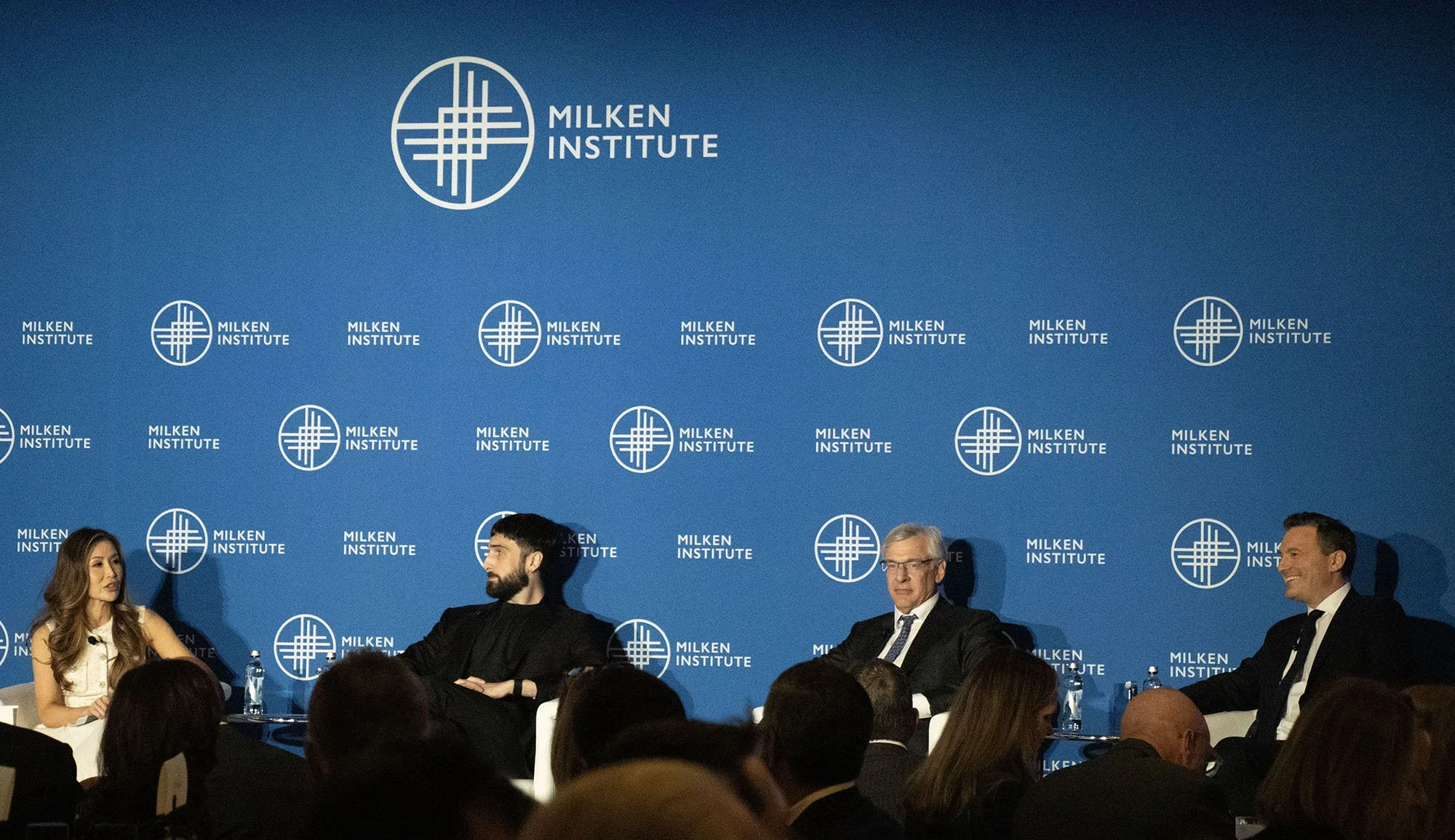
Fox Business Network correspondent Susan Li moderated a panel discussion with Cohere CEO Aidan Gomez, RBC CEO Dave McKay and AI and Digital Innovation Minister Evan Solomon at the Milken Institute’s Global Dialogues Toronto conference, Sept. 14. / MEANS & WAYS PHOTO
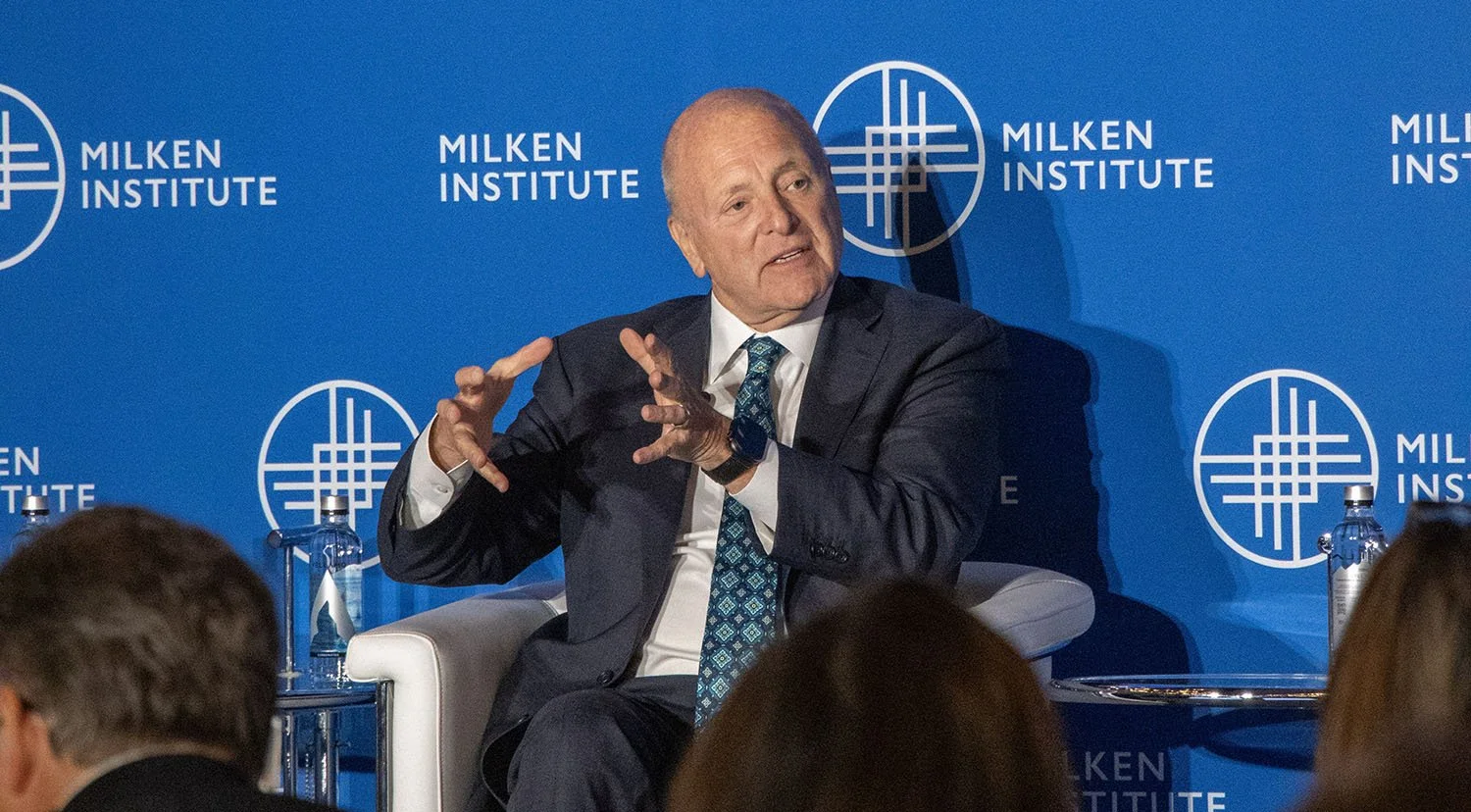
TORONTO–Canada needs to diversify its investment sources and take advantage of growing international interest in energy, critical minerals, northern infrastructure and AI and data centres, says RBC chief executive Dave McKay.
Investors are increasingly eyeing Canada as global trade shifts, he said, adding the country must pivot from "can do to must do."
“We've got to get stuff done,” McKay said during a panel on AI, investment, trade and Canada’s economic competitiveness at the Milken Institute Global Dialogues Toronto summit. “We've got to get it done fast. And we have to create a competitive return on investment against others who want that capital.”
McKay said business and government are mobilized together for the first time in a decade, but Canada must prove it can deliver fast enough to compete for capital. “Investors need confidence,” he said. “That's what we're here to sell in the next two days — that we can get this stuff done.”
McKay spoke alongside Cohere CEO Aidan Gomez and AI Minister Evan Solomon at the Milken Institute’s Global Dialogues Toronto conference on Sept. 14. The panel also touched on this week’s safety debate, sparked by a researcher’s resignation and Anthropic’s call to slow AI development. Gomez pushed back on industry self-regulation, likening it to a cartel: "What we need is a process by which to come up with the right regulation… an independent third party that isn’t isolated in any one country and isn’t dominated by any one industry player."
Solomon said the policy challenge isn’t whether Canada builds AI infrastructure, but how. “It's build right or build wrong,” Solomon said. “If you build wrong, you can't get the social license for this… If you build wrong, it might get dangerous and the risks go up.” For data centres, he said, that means addressing community benefits, water use, and workforce readiness.
McKay called AI a major economic transition that businesses, governments and workers will need to adapt to, and said retaining high-growth tech companies is a challenge, given how reliant they are on U.S. financing. “70% of our growth capital comes from the U.S.,” he said, pressure that can push successful Canadian firms to move south as they scale.
Gomez said Canada is one of four countries — with the U.S., China and France — advanced enough to lead on deploying frontier AI models. Canada should "fight to retain control of how it's deployed," he said. "We're kind of sleepwalking into a reality where there's only one option. It's U.S.-built AI and China-built AI and that’s your choice. I firmly believe the second rail has to come from a democracy."
Canada’s reputation for trusted institutions could help it lead on global AI development and regulation, BMO Vice Chair, BMO Wealth Management, Scott Brison told Means & Ways at the summit. "One of the biggest strengths that Canada offers the world in the rapid development of AI is trust… no country in the world is more trusted than Canada," he said, citing Canada’s role founding the G20 and Mark Carney’s leadership of the Financial Stability Board. Brison said international investment in Canada is already growing.