‘We’re not waiting for the right people to find us,’ says Diab on new Express Entry immigration changes
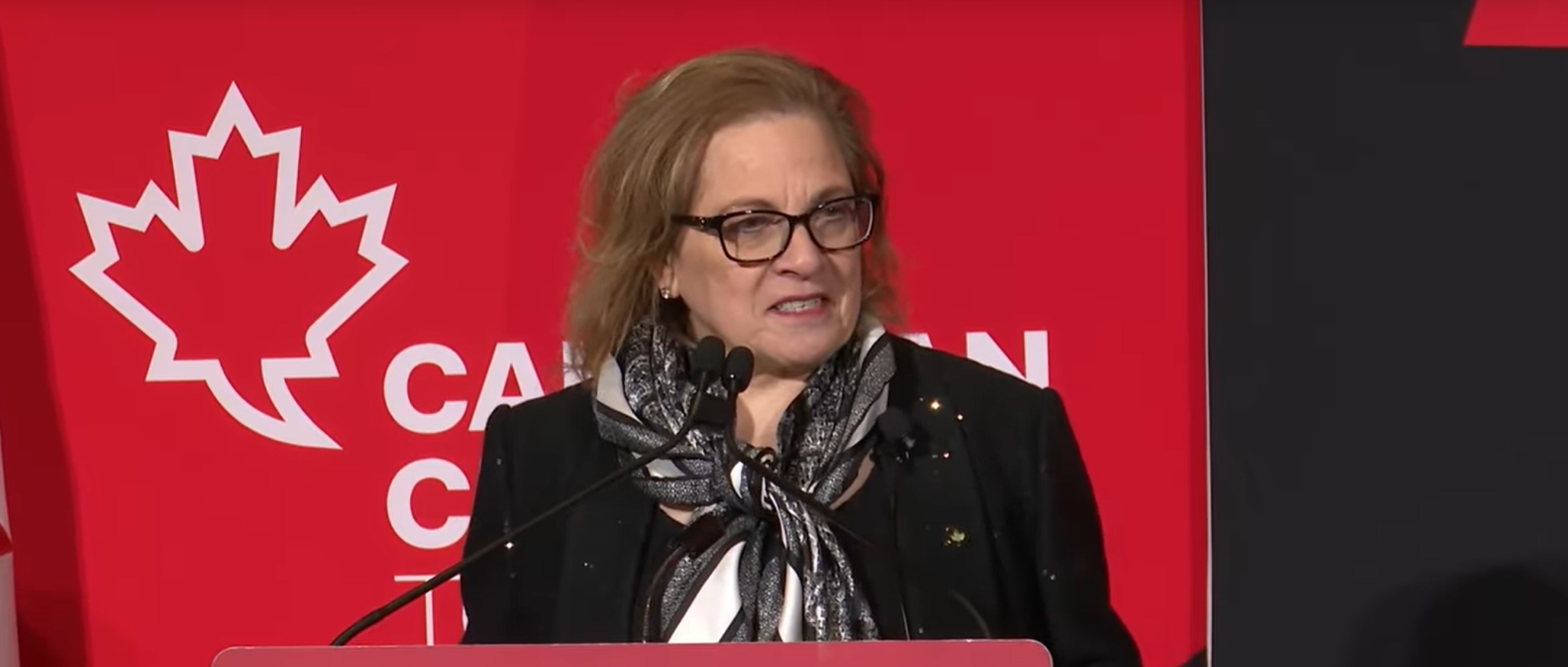
‘Our Express Entry system is at the core of our approach for attracting and retaining the skilled workers Canada needs,’ says Immigration Minister Lena Metlege Diab. / SCREENSHOT
The federal government is introducing major changes to its Express Entry immigration system, adding new priority categories aimed at attracting skilled workers, Immigration Minister Lena Metlege Diab announced Wednesday.
“We’re not waiting for the right people to find us. We’re going out into the world to recruit the people our country needs, connect them with Canadian employers, and highlight why Canada is the best place in the world to build their careers and lives,” Diab said at the Canadian Club of Toronto. “Employers can plan, hire and invest with confidence, with an Express Entry program that functions effectively for them.”
Diab said the changes are part of a broader effort to better align immigration with labour market needs, economic growth, and national security priorities.
“Our Express Entry system is at the core of our approach for attracting and retaining the skilled workers Canada needs,” she said.
Express Entry manages applications for three permanent residence programs and uses a points-based ranking system. The government conducts targeted invitation rounds for candidates with specific skills and work experience.
Diab said the federal government will introduce several new categories beginning in 2026, including researchers and senior managers with Canadian work experience to support innovation and economic growth. The government will also introduce a new category for aviation workers, including pilots, aircraft mechanics and inspectors.
Policy adjustments alone won’t achieve productivity gains
Anita Huberman, board chair of Western Community College, said the devil will be in the details.
“Any changes to Express Entry must ultimately be evaluated through the lens of labour market alignment and economic productivity,” she told Means & Ways.
“Canada’s innovation and productivity goals depend on addressing real, persistent workforce shortages — particularly in health care, technology, skilled trades, logistics, hospitality and applied business sectors. Express Entry reforms that prioritize in-demand occupations and skills-based selection can help move the system closer to employer needs. However, policy adjustments alone will not achieve productivity gains unless they are tightly integrated with domestic training capacity and credential recognition pathways.”
She said that’s why “immigration policy, employer demand and education program approvals” need to be aligned. “The outcome is stronger workforce integration and faster economic contribution,” she said. “If the reforms streamline pathways for individuals with industry-relevant skills and ensure timely processing, they can support innovation goals. However, if uncertainty, caps, or delays disrupt student pipelines without corresponding domestic capacity expansion, it may slow progress in sectors already experiencing labour constraints.”
Another major change is the creation of a new Express Entry category for skilled military recruits. Eligible candidates must have a job offer from the Canadian Armed Forces and meet all military and security requirements.
“They’ll be subject to the same security and all military requirements,” she added. “This new category supports our government’s commitment to strengthen our armed forces, defend our sovereignty, and keep Canadians safe.”
The Globe and Mail reported, however, that the military does not have problems attracting Canadian citizens interested in serving. Rather, there are issues with significant bottlenecks, rejections and delays that need to be addressed.
The Globe cited Charlotte Duval-Lantoine, vice-president of Ottawa operations at the Canadian Global Affairs Institute, who said the recruitment of foreign service members is a new move for Canada, but cautioned that “the success of this immigration pathway will depend on improving a recruitment system that’s struggled domestically.”
Concern over category-based selection
Additionally, Ravi Jain, a Toronto-based immigration lawyer, told the Globe: “I’m concerned that the government is continuing with ‘category-based selection’ in Express Entry given that it allows for PR invitations to be issued to those with lower overall scores. Economic immigrants are supposed to be selected for their ability to become economically established and for contributing to Canada’s economy.”
Diab said Ottawa will introduce a new Express Entry category for foreign-trained doctors with Canadian work experience while maintaining existing priority streams for health-care workers, French-speaking candidates, skilled trades, and STEM professionals. She said the changes are part of a broader effort to “restore control and balance” to the immigration system by reducing population growth pressures and making immigration more targeted, predictable, and aligned with long-term economic and labour needs.
"Whether it’s employers and entrepreneurs, regional and community leaders, refugees and settlement groups, I can tell you that we’re listening. And we’re also making decisions that, while tough, are necessary, in order to get our system back to balance," she said.
Conservative MP Michelle Rempel Garner said in response to Diab’s announcement that the government should be prioritizing Canadian youth when it comes to skills and employment.
“The Liberals are only focused on expanding immigration streams that push our young people further away from jobs that would set them on a path to success,” Garner, her party’s immigration critic, said online. “At the same time, the Liberals have neglected to propose a plan that would ensure three million non-citizen temporary residents whose permits expire by the end of 2026 will leave Canada once their visas are up. The Liberals’ decade-long abuse of a once well-functioning immigration system is already overextending Canada’s healthcare system and housing market, while taking job opportunities for Canadians, with no long-term solution in sight.”
She said the government should “hire Canadian” and “bet on Canadians” by abolishing the Temporary Foreign Worker Program while creating a targeted agricultural stream and ensuring foreign workers leave when their visas expire. She also wants new labour mobility and retraining strategies, incentives for Canadians to fill jobs in underserved regions, and immigration planning that accounts for the impacts of artificial intelligence on the workforce.