Foreign investment from middle powers an untapped opportunity for Canada
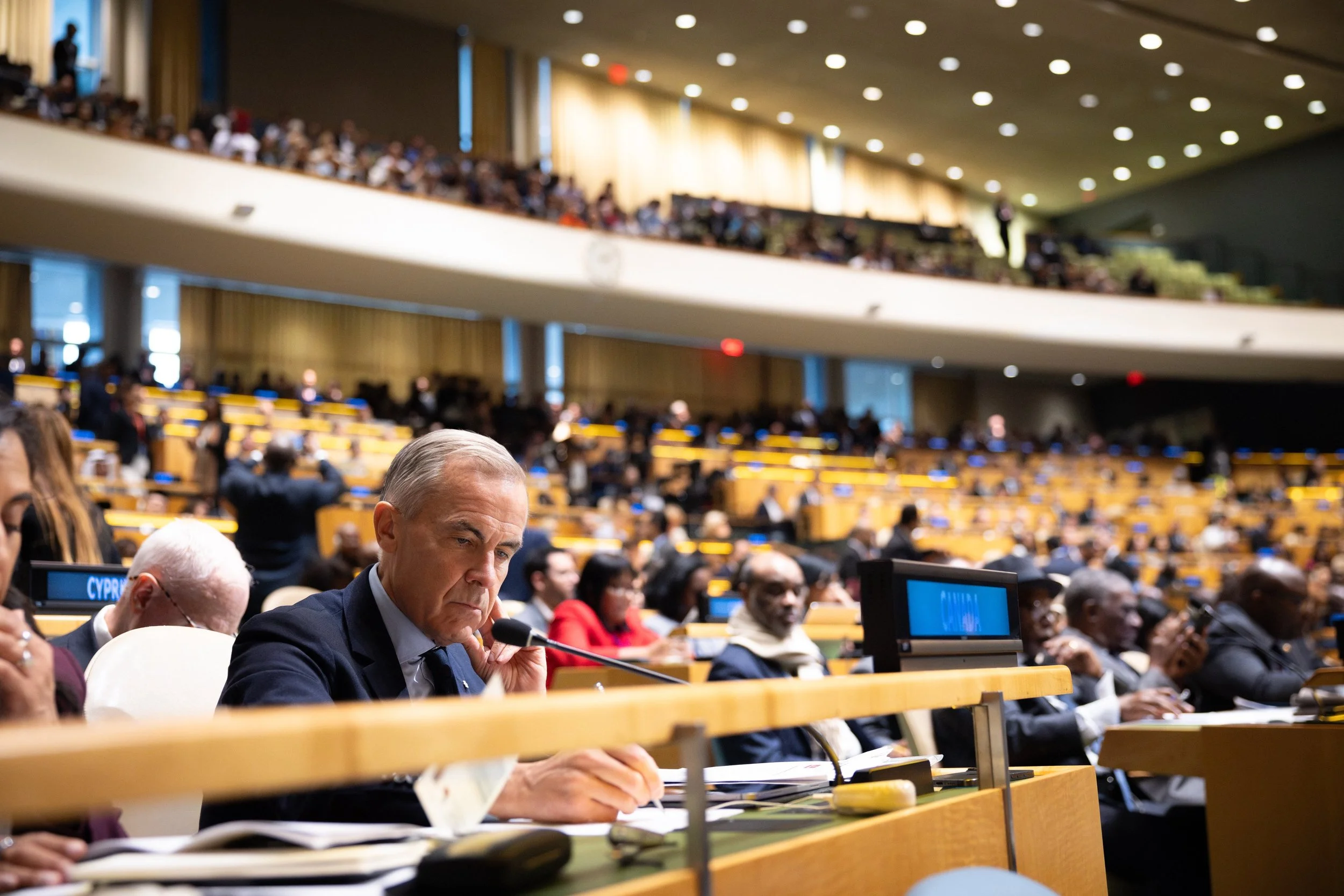
‘Nations are strongest when they build together. At the 81st Session of the United Nations General Assembly in New York, Canada is choosing to step forward. To lead. To shape what comes next,’ Prime Minister Mark Carney wrote on social media. / TWITTER PHOTO
The world’s 10 largest economies outside the U.S. and China account for 43% of global outward foreign direct investment, creating a largely untapped pool of capital that could reshape Canada’s investment prospects, says RBC Thought Leadership Managing Director Jordan Brennan.
The group of “middle power” countries represents about one-fifth of global GDP, but “when it comes to investment in capital, all the capital that Canada or the middle powers could want to deploy exists within them,” Brennan said. “There is this superpower, but it currently lacks structure, agency and identity.”
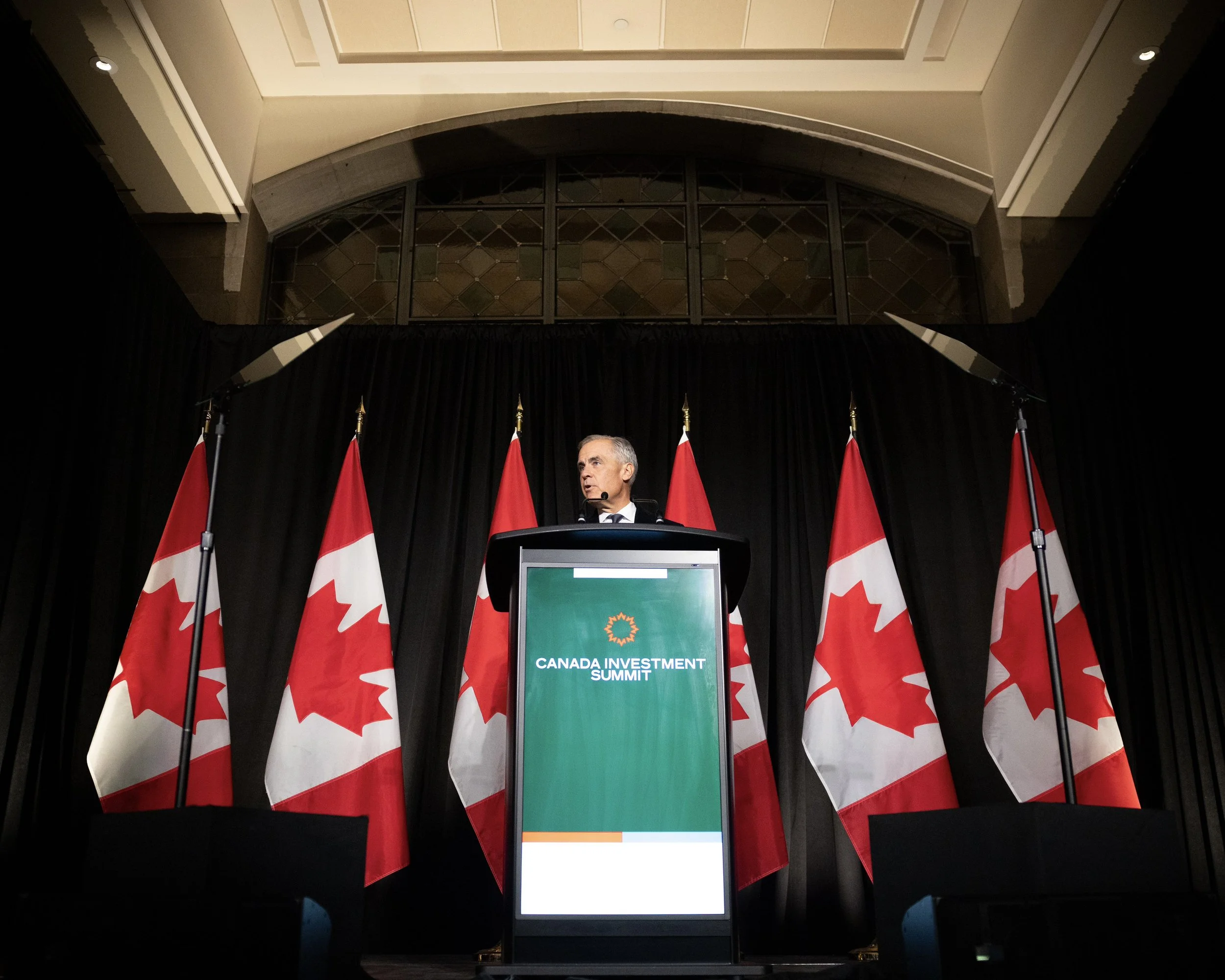
Brennan spoke on a Means & Ways webinar alongside Business Council of Canada senior vice-president of policy Theo Argitis and National Angel Capital Organization CEO Claudio Rojas, following a federal Investment Summit in Toronto aimed at attracting capital into AI, energy, critical minerals, infrastructure and other strategic industries.
Prime Minister Mark Carney has been promoting greater cooperation among “middle powers” as a potential counterweight, emphasizing collaboration over confrontation. Brennan said these countries have substantial capital within their own economies but remain heavily invested in the United States. As uncertainty and policy instability in the U.S. grow, countries including Canada, Japan, South Korea and Germany could become more attractive destinations for one another’s investment.
“There's lots of money that's looking for a new home,” he said. “It's an enormous untapped opportunity.”
Argitis said the Canada Investment Summit generated significant interest but noted that investor interest is not the same as investment actually being delivered. “It’s clear that the ambition is there,” he said. “So the question is, what do we need to do to translate that into success?”
He pointed to permitting, regulatory hurdles, interprovincial trade barriers and labour issues as challenges, and questioned whether Canada has enough capacity to absorb a major influx of investment. “If we're successful in attracting all of this capital and we're injecting it into the economy, are we simply inflating it away because we don't have the workers, for example?”

Credibility: hard to earn, easy to lose
He said Canada is nevertheless moving in the right direction but the momentum should not be lost. “Credibility is hard to earn and easy to lose,” Argitis said.
While the investment summit concentrated heavily on infrastructure and later-stage investment, Rojas argued that Canada’s ability to attract large-scale capital ultimately depends on what happens much earlier. He said Canada has neglected the early stages of the capital pipeline, making it harder for startups to grow into the kinds of companies capable of attracting major institutional investors.
“We were watering the top of the trees while the roots were dying,” Rojas said. “We need to catalyze private investors, both domestic and foreign, to help the great Canadian success stories of tomorrow emerge.”
Rojas cited research conducted with Startup Genome involving 65,000 deals that found Canadian companies raise 40% less than their American counterparts and take longer to raise capital. He said 30% fewer Canadian companies move through the pre-seed and seed pipeline compared with jurisdictions such as the U.S. “Capital is the oxygen of business,” he said. “And our entrepreneurs have effectively been competing in oxygen-deprived conditions.”
Brennan said Canada also has a structural problem between its smallest companies and its largest corporations. “The large firms we have, we need more of them, but they grew out of the midsize companies and there's not very many of them,” he said.
The panel also discussed the federal government’s new “mega deduction,” which lets businesses immediately expense two-thirds of new capital investment.
Argitis said the measure could significantly improve Canada’s competitiveness with the United States, but argued Canada cannot simply match U.S. tax conditions because investors have other reasons to prefer the American market.
“So it's not just good enough to have similar tax levels to the US. We actually have to have even better tax rates advantages vis-a-vis the U.S.,” Argitis said.
Brennan said the measure was “a brilliant move on the part of the government” because it targets the economics of new projects rather than applying broadly across the existing corporate tax base. “We needed game-changing numbers that swing the internal rate of return on projects … and change the economics,” he said.
Canada is cool right now, but we need to execute
Rojas said the measure sends a positive signal but argued Canada also needs policies aimed specifically at early-stage investors, pointing to the U.K. and the U.S. as models for stronger tax credits and capital-gains incentives to keep high-growth founders in Canada.
“Our geography has made it very convenient for founders to move to the other more competitive jurisdiction. But we now have a government, I hope, that recognizes that the small companies of today have the capability to become the behemoths, to become the hyperscalers of tomorrow. And it's very important that we create the conditions to keep them here,” he said.
Brennan said there is an “enormous” opportunity but “everyone now needs to be laser focused on execution.”
“Canada is cool right now,” he said. “The opportunity is real, but the window will close.”
Argitis said Canada is entering the moment with many of the underlying advantages it has always possessed, particularly its resource base. “The big difference today is that the sentiment has changed. Our businesses are much more optimistic about the economy's potential and the potential to turn those strengths into opportunities,” he said. “We also have the catalyst south of the border that's driving a lot of these reforms. Now is the time. The mood in the country has changed and the business community is ready to be part of this parade.